
The former slave market and Christ Church
An Anglican cathedral stands where enslaved people were once sold in Stone Town. A quiet, careful visit helps you understand a history that shaped the whole coast.
 Picture: Luganosamwel · Creative Commons BY-SA 4.0 (source file)
- From Stone Town
- A short walk inland
- Pace
- Half day
- Getting there
- Walk inland from the seafront
- Bring
- Modest clothes, time, a quiet frame of mind
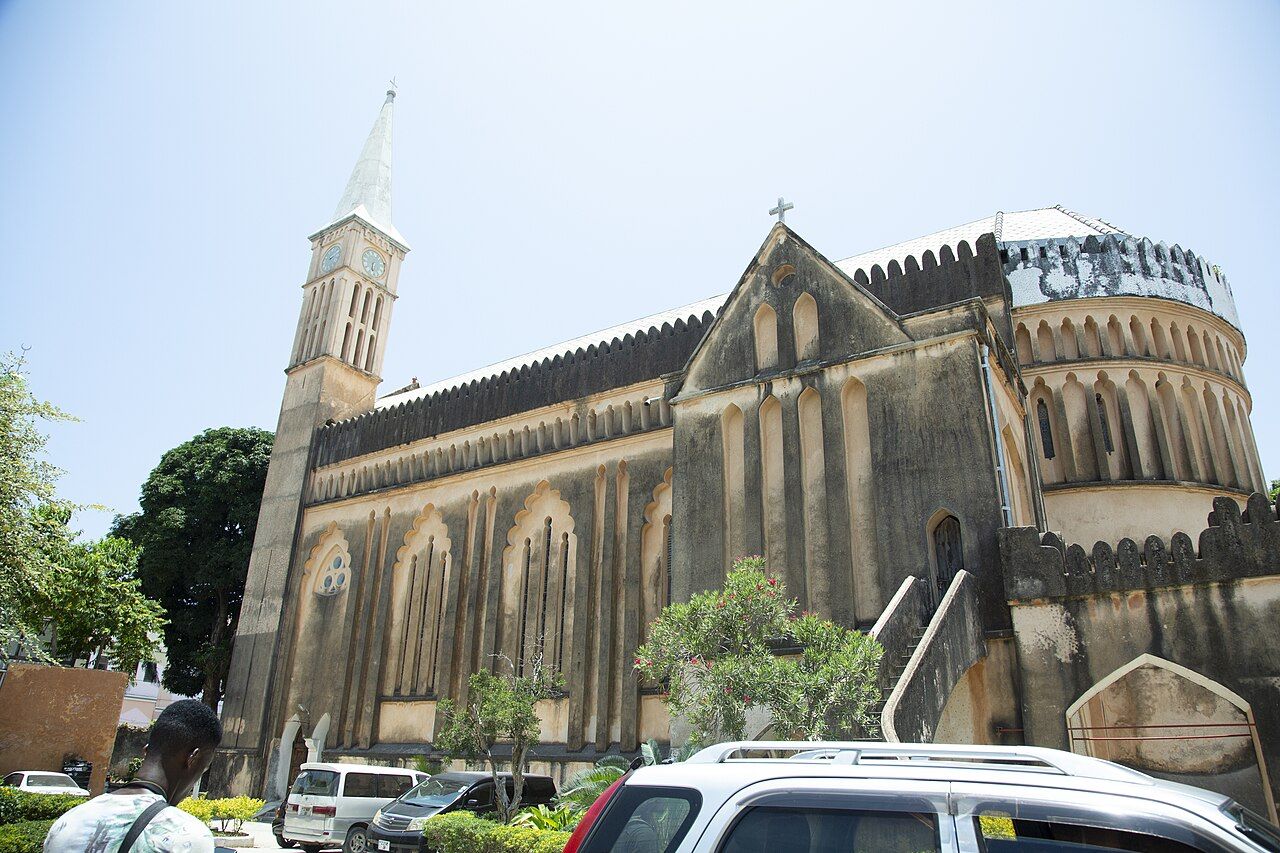
In the Mkunazini area of Stone Town, a little inland from the seafront, stands a stone church with a slender clock tower. Christ Church, the Anglican cathedral, was built on the site of what is usually described as the last open slave market in East Africa. Around it are a memorial sculpture, an exhibition and underground rooms that are presented as holding chambers. It is one of the most important places on the island, and it asks for a different kind of attention from the beaches and lanes.
This page sets out the history in outline and offers some thoughts on visiting with care. The exhibition on site tells the story in more depth.
Zanzibar and the slave trade
For centuries, enslaved people were taken from the East African mainland and traded along the coast and across the Indian Ocean. In the nineteenth century, Zanzibar became the centre of that trade. Caravans brought captives from far inland to the coast, and many were shipped to the island to be sold. Some were sent on to Arabia, the Persian Gulf and beyond; many others were put to work on the clove and coconut plantations of Zanzibar and Pemba.
The numbers are hard to know precisely, but they ran into many tens of thousands over the decades, and the suffering on the journey, in the markets and on the plantations was enormous. The wealth of the town, including some of the grand buildings on the seafront, was built partly on this trade.
Under strong British pressure, Sultan Barghash signed a treaty in 1873 that closed the slave market in Zanzibar and banned the seaborne trade. Slavery itself did not end at once. It continued in various forms on the islands for decades, and the legal status of slavery was not abolished in Zanzibar until 1897, with the effects lasting well beyond that.
The cathedral on the market site
After the market closed, the site was acquired by Anglican missionaries, and work on the cathedral began soon afterwards. The building was completed in the late 1870s and opened for worship. Its builders chose the location deliberately, to mark the end of the market with a place of worship.
 Picture: Adam Jones from Kelowna, BC, Canada · Creative Commons BY-SA 2.0 (source file)

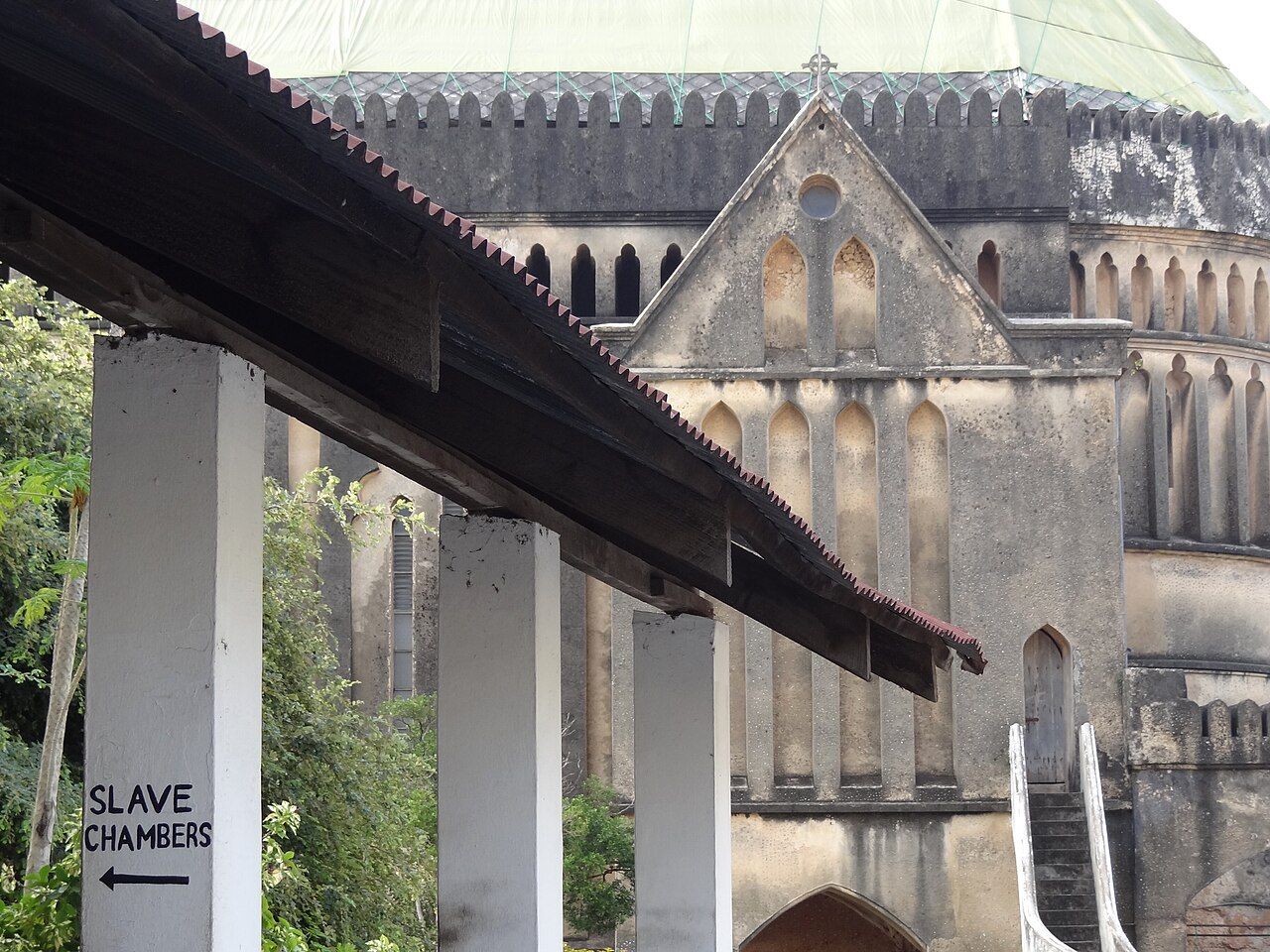
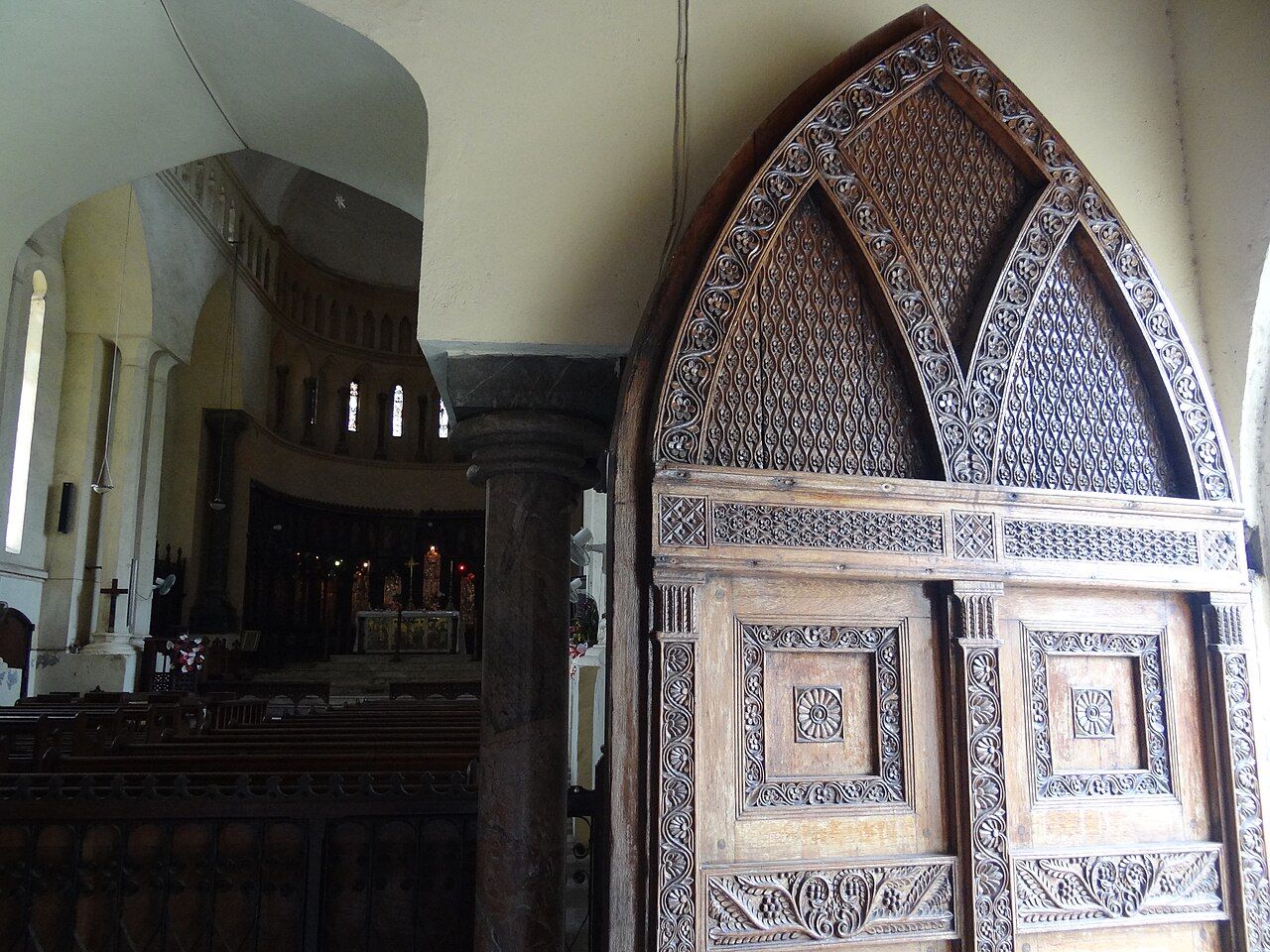
Architecturally, the cathedral is a mix of styles. It has Gothic arches and windows alongside elements that echo Islamic architecture, a rounded apse at the east end and a barrel-vaulted roof built of coral stone and concrete. The tower holds a clock, and the interior is cool and calm after the heat outside.
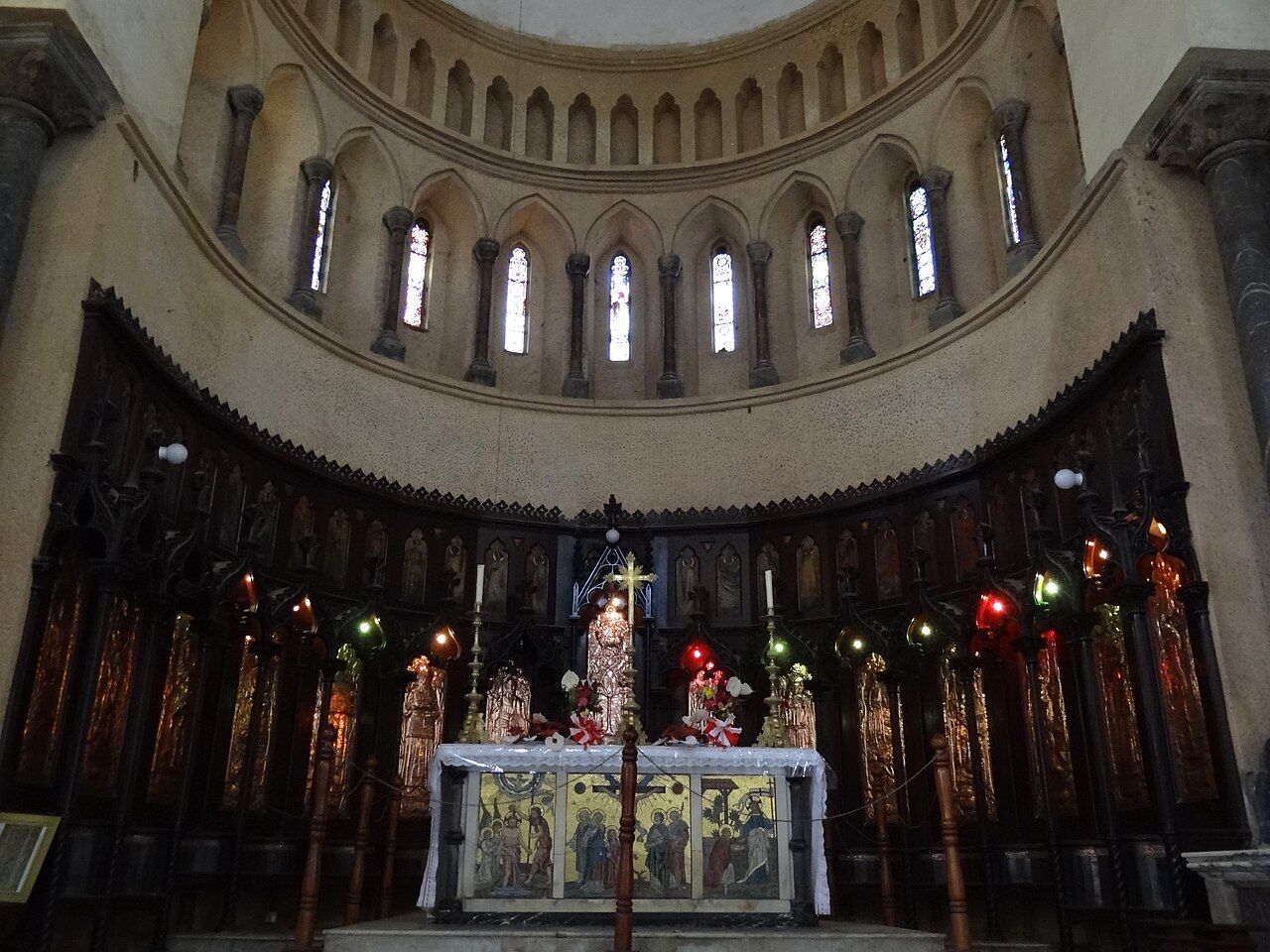
Inside, the altar is said to stand where the whipping post of the market once stood. Treat this as the tradition passed down at the site; it is how the place has been understood for generations. The interior has a carved wooden screen, stained-glass windows and memorials, and the cathedral still serves an active congregation. Services are held on Sundays and at other times, so expect visitors to be asked to wait or keep quiet during worship.
 Picture: Adam Jones from Kelowna, BC, Canada · Creative Commons BY-SA 2.0 (source file)

Pair it with Getting lost in Stone Town
The memorial and the chambers
In the grounds beside the cathedral is a sculpture that many visitors find the most affecting part of the site. It shows a small group of figures standing in a pit, with chains around their necks. The chains are said to have been used during the slave trade. The figures are not dramatic or graphic; their stillness is what makes them hard to look at.
Below a building next to the cathedral are small, low rooms with stone shelves and little light. These are presented on site as holding chambers where enslaved people were kept before sale. Historians have debated exactly how these rooms were used, and you may hear different views. Whatever their precise history, they give some sense of the confinement and fear people endured, and many visitors find a few minutes there more than enough.
An exhibition at the site, usually entered as part of a visit, covers the history of the East African slave trade, its routes and its effects, along with the campaign to end it. It is worth giving it time and reading it carefully. Panels on the walls set out how people were captured inland, marched to the coast and shipped across the water, and how the trade was finally brought to an end. Reading them before you see the chambers and the memorial gives the rest of the visit its proper weight.
 Picture: Adam Jones from Kelowna, BC, Canada · Creative Commons BY-SA 2.0 (source file)

Visiting with care
The site is a memorial and a place of worship, and a visit goes best when you treat it as both. Some practical points:
- Dress modestly. Cover shoulders and knees, as for any religious building in Stone Town.
- Allow time. An hour or two lets you see the exhibition, the cathedral and the memorial without hurrying.
- Keep your voice low in the chambers and the church.
- Think before you photograph. Photographs of the sculpture and the building are generally allowed, but posing or smiling selfies in the chambers or at the memorial are out of place. Respect any signs asking you not to take pictures.
- Do not photograph worshippers during services.
- Check practical details on the day. There is usually an entry fee, and opening times change, especially on Sundays and religious holidays.
The figures are not dramatic or graphic; their stillness is what makes them hard to look at.
Guides at the site can add context, but take your time on your own as well. Many visitors find they want to sit for a few minutes in the cathedral or the grounds afterwards. There is no right way to feel here.
Putting the site in context
The former market sits in the middle of a busy, living town. A few minutes' walk takes you to Darajani market, where people shop for fish and fruit as they do every morning, and to the lanes of the old town. Seeing the memorial in that setting is part of its power: the history is close to everyday life here, not sealed off from it.
The story also connects with other places on the island and beyond. The clove plantations that relied on enslaved labour are part of the background to the spice farms visitors see today, and the island of Pemba to the north was another centre of plantation agriculture. On the mainland, the old caravan town of Bagamoyo also preserves memories of the trade.
Zanzibar's population today includes people whose ancestors came from many places, including descendants of people who were enslaved. The way the site is presented continues to be discussed, and that conversation is part of how the island remembers. Coming with an open mind and a willingness to learn is the most respectful thing a visitor can bring.
With photos by Eric Kilby · Creative Commons BY-SA 2.0 (source file); Harvey Barrison from Massapequa, NY, USA · Creative Commons BY-SA 2.0 (source file); Erasmus Kamugisha · Creative Commons BY-SA 4.0 (source file)


