
The Old Fort and the House of Wonders
Two neighbours on the Stone Town seafront tell the island's story in stone: an Omani fort with an open-air stage and a sultan's palace now under repair.
 Picture: Erasmus Kamugisha · Creative Commons BY-SA 4.0 (source file)
- From Stone Town
- On the Stone Town seafront
- Pace
- Half day
- Getting there
- Walk to the seafront by Forodhani
- Bring
- Water, a hat, modest clothes
The waterfront of Stone Town is lined with buildings that tell the story of Zanzibar's rulers. Two of them sit side by side behind Forodhani Gardens: the brown, battlemented walls of the Old Fort and the tall white House of Wonders. One is a fortress built for defence; the other a palace built to impress. Together with the palaces further along the seafront, they make a short and rewarding walk through several centuries.
The Old Fort: Ngome Kongwe
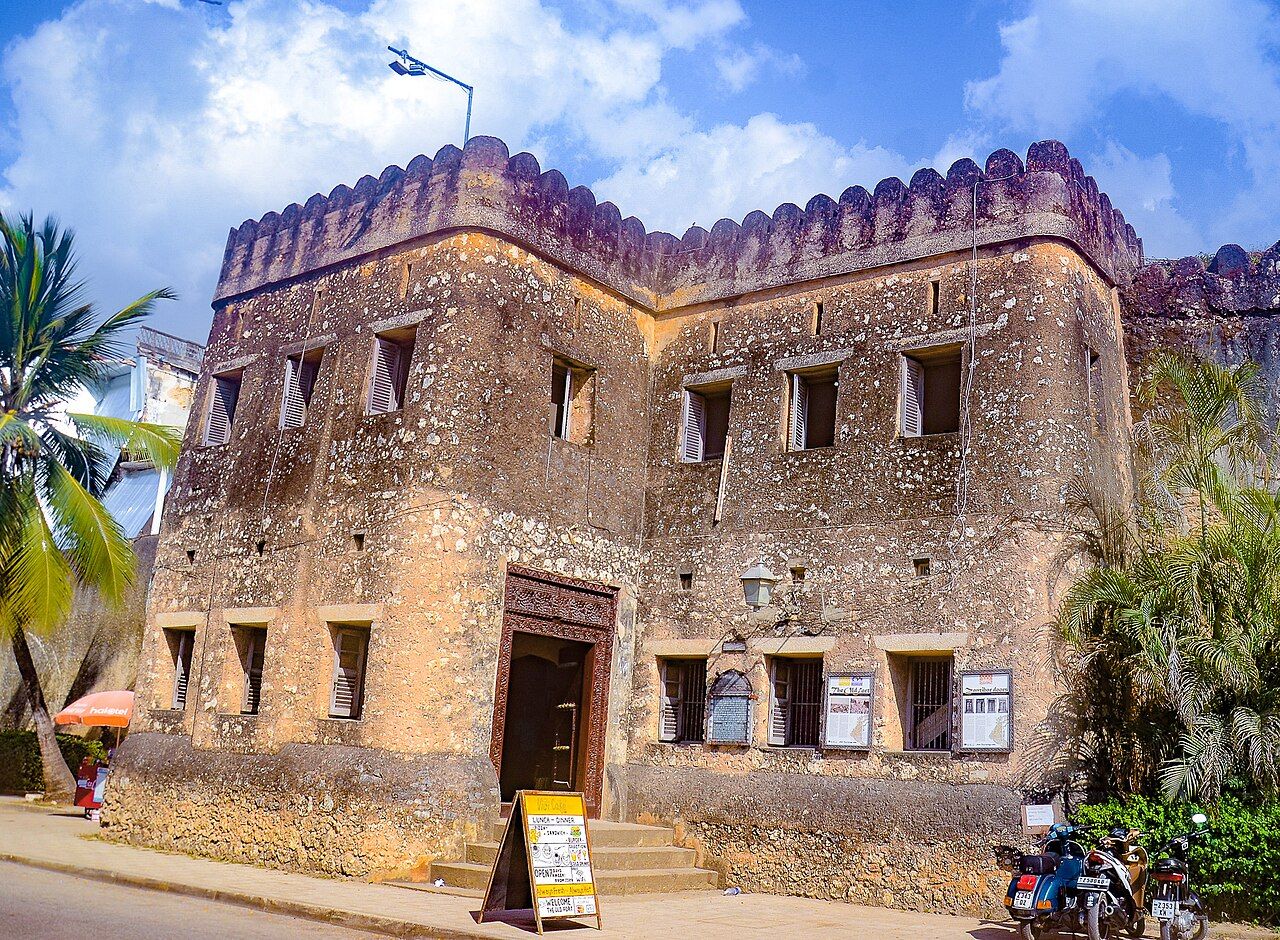
The Old Fort, Ngome Kongwe in Swahili, is the oldest standing building of its kind in Stone Town. Omani Arabs built it around the turn of the eighteenth century, after they had driven the Portuguese from the island. It was put up on the site of an earlier Portuguese chapel, and parts of the older structure are thought to be incorporated in its walls.
The fort is a rough square of thick coral stone walls with crenellated tops and squat towers. Over the years it is said to have served as a garrison, a prison, a railway depot in the colonial era and even a women's tennis club, before becoming a cultural space. Little of its military past is obvious inside today. The central courtyard is open and grassy, with trees and a few stalls around the edges.
 Picture: Moongateclimber · Creative Commons BY-SA 4.0 (source file)

The amphitheatre
The fort's most striking modern feature is the open-air amphitheatre built inside the walls, with stone seating facing a stage. It hosts performances, concerts and festival events during the year, from music and dance to film screenings. Taarab, the sung poetry and orchestral music of the coast, is sometimes performed here, and an evening show under the walls is a fine way to hear it.
Entry to the courtyard has generally been free, though events and specific areas may charge.
The House of Wonders
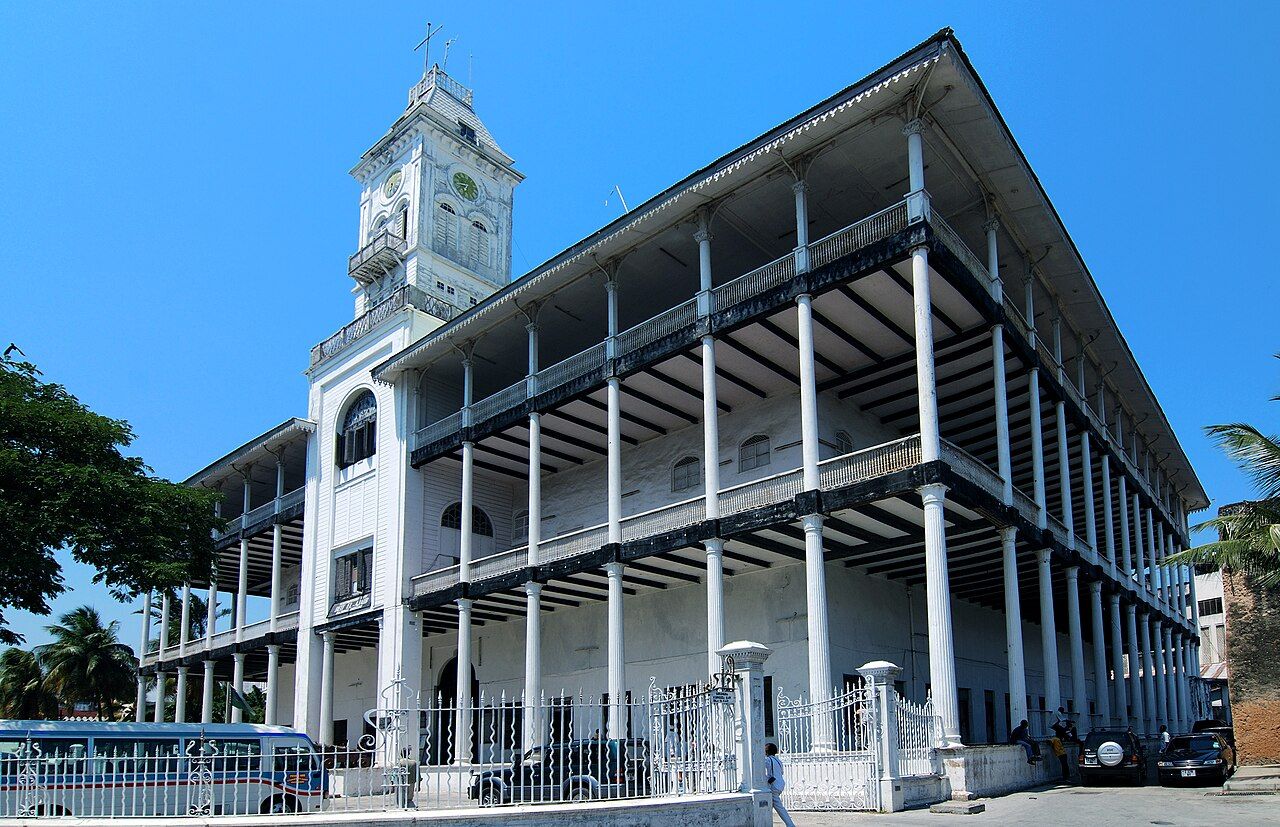
Next door stands the building that dominated the Stone Town skyline for more than a century: the House of Wonders, Beit al-Ajaib in Arabic. Sultan Barghash had it built in the 1880s as a ceremonial palace and reception hall. It rose several storeys above the town, ringed by tall columns and wide verandas, with a clock tower above.
The name came from its novelties. It is often described as the first building in East Africa with electric light and one of the first with a lift, which must have seemed astonishing at the time. In 1896 it was damaged during the short bombardment of the seafront palaces by British warships, and the clock tower was rebuilt afterwards. Later it served as government offices and then as a museum of history and culture.
Pair it with Getting lost in Stone Town
The collapse and restoration
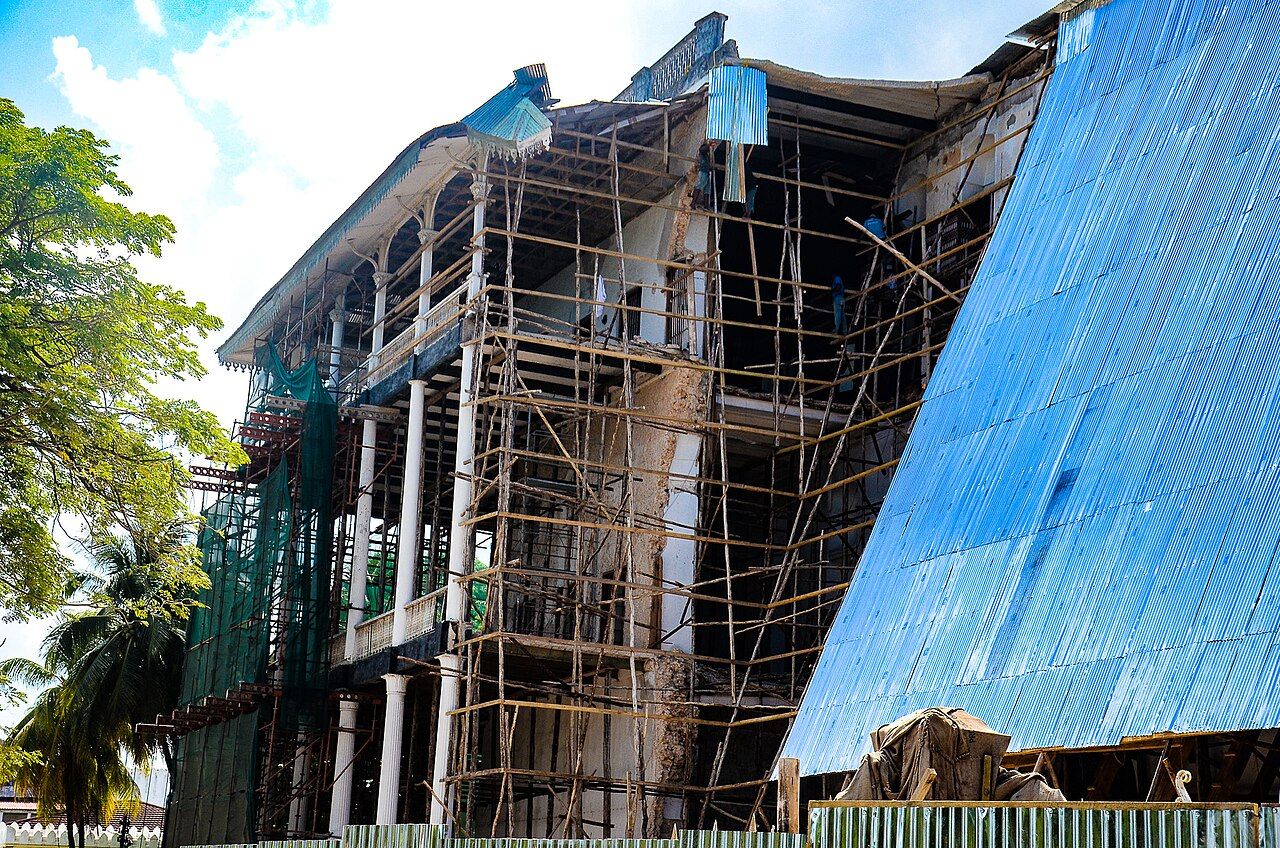
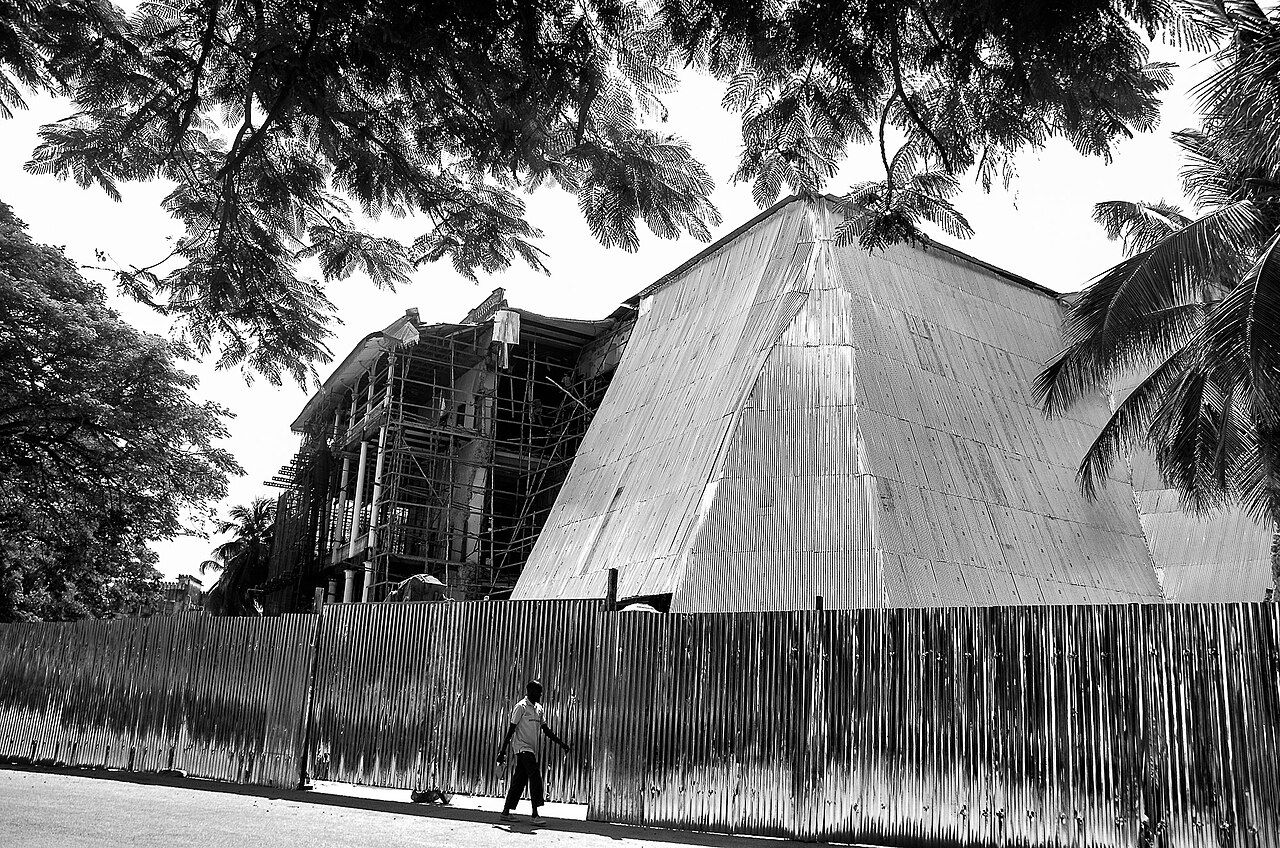
The building had suffered from decay for years, and it had already been closed to visitors for some time before the worst happened. In December 2020, during restoration work, a large section of the front and the verandas collapsed. The building has been under restoration since, behind fencing and scaffolding, and work has taken longer than first hoped.
 Picture: Erasmus Kamugisha · Creative Commons BY-SA 4.0 (source file)

What you see today depends on how far that work has progressed. You may find tall metal sheeting and scaffolding, or partly restored sections. Visitors cannot normally go inside while the work continues. Even from outside, the scale of the building and the effort to save it are striking.
 Picture: Erasmus Kamugisha · Creative Commons BY-SA 4.0 (source file)

The seafront palaces
North of the House of Wonders, the waterfront continues past more royal buildings. The most important is the Palace Museum, the former sultan's residence, which tells the story of the sultans and of life at court in the later nineteenth and twentieth centuries. Its upper floors look out over the harbour.
Some of the palace complex was destroyed or damaged in 1896 and later rebuilt, and other buildings along this stretch have had changing uses through colonial rule, the 1964 revolution and independence.
Walking north from here leads towards the port and the dhow harbour. To the south, back past the fort, the old town and its lanes begin.
Reading the seafront
It helps to think of the waterfront as a timeline. The fort reflects the Omani arrival and the struggle for control of the coast. The House of Wonders shows the confidence and wealth of the sultanate at its height, built partly on trade in ivory, cloves and enslaved people. The palace and the colonial buildings beyond tell of British influence, and the revolution of 1964 brought the sultanate to an end.
The history is not always comfortable, and some of the wealth on display came from the slave trade. A visit to the site of the former slave market, a short walk inland, adds an important perspective to these grand buildings.
Practical tips
- Go early or late in the day. The seafront can be very hot around midday, with little shade except under the trees of Forodhani.
- Combine the fort with an evening at Forodhani: catch a show in the amphitheatre if one is scheduled, then eat at the food stalls.
- Dress modestly, as elsewhere in Stone Town. Shoulders and knees covered are expected in town.
- Be ready for people offering to show you round. If you prefer to explore alone, decline politely.
- Opening times, prices and access to buildings under restoration change; ask on the spot.
Even if the House of Wonders is still wrapped in scaffolding when you visit, it is worth standing in front of it for a while. Few buildings in the region say as much about the island's past, and its long restoration is part of that story.
With photos by Eric Kilby · Creative Commons BY-SA 2.0 (source file); Harvey Barrison from Massapequa, NY, USA · Creative Commons BY-SA 2.0 (source file); Luganosamwel · Creative Commons BY-SA 4.0 (source file)


