
The carved doors of Stone Town
Heavy wooden doors covered in carving and brass studs are the signature of Stone Town. Learn to tell their styles apart and read the patterns on their frames.
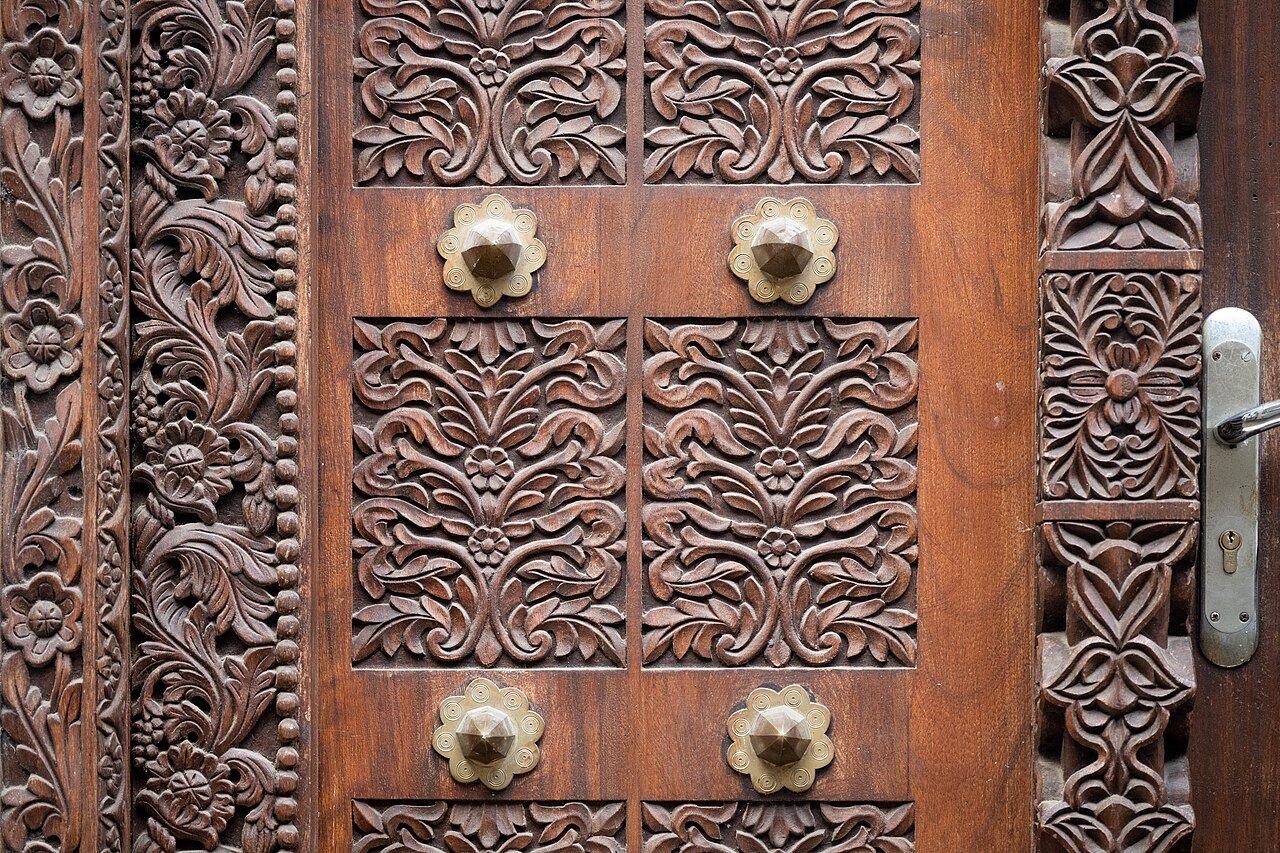 Picture: Eric Kilby · Creative Commons BY-SA 2.0 (source file)
- From Stone Town
- Throughout the old town
- Pace
- Easy
- Getting there
- Walk any lane in Stone Town
- Bring
- Comfortable shoes, patience, a zoom lens
Walk any lane in Stone Town and you will soon stop in front of a door. They are massive things, often taller than the room behind them needs, made of hardwood and covered in carved flowers, chains and vines. Many have rows of pointed brass studs. Some are faded to grey, some freshly oiled, a few lovingly restored and others split and patched. Together they are one of the clearest records of the town's history, and they turn a stroll through the old quarter into a slow treasure hunt.
Why the door mattered
In a Swahili coastal town the door was the face of the house. Merchant families built plain, solid stone walls and then spent money on the entrance, which showed the wealth and standing of whoever lived inside. A grand door was often among the first things made for a new house, and it could be fitted before the walls were finished. Doors were sometimes moved from an old house to a new one, so the age of a door and the age of its building do not always match.
The carving was done by skilled craftsmen, some of them from India and some trained locally, working in hard, durable timbers. Many doors carry a carved inscription across the lintel, often a verse from the Quran or a date, which blessed the household and marked when the door was made.
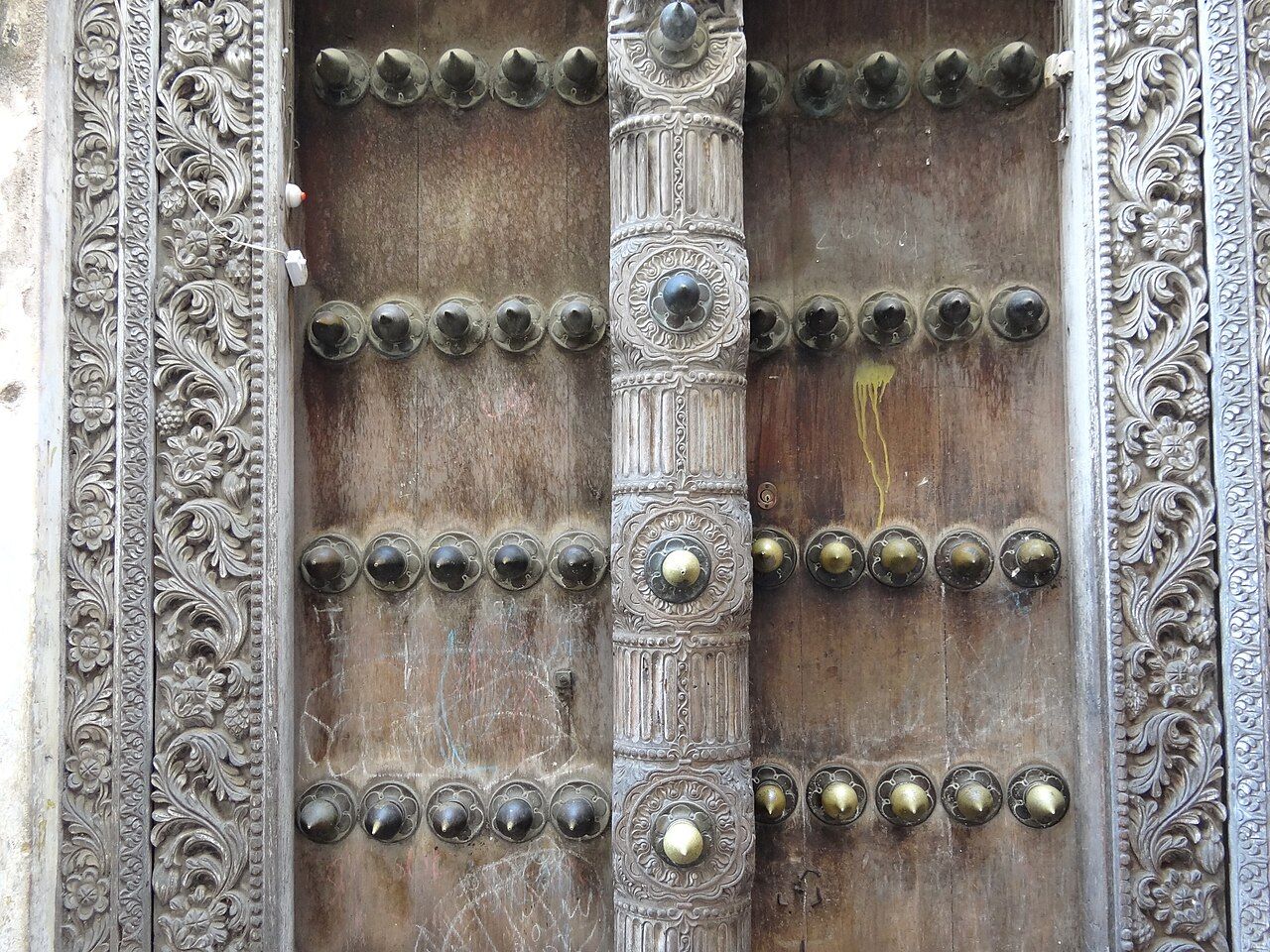 Picture: Adam Jones from Kelowna, BC, Canada · Creative Commons BY-SA 2.0 (source file)

Two main styles
Most of the doors fall broadly into two families, though many mix features of both.
Omani or Arab style
The older type tends to be rectangular, with a flat, heavy lintel carved with dense geometric and floral patterns and often an inscription. The frame is wide and the two leaves meet at a central post. These doors are generally associated with the period when Omani rulers and merchants dominated the island in the nineteenth century.
Indian style
The later Indian style usually has a rounded or semicircular top above the door, filled with carving, and more flowing plant and flower motifs. Many have large conical brass studs. These became common later in the nineteenth century and into the early twentieth, when merchants with roots in Gujarat and elsewhere in India were prominent in Zanzibar's trade.
Once you have the two types in mind, the lanes start to sort themselves. You notice a cluster of arched Indian doors along one street and a square Omani doorway with a fading inscription around the corner.
Reading the carving
The motifs are not random decoration. Over the years a set of meanings has been attached to them, and you will hear them repeated in Stone Town. Treat them as tradition and interpretation rather than fixed fact.
- Chains carved around the frame are often said to symbolise security, protecting the household. Some visitors assume a link with the slave trade, but that reading is generally considered mistaken.
- The lotus is usually read as a sign of fertility or prosperity, reflecting Indian influence.
- Fish stand for the sea and plenty, and perhaps for fertility as well.
- The date palm suggests abundance and hospitality.
- Frankincense and other trees point to wealth and the old trade routes with Arabia.
- Vines and rosettes fill frames and panels, and some carvers built whole family stories into their choices.
Pair it with Getting lost in Stone Town
The brass studs
The pointed brass studs are the detail everyone asks about. The usual explanation is that they come from India, where heavy spikes on doors were meant to stop elephants from forcing a gate. Zanzibar has no wild elephants, so here the studs were purely decorative, a mark of status borrowed from another tradition. It is a good story, and like many door stories it is best told with a small caveat.
Restoration and loss
The doors have had a hard time. Salt air, termites, damp and rot wear them down, and for a long period many were neglected as the old houses decayed. Some were sold off and shipped abroad. The town's conservation authorities have since worked to protect and record them, and owners of listed buildings are expected to keep original features where possible.
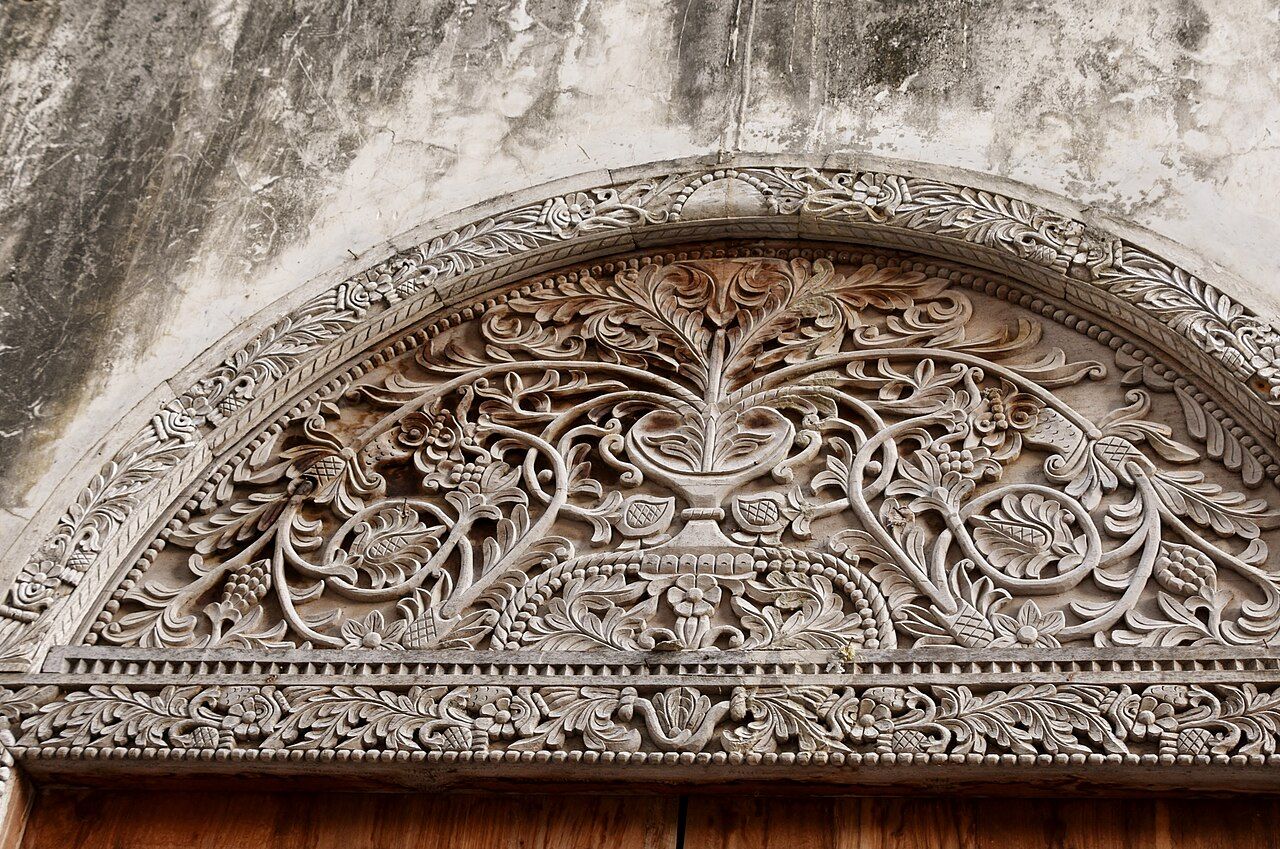 Picture: Richard Mortel from Riyadh, Saudi Arabia · Creative Commons BY 2.0 (source file)

Restoration is slow work. A badly damaged frame may be patched with new timber carved to match, and you can sometimes see the difference between the darker old wood and the paler repair. Carvers still work in Stone Town and elsewhere on the island, producing new doors for homes, public buildings and buyers overseas. Watching a carver at work, chisel and mallet tapping out a vine, is a reminder that this is a living craft and not just a museum piece.
If you buy a carved item, ask where the wood comes from. Some hardwoods are under pressure, and a reputable carver will usually be glad to explain.
Looking without intruding
A door is the entrance to someone's home. It is fine to stop and admire the carving and to photograph the woodwork, but keep the lens off the people inside if a door is open, and step aside for anyone coming in or out. Some of the finest doors belong to private houses whose owners are tired of crowds on the step; a quick greeting or a nod costs nothing.
The best way to see the doors is simply to walk. They are found right across the old town, from the lanes near Darajani market to the seafront palaces, and the cathedral at the former slave market has fine carved doors of its own inside. Go in the morning, when the light is softer and the lanes are quieter, and let one door lead you to the next.
A few practical notes
- The light in the narrow lanes changes quickly. Morning and late afternoon give the most even shade on the carving.
- Most doors are visible from the lane, so there is no fee to look.
- Dress modestly while you wander, as you would anywhere in the town.
- Carry water; a door hunt can easily turn into two or three hours on foot.
With photos by Harvey Barrison from Massapequa, NY, USA · Creative Commons BY-SA 2.0 (source file); Erasmus Kamugisha · Creative Commons BY-SA 4.0 (source file); Luganosamwel · Creative Commons BY-SA 4.0 (source file)


