
Forodhani Gardens after dark
By day it is a shady seafront park. At sunset Forodhani fills with families, divers, grills and smoke, and becomes the town's evening meeting place.
 Picture: Harvey Barrison from Massapequa, NY, USA · Creative Commons BY-SA 2.0 (source file)
- From Stone Town
- On the Stone Town seafront
- Pace
- Easy
- Getting there
- On the seafront by the Old Fort
- Bring
- Hand sanitiser, small notes, a light layer
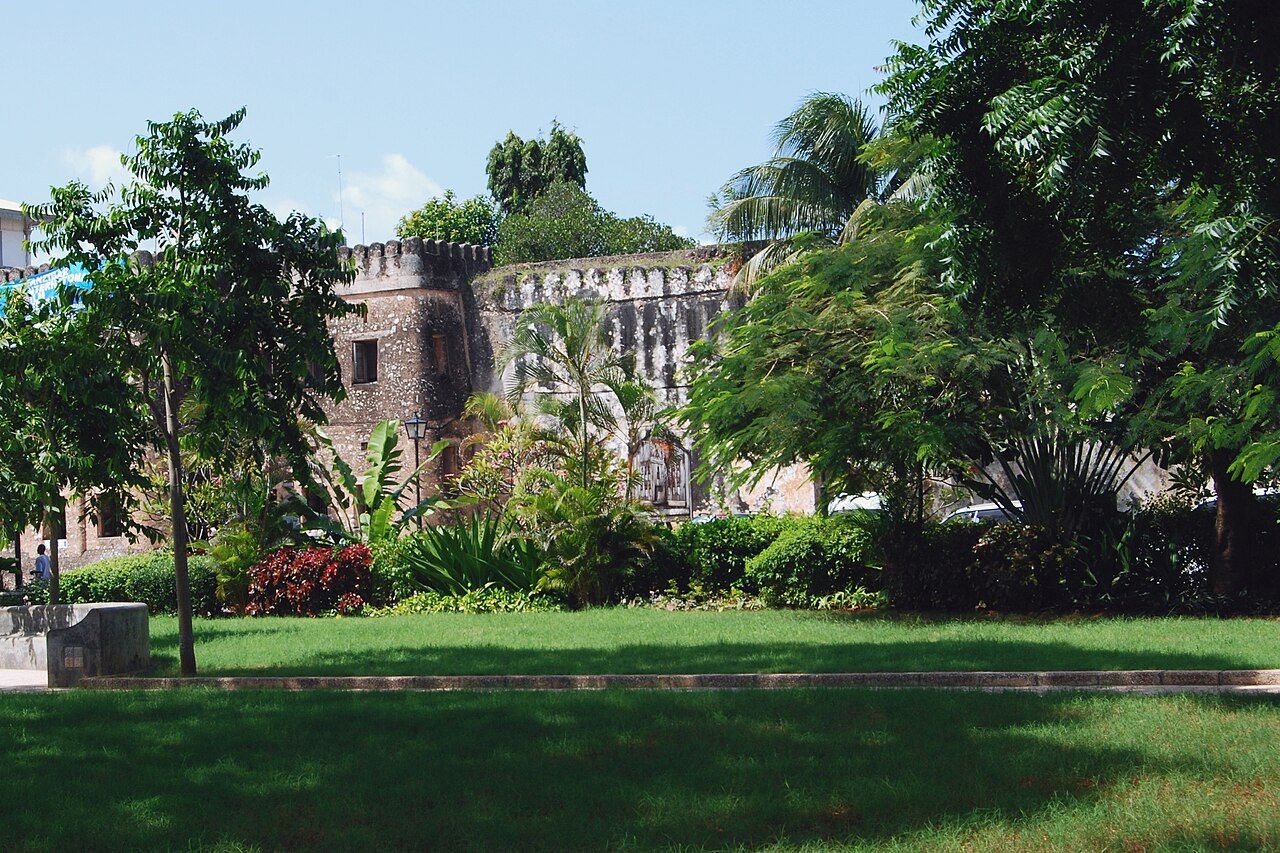
Forodhani Gardens is the small public park on the Stone Town waterfront, directly in front of the Old Fort and the House of Wonders. The name comes from forodha, the Swahili word for customs, recalling the customs house that once stood nearby. In the morning it is a calm place of lawns, benches and big shade trees with the harbour beyond. In the evening it turns into something else: the town's living room, a place to eat, meet and watch the sun go down over the sea.
The garden by day
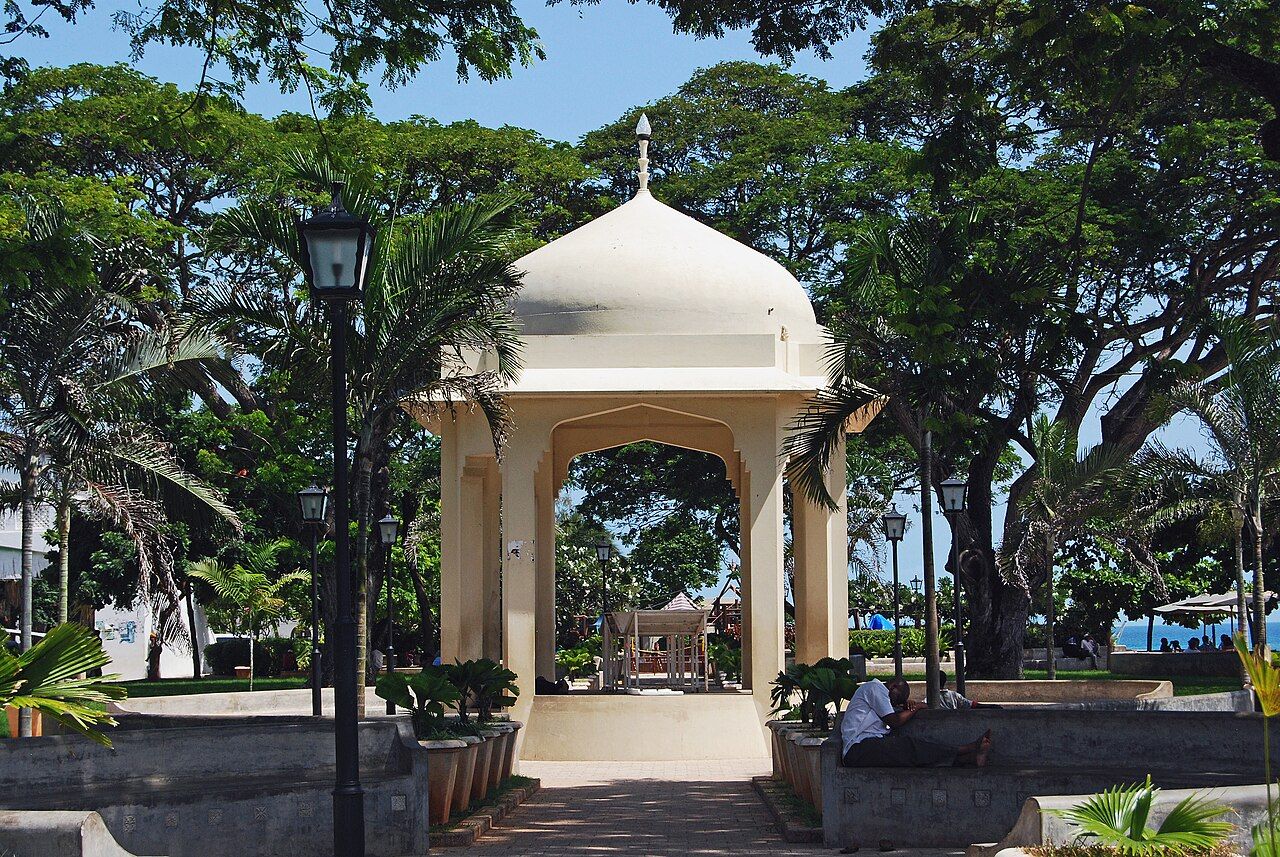
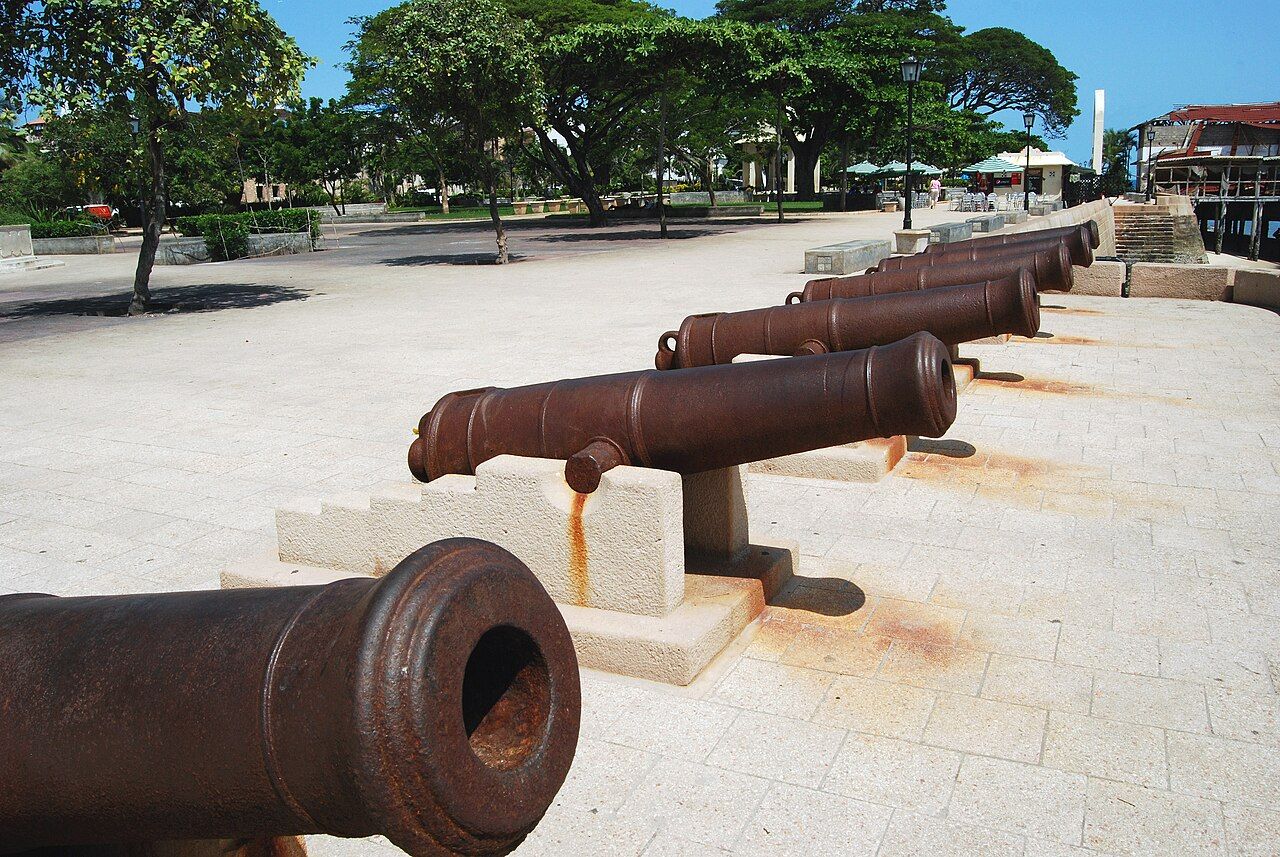
The gardens were laid out on the seafront in the colonial period and have been rebuilt more than once. A major restoration in the late 2000s repaired the sea wall, paths, lawns and lighting and gave the park the shape it has now. A domed white pavilion stands in the middle, old cannons line the waterfront, and benches sit in the shade of large trees.
 Picture: Harvey Barrison from Massapequa, NY, USA · Creative Commons BY-SA 2.0 (source file)

During the day it is a good place to rest between sights. The Old Fort is right behind you, and the seafront palaces and the port lie a short walk along the water. Office workers eat lunch on the benches, students study in the shade, and couples walk along the wall. It is a public park, so there is nothing to pay to enter.
Sunset over the channel
Stone Town faces west, and Forodhani is one of the best places in town to watch the sun go down. The light turns the harbour gold, small boats and dhows cross in silhouette, and the islands offshore fade into the haze. In the dry months the sky is usually clear, and the sunset becomes a daily event that draws a crowd along the sea wall.
This is also when the boys arrive. Groups of young local swimmers dive and somersault off the sea wall into the harbour, climbing back up the stones and doing it again. It is a long tradition and great fun to watch. Keep back from the edge, and if you want photographs, a smile and a nod first are courteous. Some of the boys may expect a small tip for posing; it is your choice.
Swimming yourself is not a good idea here: the water near the port is used by boats and is not particularly clean.
The evening food stalls
As the light fades, food sellers set up rows of tables and grills along the paths. Lanterns go on, smoke rises, and the gardens fill with locals and visitors. The stalls have changed over the years and the exact offering varies, but the general pattern is consistent.
- Grilled seafood on skewers or laid out on the table: fish, squid, octopus, prawns and sometimes lobster, with a price that depends on what you pick.
- "Zanzibar pizza", a thin dough folded around egg, minced meat or vegetables, or a sweet filling, and fried on a hot plate.
- Urojo, often called Zanzibar mix, a tangy soup with potato, fritters and toppings.
- Sugarcane juice pressed fresh, often with ginger and lime.
- Grilled maize, cassava and chapati as cheaper sides.
Pair it with Eating on the island
For more on these dishes and where they come from, see eating on the island.
Eating with care
Forodhani's food is part of the experience, but it pays to be thoughtful. Seafood can sit out on display for hours in the warm air, and some stomachs do not cope well.
- Choose what is cooked hot in front of you. Ask for your seafood to go back on the grill until it is properly heated through.
- Look at turnover. Busy stalls with local customers usually have fresher food.
- Agree the price before cooking. Ask what each item costs and what the total will be, to avoid confusion when the plate arrives.
- Be wary of water and ice if you have a sensitive stomach, and peel fruit yourself.
- Clean your hands before eating; not every stall has water.
Sellers can be persistent and will call you over from every side. A friendly smile and a no, thank you, are usually enough. Prices for visitors are often higher than for locals; it is fine to compare a few stalls before you decide.
Around the gardens
From Forodhani it is easy to fold the evening into a longer walk. The Old Fort and the House of Wonders stand right behind the park, and from the waterfront the lanes of the old town lead inland. Heading south along the shore takes you past old houses and small beaches.
 Picture: Harvey Barrison from Massapequa, NY, USA · Creative Commons BY-SA 2.0 (source file)

After dark, the gardens are well lit and busy, and most people feel comfortable there. As with any crowded place, keep an eye on bags and phones. When you leave, use the main lit streets rather than the darkest lanes.
Respect and timing
Forodhani is a local public space before it is a visitor attraction. Families come here for an evening out, and many people use the gardens to pray, rest or meet friends. Modest dress is expected, as it is in the rest of Stone Town.
During Ramadan the rhythm changes. The daytime is quiet, and the evening crowd gathers around sunset, when the fast is broken. The atmosphere can be especially warm, but visitors should be discreet about eating and drinking in public during daylight hours. Stall times and the general set-up vary by season and occasion, so take the evening as it comes.
With photos by Adam Jones from Kelowna, BC, Canada · Creative Commons BY-SA 2.0 (source file); Eric Kilby · Creative Commons BY-SA 2.0 (source file); Erasmus Kamugisha · Creative Commons BY-SA 4.0 (source file)


