
Getting lost in Stone Town
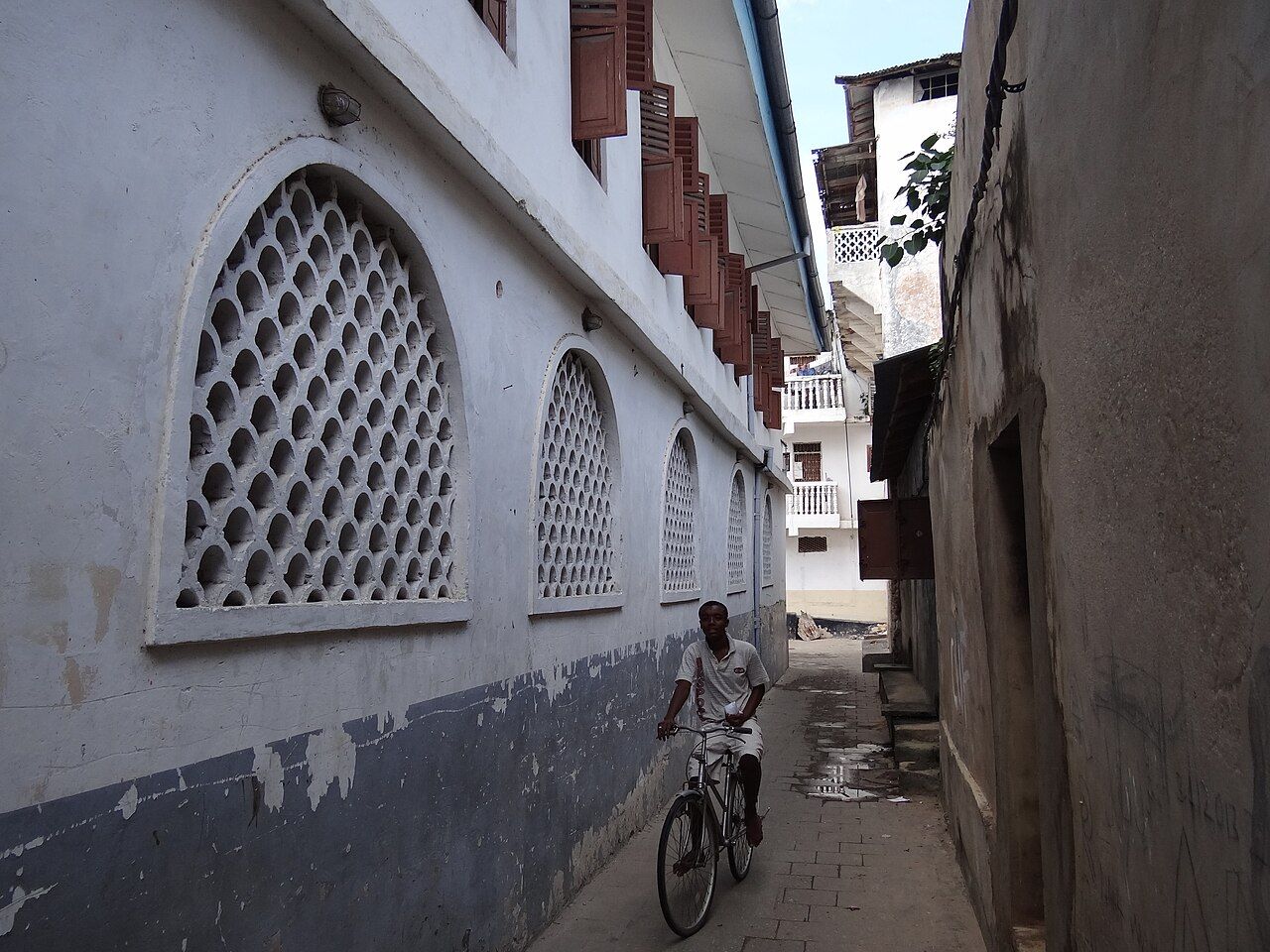
The old town is a knot of narrow lanes with no straight lines. Losing your bearings is part of the visit, and finding them again is easier than it looks.
 Picture: Adam Jones from Kelowna, BC, Canada · Creative Commons BY-SA 2.0 (source file)
- From Stone Town
- You are already in it
- Pace
- Half day
- Getting there
- On foot from the seafront
- Bring
- Light scarf, covered shoulders, small notes, a fully charged phone
Stone Town, Mji Mkongwe in Swahili, is the old quarter of Zanzibar City on the west coast of Unguja, the main island. It is a UNESCO World Heritage Site, and most of it is a tangle of lanes too narrow for cars. Houses of coral stone and lime rise three or four storeys on either side, so the lanes stay shaded for much of the day. Scooters and bicycles squeeze through, handcarts rumble over the paving, and the smell of cooking oil, cloves and damp plaster drifts out of open doorways.
The way to see it is slowly and without a plan. A map helps you get home, but it will not tell you much about the place. The best of Stone Town is in the corners you did not mean to reach.
A maze built for shade and talk
The lanes were never laid out on a grid. They grew around houses, mosques and courtyards over the nineteenth century, when the town was the busy capital of an Omani sultanate and a trading port facing India and Arabia. The result is a pattern of bends, dead ends and small open squares where several lanes meet. In the heat of the afternoon, the narrowness is the point: tall walls close together keep the sun off the street.
Along the front of many houses runs a baraza, a stone bench built into the wall. This is where the town talks. Older men sit there in the late afternoon with coffee in tiny cups, a game of dominoes or bao on the go, watching the lane go by. The baraza is part of the house but also part of the street, and it says a lot about how life here is lived in public. You may be invited to sit; it is fine to accept for a few minutes, and equally fine to smile and walk on.
 Picture: Timothy A. Gonsalves · Creative Commons BY-SA 4.0 (source file)

Look up as you walk. Carved balconies, wooden shutters, fretwork screens and lime-washed walls stained by decades of rain sit above every lane. Many buildings are in good repair; others are crumbling, with fig roots in the masonry. The town's famous carved doors are everywhere, and they deserve their own slow walk through the carved doors of the old merchant houses.
The call to prayer and the rhythm of the day
Stone Town is a largely Muslim town with dozens of mosques, many of them small and easy to miss behind a plain doorway. Five times a day the adhana, the call to prayer, rises from loudspeakers across the quarter, one voice overlapping the next. The dawn call is often the first sound you hear, and the one at sunset seems to slow the whole town down.
The day has a shape. Mornings are busy and fairly cool, with shutters opening and traders setting out goods. Midday is hot and quiet. Late afternoon is when the lanes fill again, and evenings bring people out to the seafront. On Friday around midday, the main prayer of the week draws men to the mosques and some shops close for a while.
Non-Muslim visitors generally do not enter mosques in Stone Town unless clearly invited, and photographing worshippers is unwelcome. During Ramadan the daytime town is quieter and more restrained; eating, drinking and smoking in the street should wait until after sunset. The page on greetings, dress and Ramadan covers this in more detail.
 Picture: Rod Waddington from Kergunyah, Australia · Creative Commons BY-SA 2.0 (source file)

How to find your way
Getting lost is easy and mostly harmless. The quarter is small, roughly a triangle with the sea on two sides, and almost every lane eventually spills out somewhere you recognise. A few habits make it simpler.
- Use the sea. The open water lies to the west and north. If you head downhill towards brighter light and a breeze, you usually reach the waterfront.
- Know the inland edge. The wide road along the landward side of the old town follows the line of a creek that was filled in long ago. Reach it and you have left the maze.
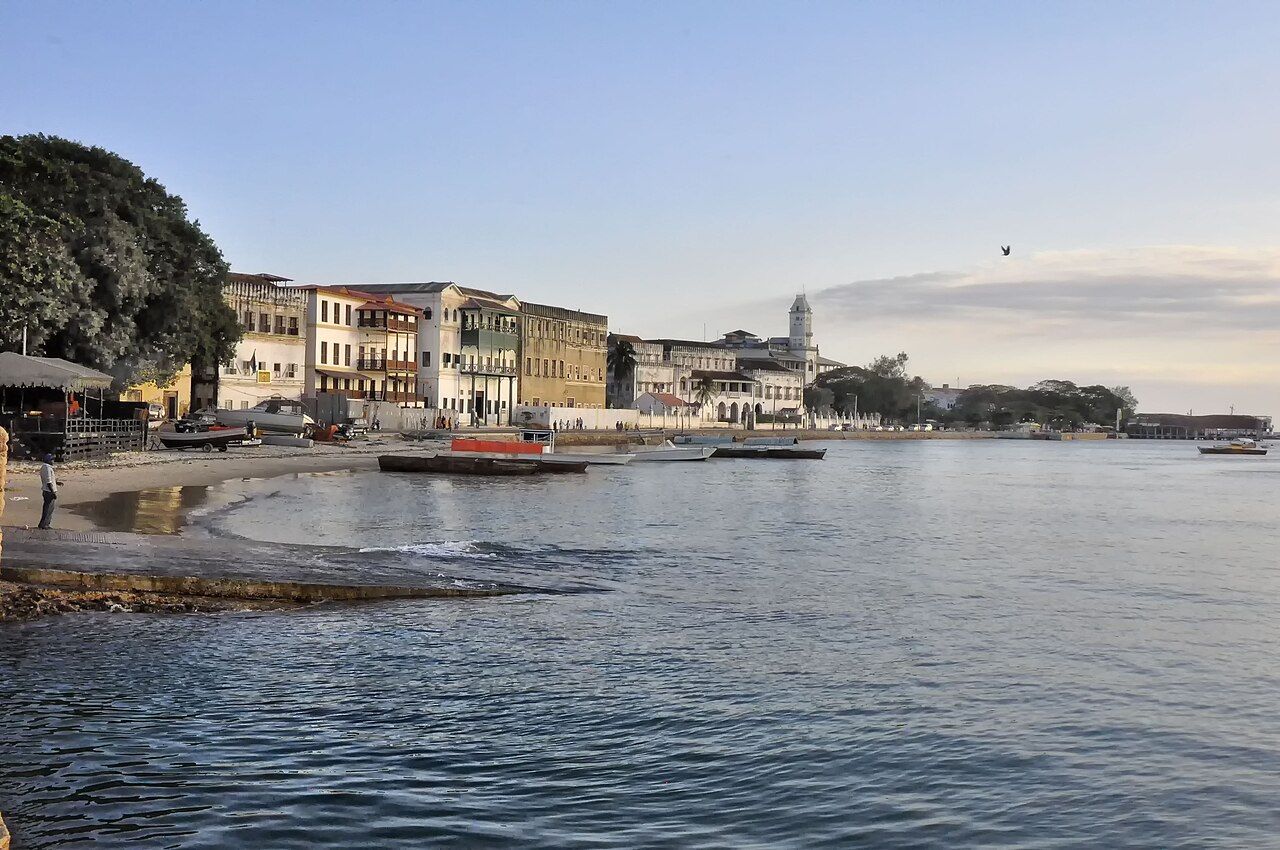
- Pick landmarks. The tower of the Anglican cathedral, the tall white House of Wonders on the seafront and the Old Fort are good reference points.
- Save your starting point offline. Phone maps work, though the signal can blur between high walls, and some lanes appear as gaps.
- Ask a shopkeeper rather than a self-appointed guide. People will offer to walk you somewhere and then expect payment. A polite hapana, asante (no, thank you) is enough.
Lanes are generally safe in daylight. After dark, stick to lit, busier routes, keep your phone out of sight and avoid deserted stretches, just as you would in any old town.
Pair it with The Old Fort and the House of Wonders
Some of the most rewarding wandering is between the big sights. Walk from the cathedral at the site of the former slave market down towards Darajani, then cut back west through the residential lanes, and you see the town as people live in it: children walking home from school, women chatting in doorways, a carpenter planing a plank on the step.
Rooftops and the waterfront
Above the lanes, Stone Town has a second level. Many of the taller buildings have flat roofs or rooftop terraces, and from up there the town becomes a jumble of tin roofs, satellite dishes, minarets and the cathedral spire, with the sea on the horizon. Several public buildings and some cafés open their roofs to visitors at sunset; prices and access change, so ask before you climb.
 Picture: Timothy A. Gonsalves · Creative Commons BY-SA 4.0 (source file)

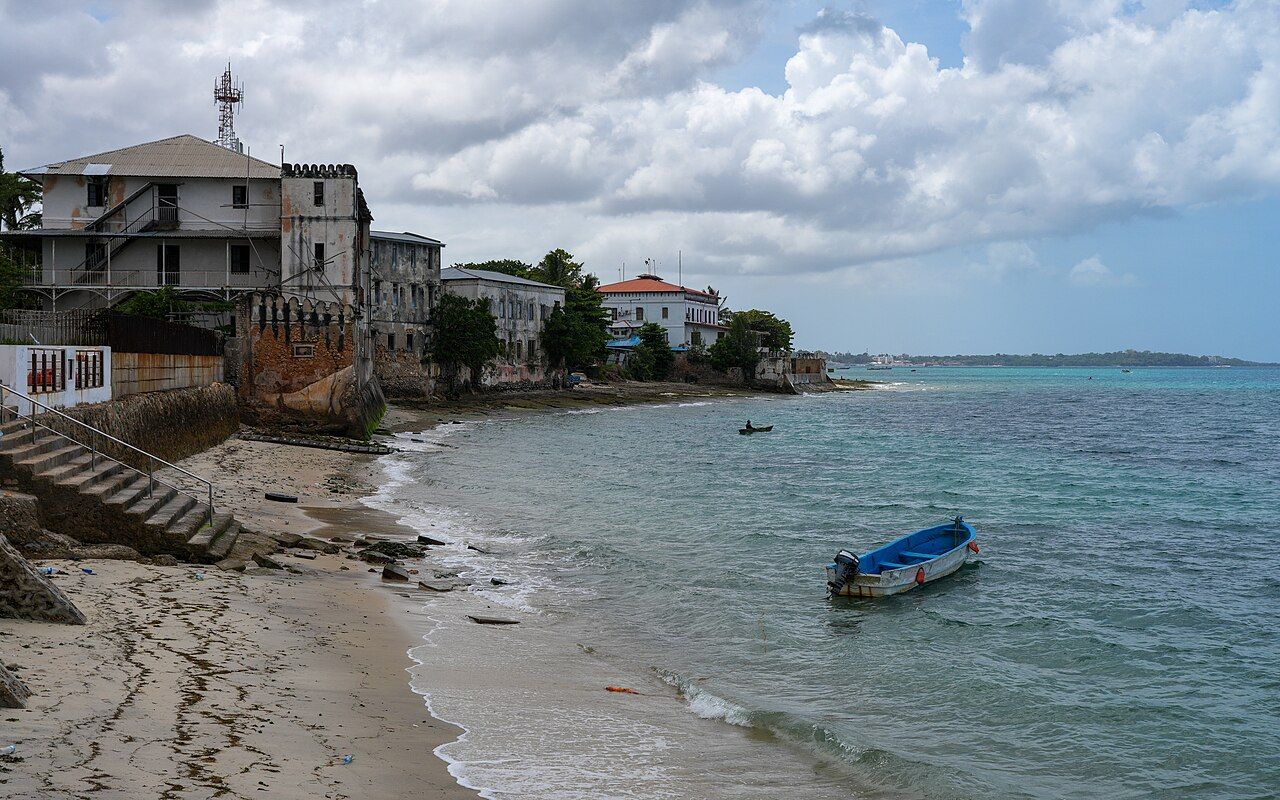
The waterfront itself is the easiest place to reset. South of the Shangani area, the old houses stand right on the shore, with small beaches below them where boats are pulled up and children swim. Heading north, the seafront leads to Forodhani Gardens, the Old Fort and the port. At sunset the channel turns gold and the dhows come in under sail.
 Picture: Timothy A. Gonsalves · Creative Commons BY-SA 4.0 (source file)

The lanes are worth seeing at more than one time of day. Early morning, before the heat, they are washed and quiet. Late afternoon has the best light and the most life. After dark, the lanes empty and the seafront fills.
Photographs and good manners
Stone Town is extraordinarily photogenic, and it is also home to thousands of people who did not choose to be in your pictures. A few points of courtesy go a long way.
- Ask before photographing anyone, and accept a no with good grace. Women especially may rather stay out of your pictures, and that wish deserves respect.
- Do not point a camera into homes, courtyards or mosques.
- Dress modestly in the town: shoulders and knees covered for everyone. Beachwear belongs on the beach.
- Greet people. A simple jambo, or shikamoo to an older person, changes the tone of any encounter.
- Drones are subject to permits and restrictions in Tanzania.
The best of Stone Town is in the corners you did not mean to reach.
Above all, slow down. The Swahili phrase pole pole, slowly slowly, is said so often to visitors that it becomes a joke, but in these lanes it is good advice. Sit on a baraza for a moment, listen to the town, and let the maze do the rest.
With photos by Eric Kilby · Creative Commons BY-SA 2.0 (source file); Harvey Barrison from Massapequa, NY, USA · Creative Commons BY-SA 2.0 (source file); Luganosamwel · Creative Commons BY-SA 4.0 (source file)


