
Clove, nutmeg and cinnamon: the spice island
Zanzibar's reputation was built on a dried flower bud. A walk through a spice farm shows how cloves and their neighbours grow, and why the trade shaped the island's past.
 Picture: Bärbel Miemietz · Creative Commons BY-SA 4.0 (source file)
- From Stone Town
- Half an hour by road
- Pace
- Half day
- Getting there
- Inland villages north and east of town
- Bring
- Hat, water, small change, a curious nose
Ask anyone on the coast of East Africa what Zanzibar is known for and they will probably say spices. The island and its neighbour Pemba were once among the world's biggest producers of cloves, and the smell of drying buds still drifts out of villages in season. A visit to a spice farm is one of the most common half-day trips from Stone Town, and a good one, as long as you know what you are looking at.
What a spice farm visit is
Most farms that take visitors are mixed smallholdings rather than neat plantations. Trees, shrubs and climbers grow together in a shady jumble, with cassava and bananas planted in the gaps. A walk usually takes an hour or two, moving from plant to plant while someone crushes a leaf, scrapes a bark or splits a fruit and asks you to guess what it is.
The farms cluster in the inland villages north and east of Stone Town, where the soil is deeper than on the coral rag of the coast. Many visits finish with a tasting of fresh fruit and spiced tea, and often a table of small packets for sale. Buying is never required. If you do buy, whole spices keep far better than ground ones.
How the spices grow
Seeing the plants is the real point of the visit, because most of us only ever meet spices in jars.
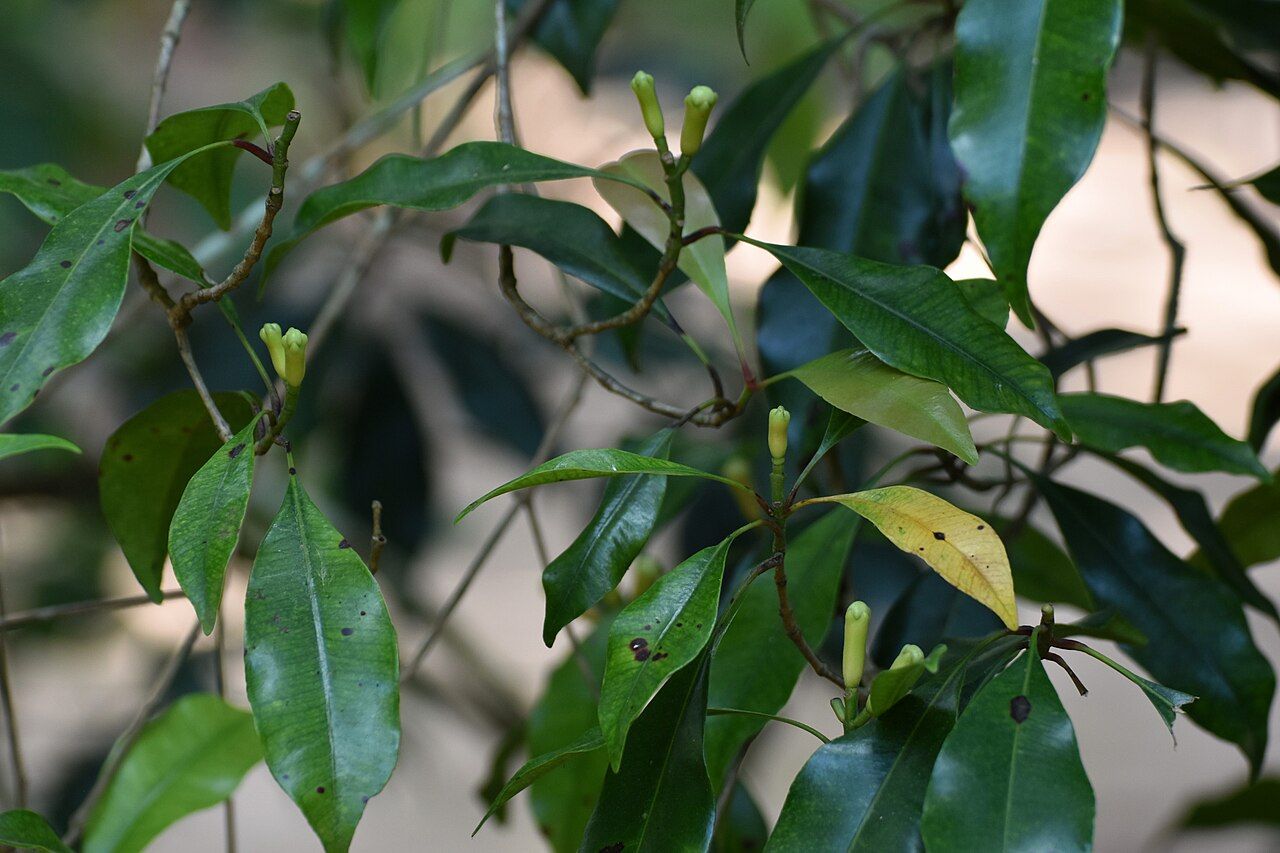
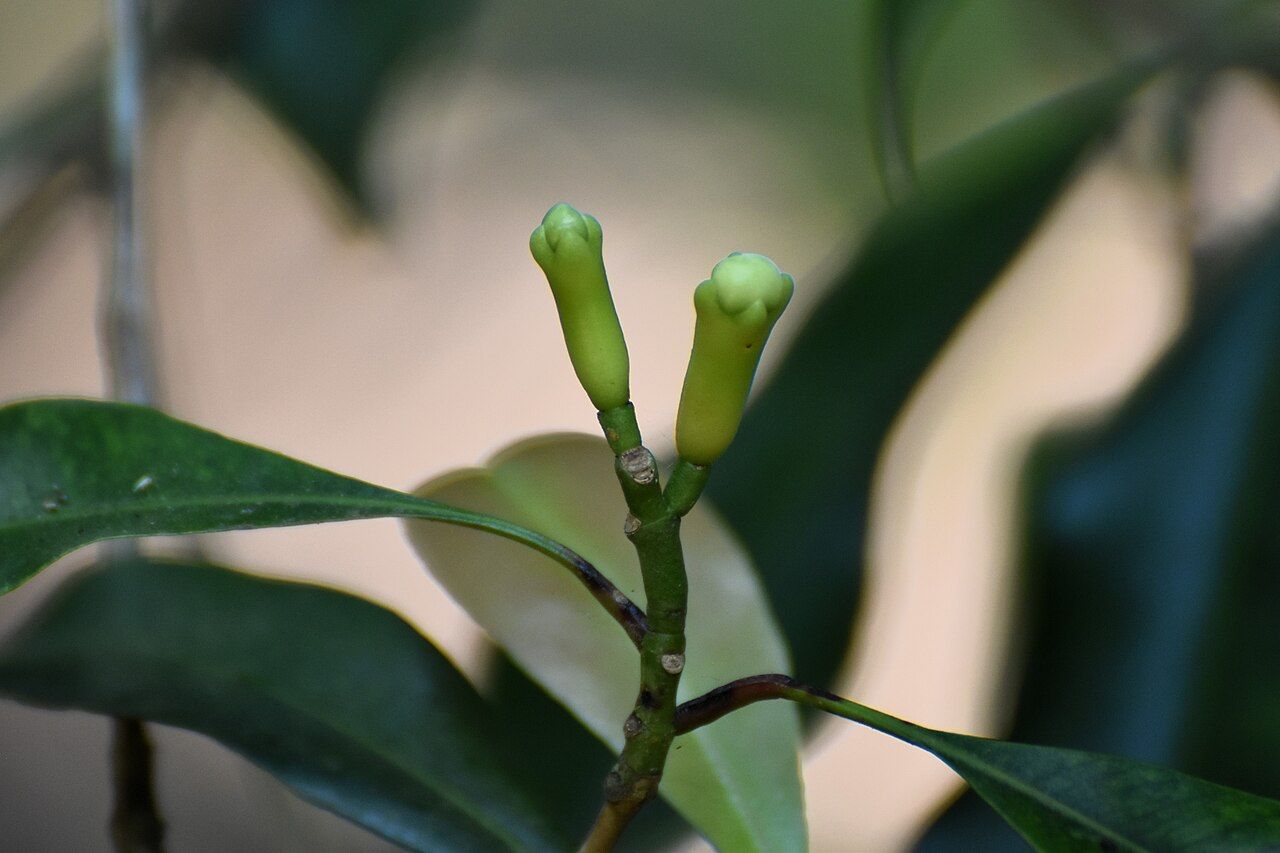
- Cloves are the unopened flower buds of a tall evergreen tree. They are picked by hand while still pink-green, then spread out in the sun to dry until they turn dark brown. Left on the tree, the buds open into small fluffy flowers and are useless for the trade.
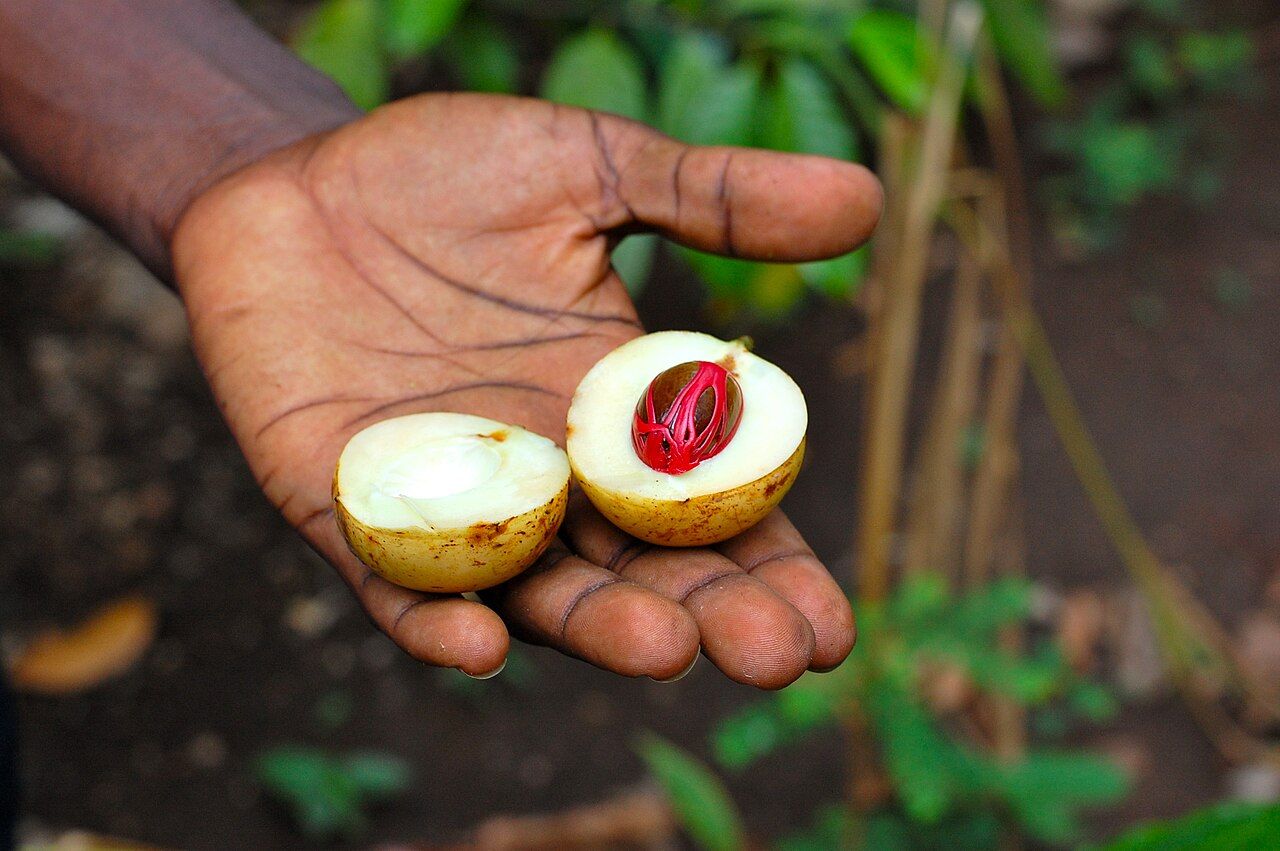
- Nutmeg grows inside a fruit that looks like a small apricot. Split it and you find a dark seed wrapped in a bright red lace. The seed is nutmeg; the lace, dried, becomes mace.
- Cinnamon is the inner bark of a tree, peeled from young shoots and left to curl into quills. The leaves smell of it too when crushed.
- Black pepper is the berry of a climbing vine that winds up the trunks of other trees. Green, black and white pepper all come from the same plant, picked and processed differently.
- Vanilla is the pod of a climbing orchid, and each flower has to be pollinated by hand outside its native range.
 Picture: Babacrash · Creative Commons BY-SA 4.0 (source file)

You are also likely to meet lemongrass, turmeric and ginger roots, cardamom, and trees such as the strongly perfumed ylang-ylang. Fruit grows alongside: jackfruit, star fruit, bilimbi, citrus and, in season, mangoes. If you enjoy what you taste, the stalls at Darajani market sell many of the same things to local cooks.
A trade built on hard labour
Cloves are not native to East Africa. They arrived from the spice islands of what is now Indonesia, and Omani rulers who made Zanzibar their base in the nineteenth century pushed hard to plant them across Unguja and Pemba. Within a few decades the islands were supplying a large share of the world's cloves.
Pair it with Pemba, the green island
That wealth rested on enslaved labour. Plantations depended on people brought from the mainland by force, and Zanzibar's slave trade and its clove economy grew together. The farms you walk through today are small and family-run, but the history behind the word spice is not a gentle one. A visit to the former slave market and its memorial in Stone Town puts that history in plain view, and it is worth seeing before or after a farm visit.
Through the twentieth century, cloves remained the islands' main export, with the government long involved in buying and selling the crop. Prices have risen and fallen with world markets, and many farmers have turned to other crops or to tourism alongside their trees.
Pemba, the clove island
Most of the archipelago's cloves now come from Pemba, the greener and hillier island to the north. Its deeper soils and wetter climate suit the trees, and in harvest season whole families take part in picking, sorting and drying. If cloves interest you, a trip to Pemba shows the crop as a working economy rather than a demonstration, though it is not a place set up for spice tours in the same way.
 Picture: Bärbel Miemietz · Creative Commons BY-SA 4.0 (source file)

Harvest timing depends on the rains and varies from year to year. It often falls in the second half of the year and around the turn of the year, but treat that as a rough guide and ask locally.
Making the visit a good one
A few habits help:
- Ask before you pick anything. These are people's livelihoods, and a broken shoot can mean a lost harvest.
- Wear a hat and carry water. The shade is patchy and the walk is slow.
- Ask questions. People who grow spices tend to know far more than the short script, from uses in local cooking to remedies for coughs and stomach aches.
- Keep plant remedies as curiosities. Interesting folk uses are not medical advice.
- Agree on what is included before you set off, and check whether lunch, tasting or transport costs extra. Arrangements vary from farm to farm.
Some visitors leave a little uneasy at the souvenir table at the end. That is fair. Buy only if you want to, and if the prices are unclear, ask before you open a packet. A polite no, with asante for the walk, is perfectly acceptable.
Bringing the smell home
Whole cloves, cinnamon quills and nutmeg seeds travel well in a sealed jar. Many countries restrict bringing in plants, seeds and soil, so stick to dried, packaged spices and check your home country's customs rules before you fly. Then, the next time you push a clove into an orange or grate nutmeg over a pudding, you will know that it started life as a bud picked by hand on a hot morning, somewhere on these islands.
With photos by Olivier Lejade from France · Creative Commons BY-SA 2.0 (source file); Moongateclimber · public domain (source file); Mnazini · Creative Commons BY 4.0 (source file)


