
The seaweed farmers
When the tide drops on the east coast, rows of sticks and lines appear in the shallows. They are farms, mostly tended by women, and they hold a quiet piece of island life.
 Picture: Moongateclimber · public domain (source file)
- From Stone Town
- About an hour by road
- Pace
- Easy
- Getting there
- East-coast villages by road
- Bring
- Reef shoes, sun hat, tide table, patience
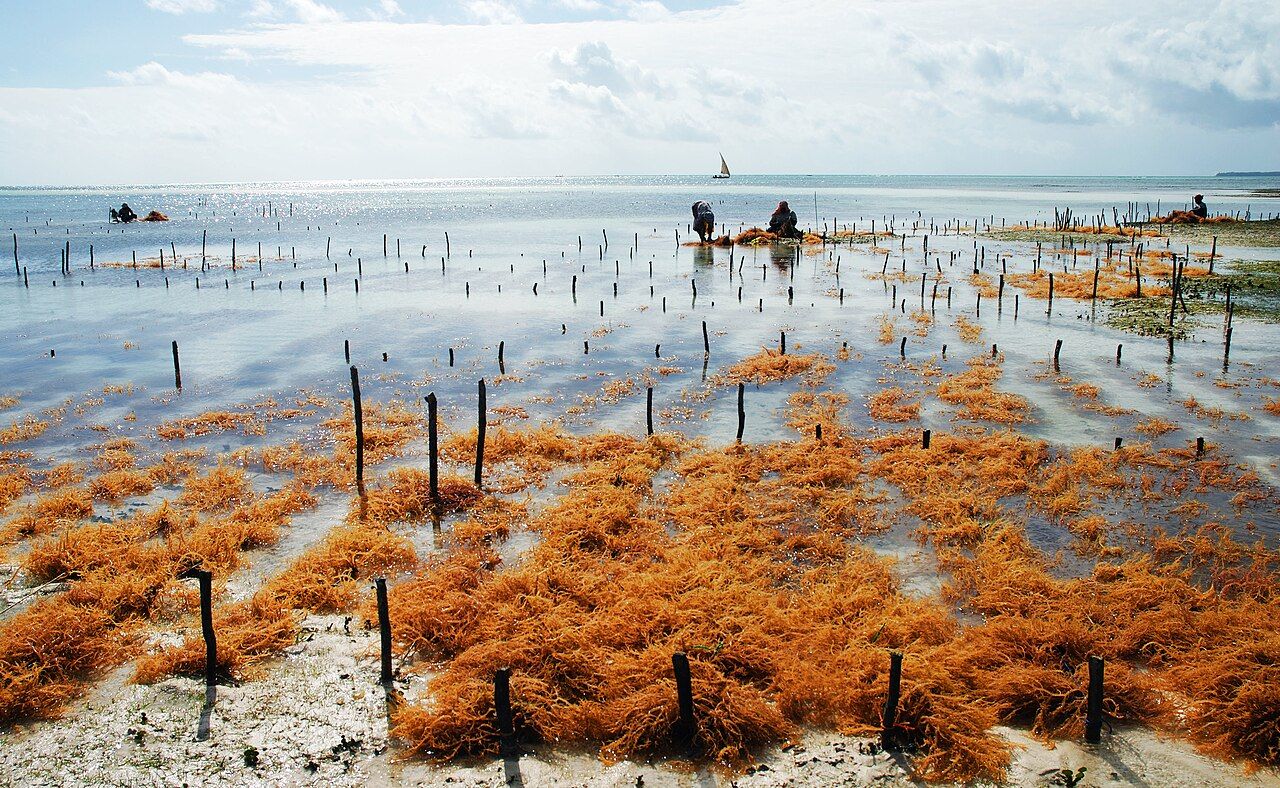
Walk out on the east coast at low tide and you will see them: neat grids of wooden pegs in the sand, strung with lines that carry tufts of seaweed in red, brown and green. Further out, small figures in bright wraps bend over the rows. These are seaweed farms, and on many stretches of the coast they are as much a part of the shore as the palms and the fishing boats.
A crop of the tidal flats
Commercial seaweed farming took hold on Zanzibar in the late twentieth century, and it spread quickly along the east coast, where wide sandy flats and sheltered lagoons give the right conditions. The basic method is simple. Farmers drive pegs into the seabed in lines, stretch cord between them and tie small cuttings of seaweed along the cord. The plants grow in the shallow water, and after a few weeks they are harvested, partly replanted and the rest carried ashore.
On land the seaweed is spread out to dry on mats or racks, then packed into sacks. Most of it is sold on for processing into carrageenan, a thickener used in foods, cosmetics and other products around the world. Some is sold locally or made into soap, oils and other goods.
The work follows the tide. When the water drains away, farmers walk out to plant, weed and harvest. When it rises again, the plots vanish, and everyone heads back. If you want to understand why the sea seems to disappear on this coast, the story on the east coast tides explains it.
Why most of the farmers are women
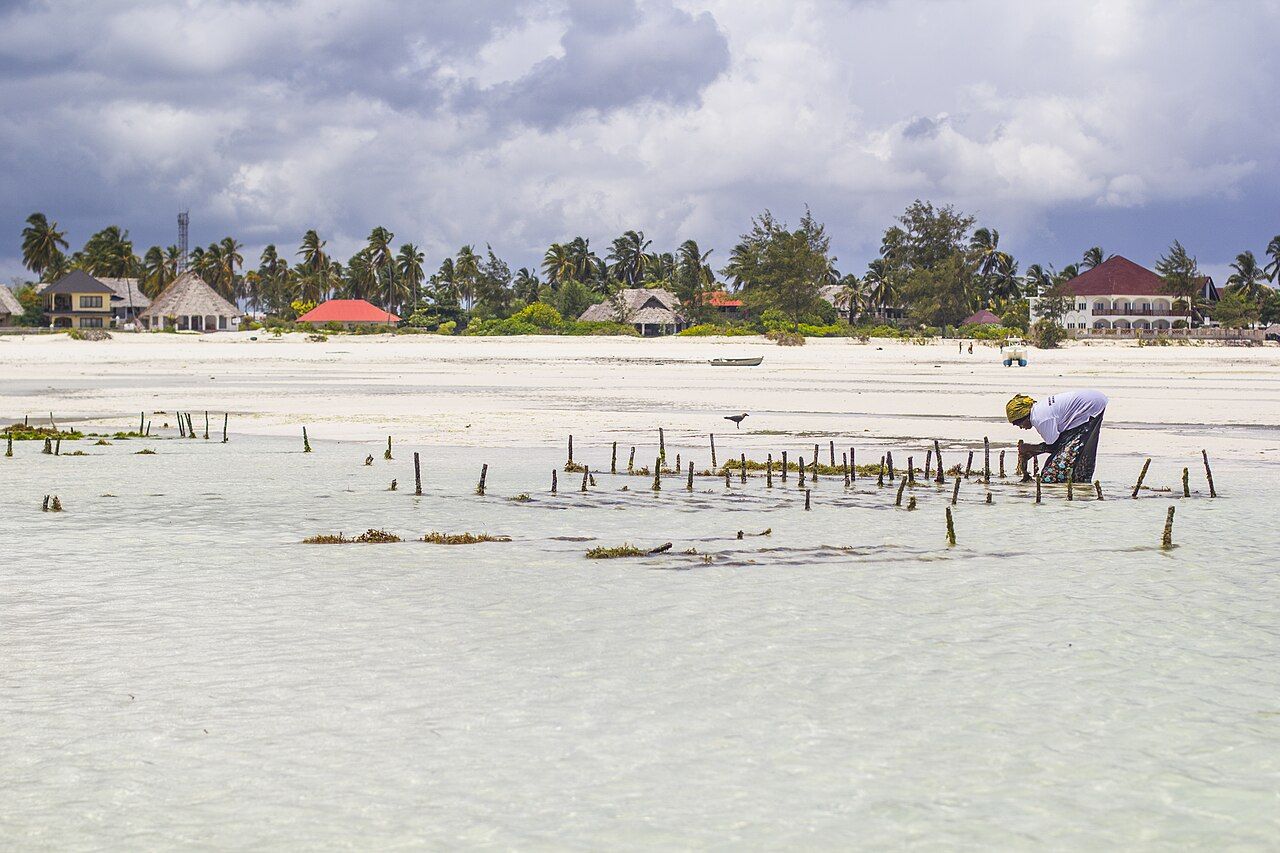
Fishing on Zanzibar has traditionally been men's work, done from boats. Seaweed farming, which needs no boat and can be done close to the village between other duties, was taken up mostly by women. For many families it has been one of the few ways for women to earn their own cash income, which pays for school costs, food and household needs.
 Picture: Rachel Clara Reed · Creative Commons BY-SA 4.0 (source file)

It is hard work. Farmers spend hours bent over in the sun and salt water, with sharp coral and urchins underfoot, and they carry heavy wet loads back to shore. Prices for dried seaweed can be low and can change from season to season, so the income is modest and uncertain. Groups and cooperatives have formed in some villages to share equipment and knowledge and to try to get better prices.
It helps to keep this in mind before treating the farms as scenery. They are workplaces, and the people in them are working.
Warming water and changing methods
Seaweed is sensitive to temperature. As sea temperatures in the shallow lagoons have risen, some of the more valuable varieties have struggled near shore, dying back or falling sick in the hottest months. Farmers have responded in different ways: switching varieties, moving plots to deeper water, or trying floating lines and other methods that need boats or swimming skills.
Pair it with Paje and Jambiani on the east coast
Deeper water brings its own problems, since many farmers never learned to swim and boats cost money. Programmes on the island have offered swimming lessons, training and new techniques, and research continues into which methods hold up best. The details shift year to year, and conditions vary from village to village, but the general picture is clear: a livelihood that depends on the sea is feeling the effects of a warmer ocean.
Where you will see the farms
Seaweed farms line much of the east coast. You are likely to see them around Paje and Jambiani, further north near Bwejuu and Michamvi, and along the shore at villages such as Uroa and Pongwe. They are most visible at low tide, when the rows stand out in the shallow water and drying racks line the beach.
Some villages have small centres or women's groups that show visitors how the work is done and sell products made from seaweed. These change over time, so ask locally rather than relying on a fixed address. A short visit arranged through a group means the people doing the explaining get something back for their time.
Photos and the seaweed farmers
A few simple habits go a long way:
- Ask before you take photos of people. A smile and a gesture to the camera is enough to ask. Many people will say no, and that answer stands. Never photograph women working without their agreement, and do not keep shooting from a distance after someone has turned away.
- Walk around the plots, not through them. Stepping on lines or pulling pegs can damage a harvest, and the cuttings are easily broken.
- Greet people. A simple jambo or a respectful hello in passing is good manners, and a few words of Swahili are usually welcomed.
- Dress modestly if you walk into a village or near working women, with shoulders and knees covered.
- Do not hand out money or sweets to children on the beach. If you want to support people, buy something they make or visit a group that runs walks.
Wear reef shoes on the flats. The sand looks soft, but sea urchins, sharp shells and coral fragments are common, and a cut foot takes a long time to heal in salty, humid air.
Reading the shore differently
Once you know what the pegs and lines are, the east coast reads differently. The neat rows are not decoration but a field, planted and tended as carefully as any farm inland, and harvested on the sea's timetable rather than the farmer's. Walk out at low tide, keep your camera down unless you are invited, and you will see a side of island life that most beach visitors pass by.
With photos by Olivier Lejade from France · Creative Commons BY-SA 2.0 (source file); Bärbel Miemietz · Creative Commons BY-SA 4.0 (source file); Mnazini · Creative Commons BY 4.0 (source file)


