
Jozani forest and the red colobus
A patch of old forest in the middle of the island is home to a monkey found nowhere else on earth. Go early, walk slowly and let the colobus decide how close.
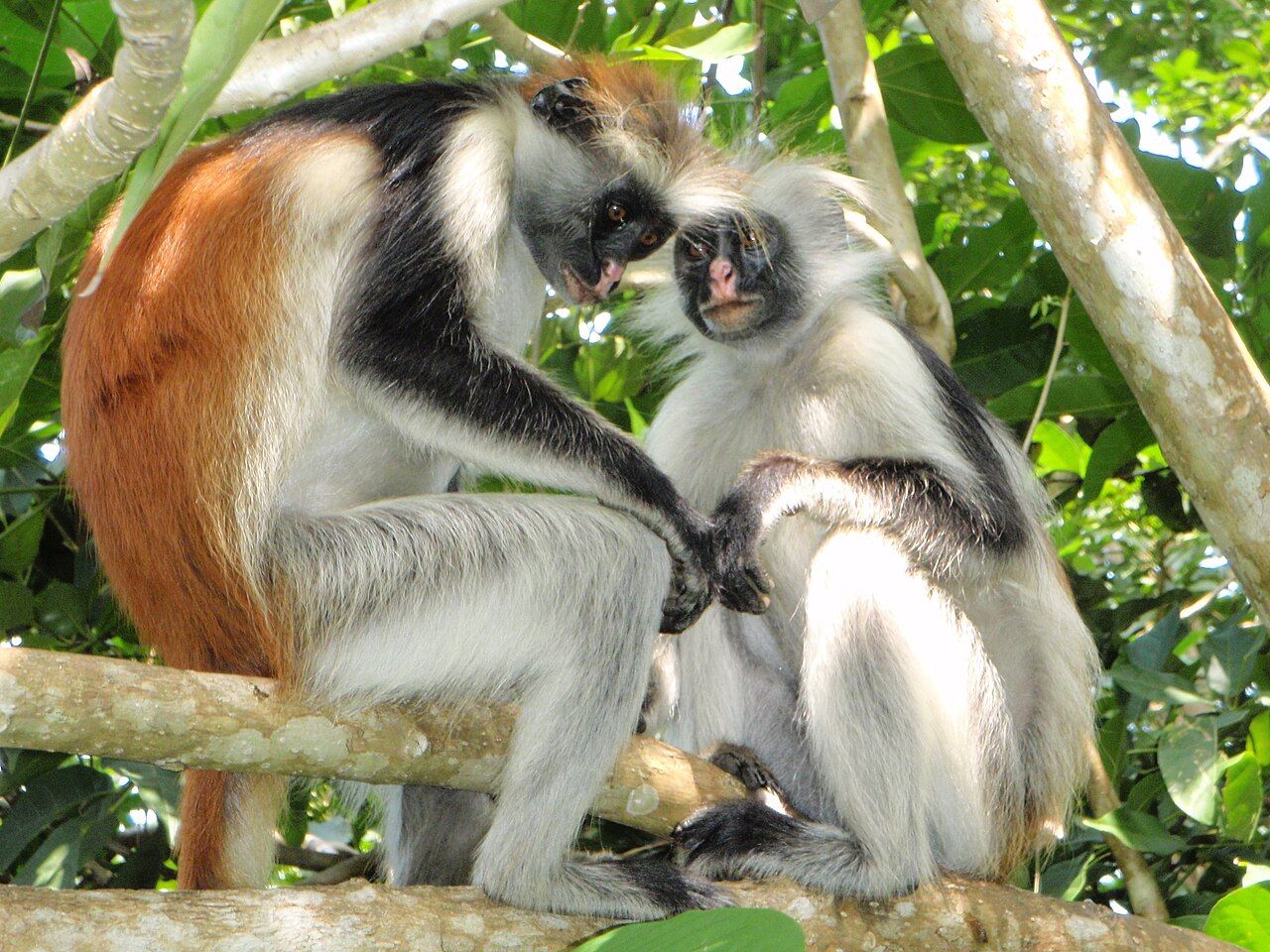 Picture: Olivier Lejade from France · Creative Commons BY-SA 2.0 (source file)
- From Stone Town
- About an hour by road
- Pace
- Half day
- Getting there
- By road south-east from Stone Town
- Bring
- Closed shoes, insect repellent, water, binoculars, a light long-sleeved shirt
Drive south-east out of Stone Town and the island flattens into farms, coconut palms and coral rag scrub. Then, roughly where Unguja pinches in at its waist, a wall of taller trees rises beside the road. This is Jozani, the largest remaining block of natural forest on the island and the core of Jozani Chwaka Bay National Park. Most visitors come for one reason: the Zanzibar red colobus, a monkey that lives on this island and nowhere else.
The park also takes in the mangroves and salt flats that run down to Chwaka Bay, along with swamp forest that floods in the rains. A visit usually combines a short loop through the forest, time with the monkeys at the forest edge and a walk on the mangrove boardwalk across the road. Allow a few hours, more if you like to linger with binoculars.
A monkey found only here
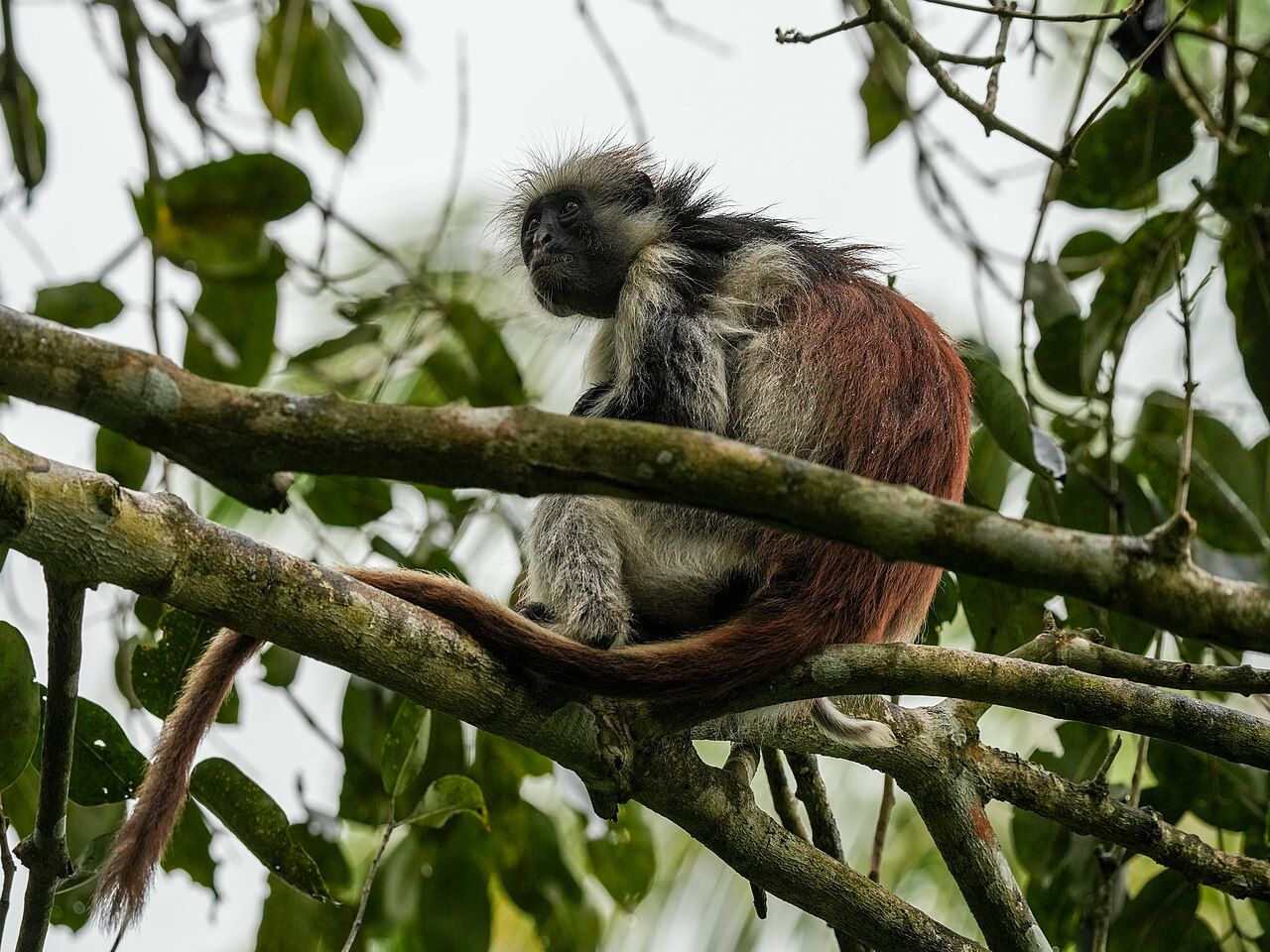
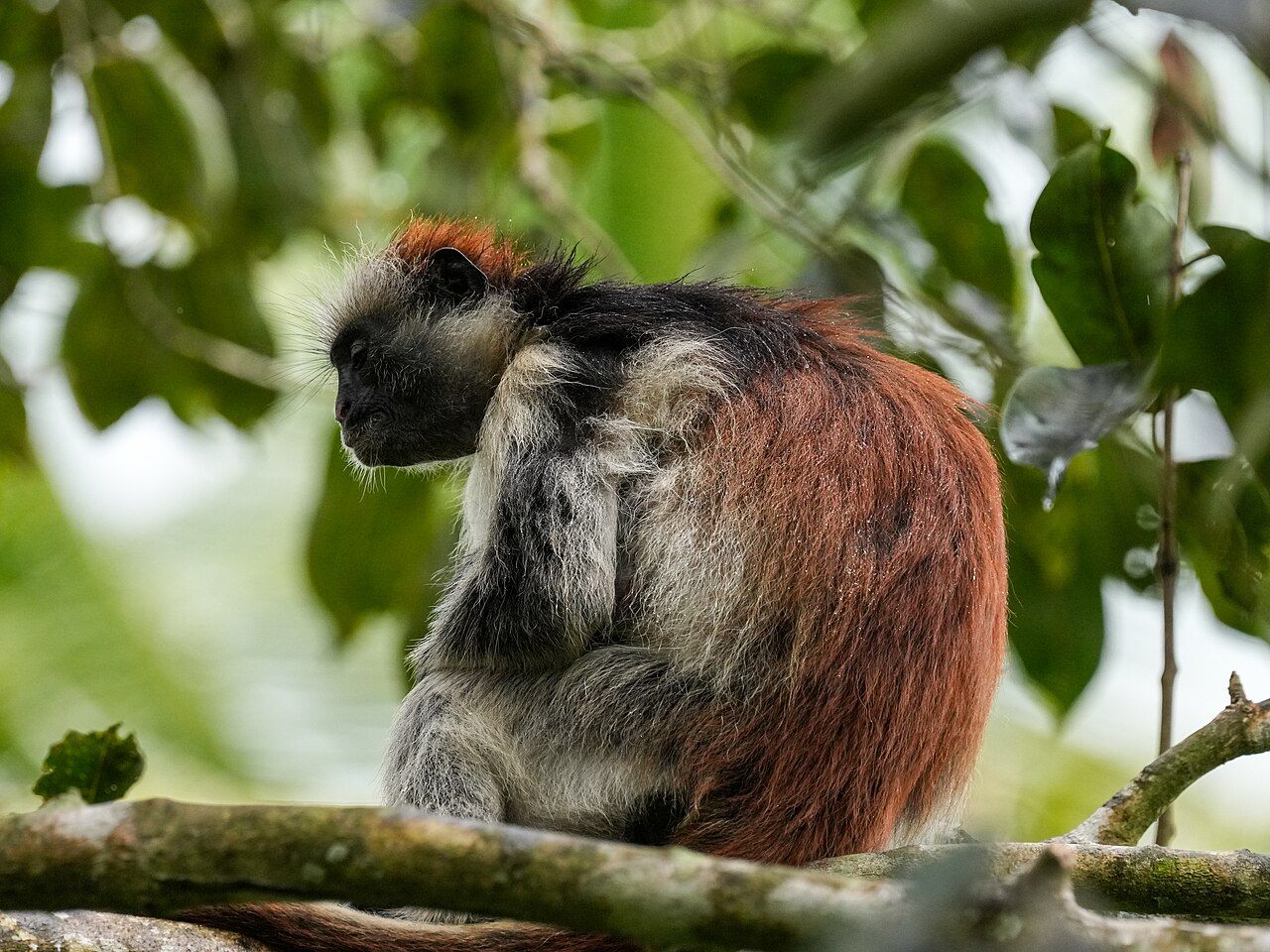
The Zanzibar red colobus has a black face rimmed with a wild crown of white hair, a dark back, and a coat that shades into deep rust red across the shoulders and down the long tail. Infants are paler and fluffier. Like other colobus, they have no proper thumbs, which gives their hands a hooked, slightly awkward look when they grip a branch.
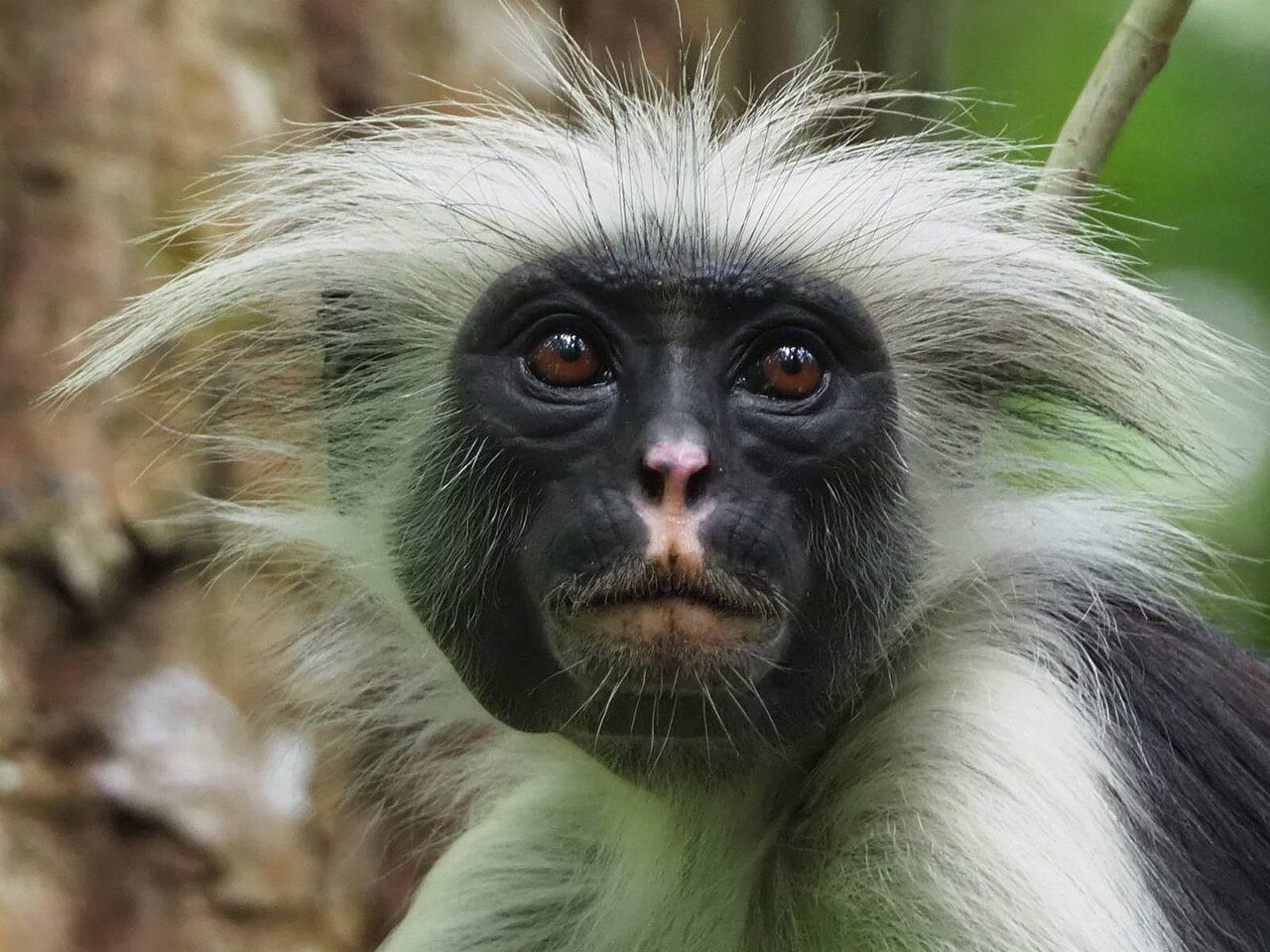 Picture: Riccardoariotti · Creative Commons BY-SA 4.0 (source file)

They are leaf eaters. Their stomachs are built to ferment tough foliage, which is why you see them sitting still for long stretches, digesting, between short bursts of feeding. Unripe fruit, seeds and flowers fill out the diet. Groups are usually a mix of adult males, several females and young, and they keep in touch with soft calls and squeaks that carry through the canopy.
The species is endangered. Forest clearing for farms, charcoal and building has squeezed it over the decades, and the population that remains is spread across Jozani and a scatter of smaller forest patches elsewhere on the island. Jozani matters because it is the stronghold, and because the money visitors bring in helps make the case for keeping the forest standing.
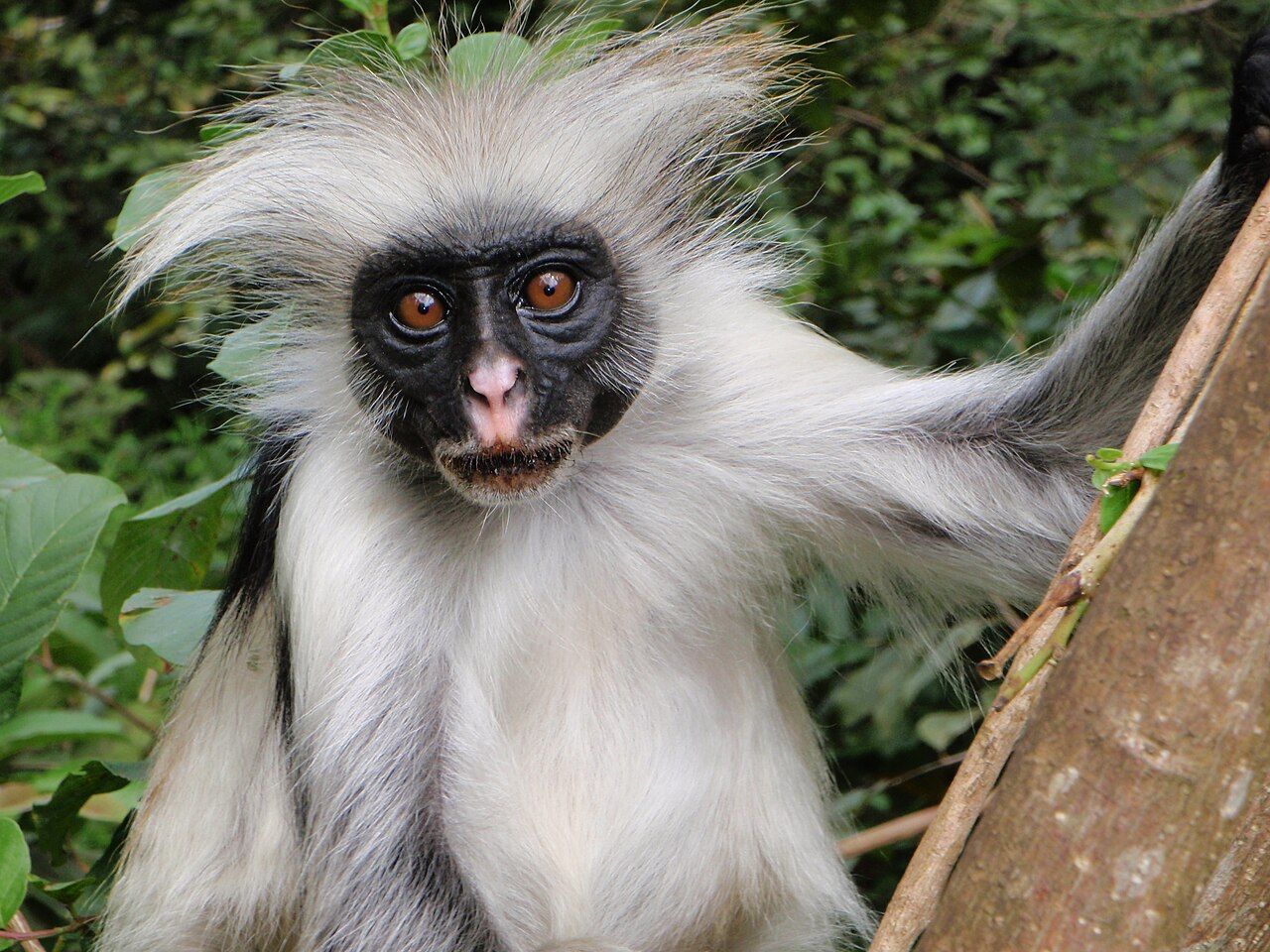 Picture: Olivier Lejade from France · Creative Commons BY-SA 2.0 (source file)

You may also see Sykes's monkeys, which are grey-brown with a pale throat and more of a forager's swagger. They tend to keep further from people. Birds are plentiful if you look up rather than at your camera screen, and small antelope and bushbabies live here too, though they are shy and rarely seen by day.
Walking the forest trail
The main nature trail is a gentle loop on flat ground, shaded by tall trees, palms and tangles of climbers. It is not a hard walk, but roots and damp leaves can be slippery, so closed shoes beat flip-flops. Visits usually go with a park guide, who can point out medicinal plants, mahogany and other trees, and explain how the forest floods and drains with the seasons.
Inside the forest proper the colobus can be high up and hard to spot. Many of the closest sightings happen at the edge, where the forest meets farm plots and gardens. Some groups here are well used to people and feed in the lower branches, which is exactly why good manners matter so much.
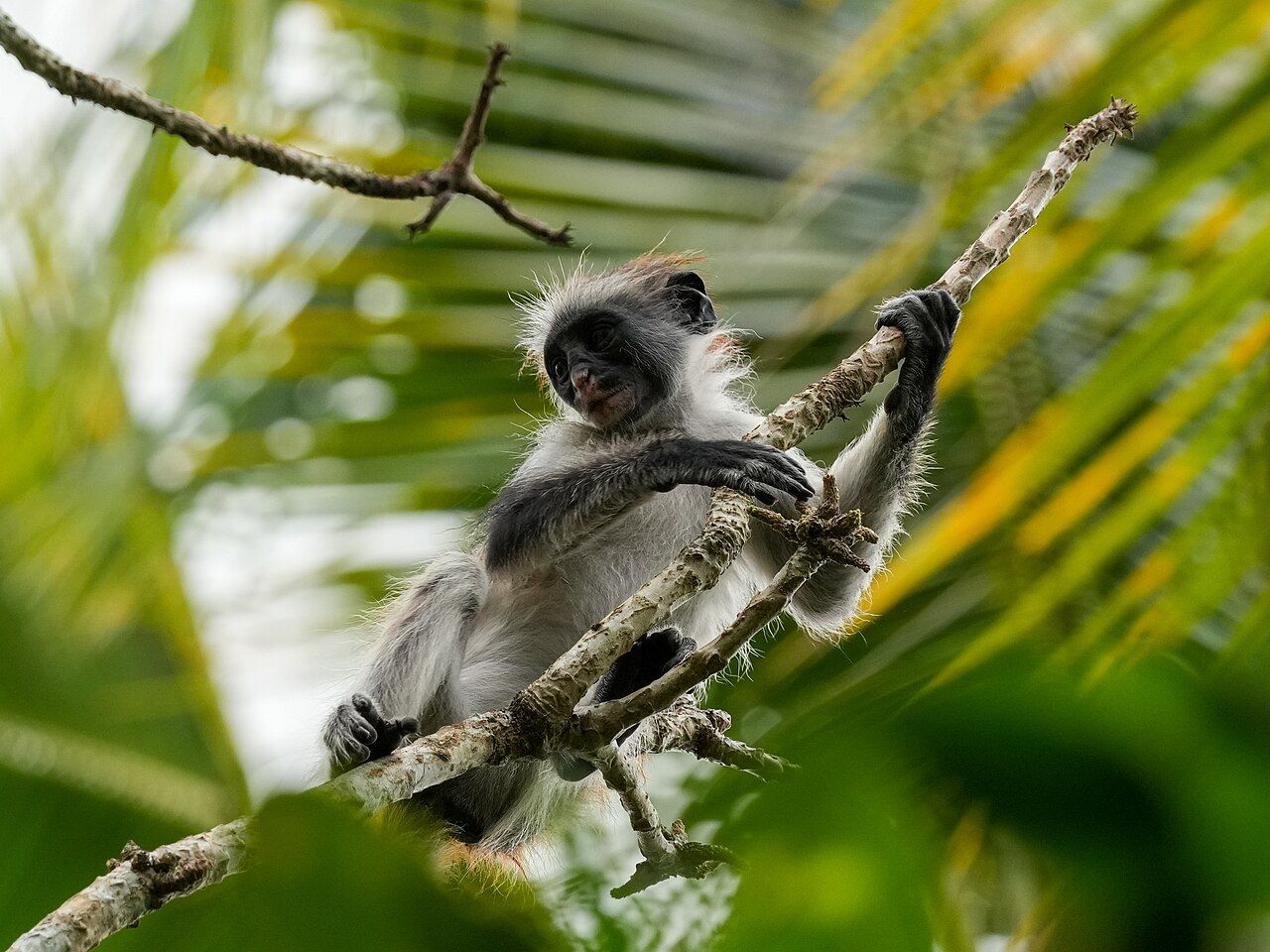 Picture: Timothy A. Gonsalves · Creative Commons BY-SA 4.0 (source file)

Mosquitoes can be lively in the shade, especially after rain. Put on repellent before you set out, and carry water: the forest is humid even when the sky is clouded over.
Distance, not selfies
Colobus at Jozani can look tame. They are not. They are wild primates that happen to tolerate people, and they are vulnerable to human illnesses such as colds and stomach bugs. A few simple habits keep them safe and keep the experience calm for everyone.
- Keep several metres back, and step away if a monkey moves towards you. Let them close the gap if they choose to, then stay still.
- Never feed them, and keep snacks out of sight. Human food can make them ill and teaches them to approach people.
- Do not touch, call or reach for them, even if a branch hangs right beside you.
- Stay quiet and keep your group small. Talking in a low voice works; shouting across the clearing does not.
- Switch off the flash and keep phones at a sensible height. Pushing a lens into a monkey's face is the fastest way to send a whole group back into the canopy.
- If you have a cough or cold, keep your distance even more carefully, or skip the visit.
Guides at the park know these rules well and generally ask visitors to follow them. If anyone in your group, or anyone nearby, starts pushing closer for a picture, it is fine to say something.
The best sighting is the one where the monkey carries on eating as if you were not there.
Pair it with Clove, nutmeg and cinnamon: the spice island
The best sighting is the one where the monkey carries on eating as if you were not there. Sit or stand back, watch how they move from branch to branch, how the young ones tumble and the adults groom each other. Ten quiet minutes tell you more than a hundred rushed photographs.
 Picture: Timothy A. Gonsalves · Creative Commons BY-SA 4.0 (source file)

The mangrove boardwalk
Across the main road, a wooden boardwalk leads out into the mangroves on the edge of Chwaka Bay. It feels like a different world from the forest: open, brighter, with the smell of salt mud and the clicks of crabs among the roots. Mangroves here act as a nursery for young fish, a filter for silt washing off the land and a buffer against storms. Several species grow together, each with its own way of coping with salt water, from stilt roots that arch out of the mud to pencil-like breathing roots that poke up around the trunks.
What you see depends on the tide. At low water the mud is exposed and alive with fiddler crabs waving their oversized claws and mudskippers flicking between pools. At high water the sea creeps in under the planks. Either way, it is a peaceful walk and a good place to understand how closely the island's forests and its coast are linked. Stay on the boardwalk; the mud is soft and the roots are easily damaged.
Mangrove wood has long been cut for poles and fuel along this coast, and replanting and protection efforts have tried to balance local needs with keeping the forest intact. Read the boards along the way if they are there, and treat the place with the same care as the monkey trail.
Planning the visit
Jozani lies inland in the south-central part of the island, on the main road towards the south-east coast. That makes it easy to fit in on the way to or from the east-coast beaches. A stop here pairs well with a few days at Paje or Jambiani, or with a morning in the fishing village of Kizimkazi further south. Local buses and shared minibuses run along the road from the market area in Stone Town, and taxis and hired cars are straightforward to arrange.
 Picture: Timothy A. Gonsalves · Creative Commons BY-SA 4.0 (source file)

Mornings are cooler and the monkeys are often more active then. Late afternoon can also be good. In the long rains, roughly from March into May, paths get muddy and parts of the forest flood, though the trees are at their greenest. The drier months from around June to October are the most comfortable for walking.
There is an entry fee for the park, and it usually covers a guided walk. Carry some cash in case card payment is not available.
What to wear and carry
Light long sleeves and trousers help against mosquitoes and scratchy plants. Bring a hat for the boardwalk, which has little shade, and binoculars if you have them: they let you watch the monkeys closely without moving in. A small bag is easier than a big one on narrow paths.
Jozani also makes sense of the island's other green places. The trees and crops you pass on the drive, the clove and cinnamon of the spice farms and the flats where the seaweed farmers work are all part of the same story of how people live with a small, crowded island and its fragile edges.
With photos by Moongateclimber · public domain (source file); Mnazini · Creative Commons BY 4.0 (source file)

