
Greetings, dress and Ramadan
A few Swahili words, covered shoulders and a little patience change how Zanzibar receives you. Here is what helps, from greetings to the holy month to the sound of taarab.
- From Stone Town
- Starts in Stone Town
- Pace
- Easy
- Getting there
- Everywhere on the island
- Bring
- Light scarf, long trousers or skirt, phrasebook
Zanzibar is relaxed and welcoming, and most visitors find people friendly and patient. It is also a mostly Muslim society with strong ideas about courtesy, dress and respect. You do not need to know every custom to get along, but a few habits make a real difference, both to how you are received and to how much you see.
Greetings come first
In Swahili culture, greeting is not optional. Before asking directions, buying something or starting a conversation, people greet each other, often at some length. Launching straight into a question can seem rude. A greeting first, then your request, works far better.
Some useful words:
- Jambo is the greeting most visitors learn, and you will hear it often, especially in tourist areas. Locally, the fuller form is hujambo, answered with sijambo.
- Mambo is a casual greeting, a little like asking how things are. A common reply is poa, meaning cool or fine. You may also hear safi or freshi as answers.
- Habari? means roughly what news, and is answered with nzuri, good. You will hear variations such as habari za asubuhi for the morning.
- Shikamoo is a respectful greeting to an elder. The reply is marahaba. Using it with older people is a small courtesy that is often appreciated.
- Karibu means welcome, and you will hear it constantly. It is also used to invite someone in or to offer something.
- Asante means thank you, and asante sana means thank you very much.
- Pole pole means slowly, and is often used to tell visitors to relax and take their time.
Even a single greeting, said with a smile, changes the tone of an exchange. People notice the effort.
What to wear, and where
On the beaches used by visitors, swimwear is normal. Away from the beach, things are different. In Stone Town, in villages and in markets, dress modestly: shoulders covered, and long trousers, long skirts or dresses that reach below the knee. Tight, see-through or very short clothes draw attention and can cause offence.
A few points help:
- Carry a light scarf or wrap. It covers shoulders quickly and can be used as a head covering if you visit a mosque or a religious site.
- Cover up when you leave the beach, even for a short walk to a shop or village.
- Topless sunbathing is not acceptable anywhere.
- Men should also cover up in town: going shirtless in the streets is seen as disrespectful.
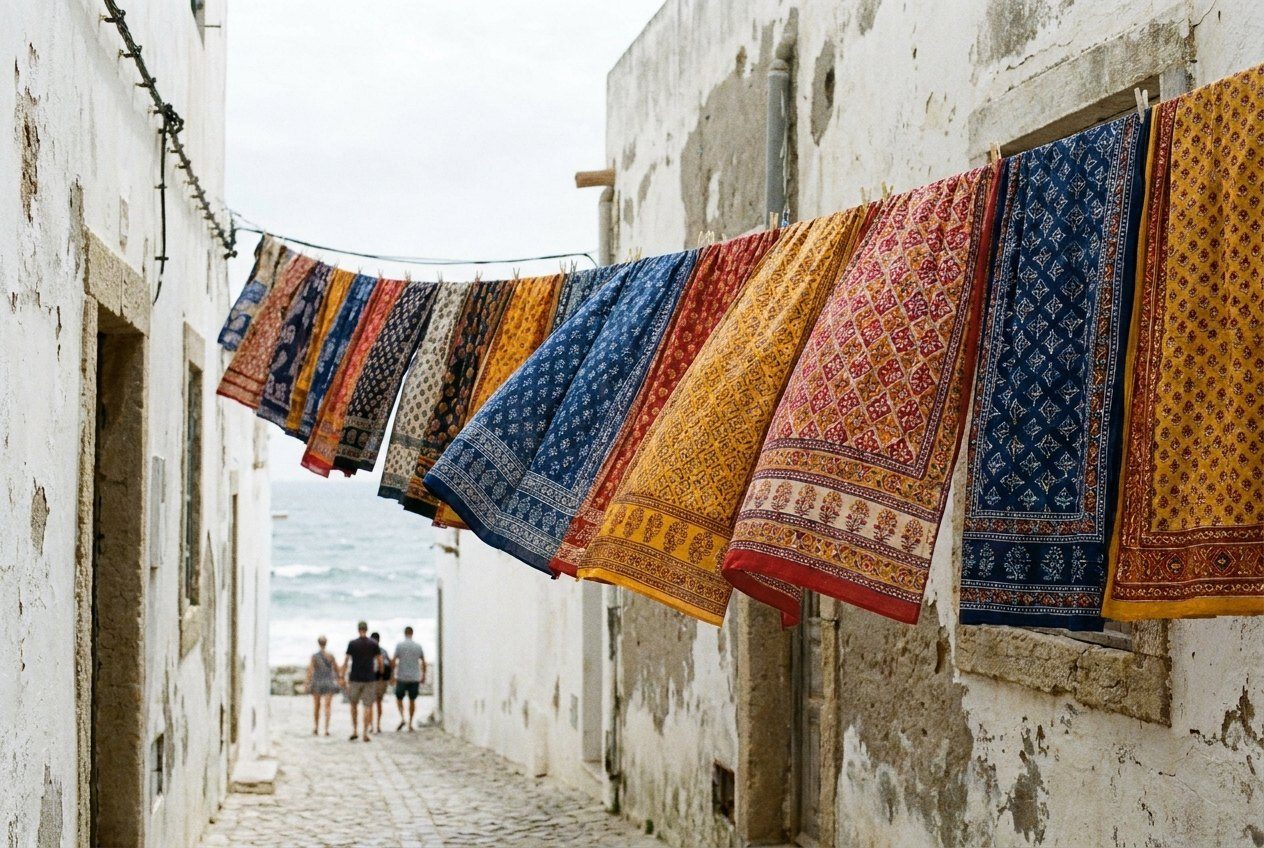
Walking through the lanes of Stone Town, you will see local women in long dresses and headscarves, often with a black buibui cloak, and men in long white kanzu robes and embroidered caps, especially on Fridays. Bright printed cloths called kanga are worn wrapped around the body and head. Each kanga traditionally carries a short Swahili saying printed along the border, a proverb or message, and choosing one can be a way of saying something without words.
Pair it with Eating on the island
Ramadan
Ramadan is the holy month of fasting in Islam. From dawn to sunset, Muslims do not eat, drink or smoke. Its dates follow the Islamic lunar calendar, so they move about eleven days earlier each year. Check the expected dates before you plan your trip, as they depend on the sighting of the new moon.
During Ramadan:
- Eat, drink and smoke discreetly in public during the day. Many local places close in daylight hours.
- Dress even more modestly than usual, particularly in Stone Town and villages.
- Expect shorter working hours and slower service by day.
- Enjoy the evenings. After sunset, streets come alive as families break the fast, and food stalls and gatherings run late into the night.
The end of Ramadan is marked by Eid al-Fitr, a festival of several days with new clothes, family visits and celebrations. Some services may be limited around this time, so plan ahead.
Photographs and good manners
Zanzibar is visually rich, and it is tempting to photograph everything. Ask first before taking pictures of people, especially women, older people and anyone praying. A gesture to the camera and a questioning look is usually understood. If someone says no or turns away, respect that. Some people may ask for money in return; it is better simply to ask and accept the answer than to take pictures secretly.
Other small courtesies:
- Use your right hand to give, receive and eat.
- Keep public displays of affection low-key.
- Be careful with alcohol: drink in places where it is clearly served, and not in the street or in villages.
- Remove shoes when entering homes or mosques, and ask before entering a mosque at all.
- Be patient. Things often move slowly here, and a calm manner gets better results than frustration.
Taarab, the sound of the island
Taarab is a style of sung poetry with strong roots on Zanzibar. It mixes Arab, Indian and African influences, with singers backed by instruments such as the oud, violins, the qanun, accordion and drums. Lyrics are often about love, social life and gossip, written in a rich poetic Swahili full of double meanings.
Taarab clubs and orchestras have kept the tradition alive for generations, and Siti binti Saad, a singer who became famous in the early twentieth century, is remembered as one of its great early voices. You may hear taarab at weddings, on the radio or at performances in Stone Town. Venues and schedules change, so ask locally what is on. If you get the chance, listen to a live performance, even if you do not follow the words.
Respect goes both ways
None of this requires perfection. People on Zanzibar are used to visitors, and small mistakes are usually forgiven, especially when you are clearly trying. A greeting, covered shoulders and a willingness to slow down are what matter most. In return, you will find the island opening up in ways that are easy to miss when you rush. Spend time in the market, let conversations take their course, and karibu will start to feel less like a word and more like an invitation.
With photos by Fanny Schertzer · Creative Commons BY 2.5 (source file)
