
Living with the east coast tides
On the east coast the sea can retreat so far that it seems to have gone. Knowing when and why helps you plan swims, walks and boat trips.
 Picture: Jonathan Dalrymple · Creative Commons BY-SA 4.0 (source file)
- From Stone Town
- About an hour by road
- Pace
- Easy
- Getting there
- Any east coast village
- Bring
- Reef shoes, a tide table, water, a hat
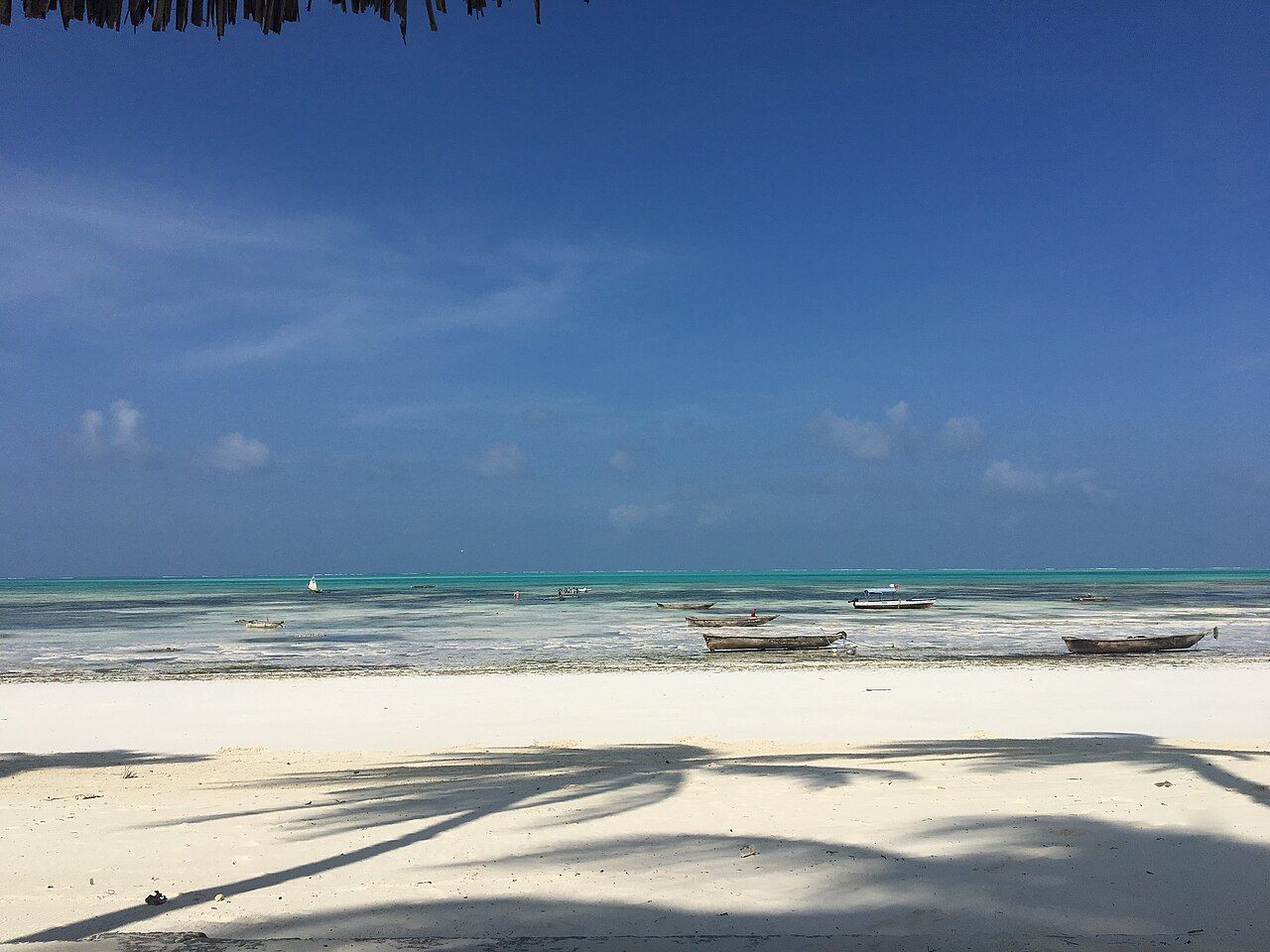
Arrive on Zanzibar's east coast at the wrong moment and you may wonder where the sea has gone. Where there was turquoise water in the morning there is now a vast expanse of sand, seagrass and pools, with the waves breaking far out on the reef. A few hours later the water creeps back and the lagoon fills again. This is the defining rhythm of the coast from Matemwe in the north-east to Jambiani in the south-east, and once you understand it, you can plan your days around it.
Why the water disappears
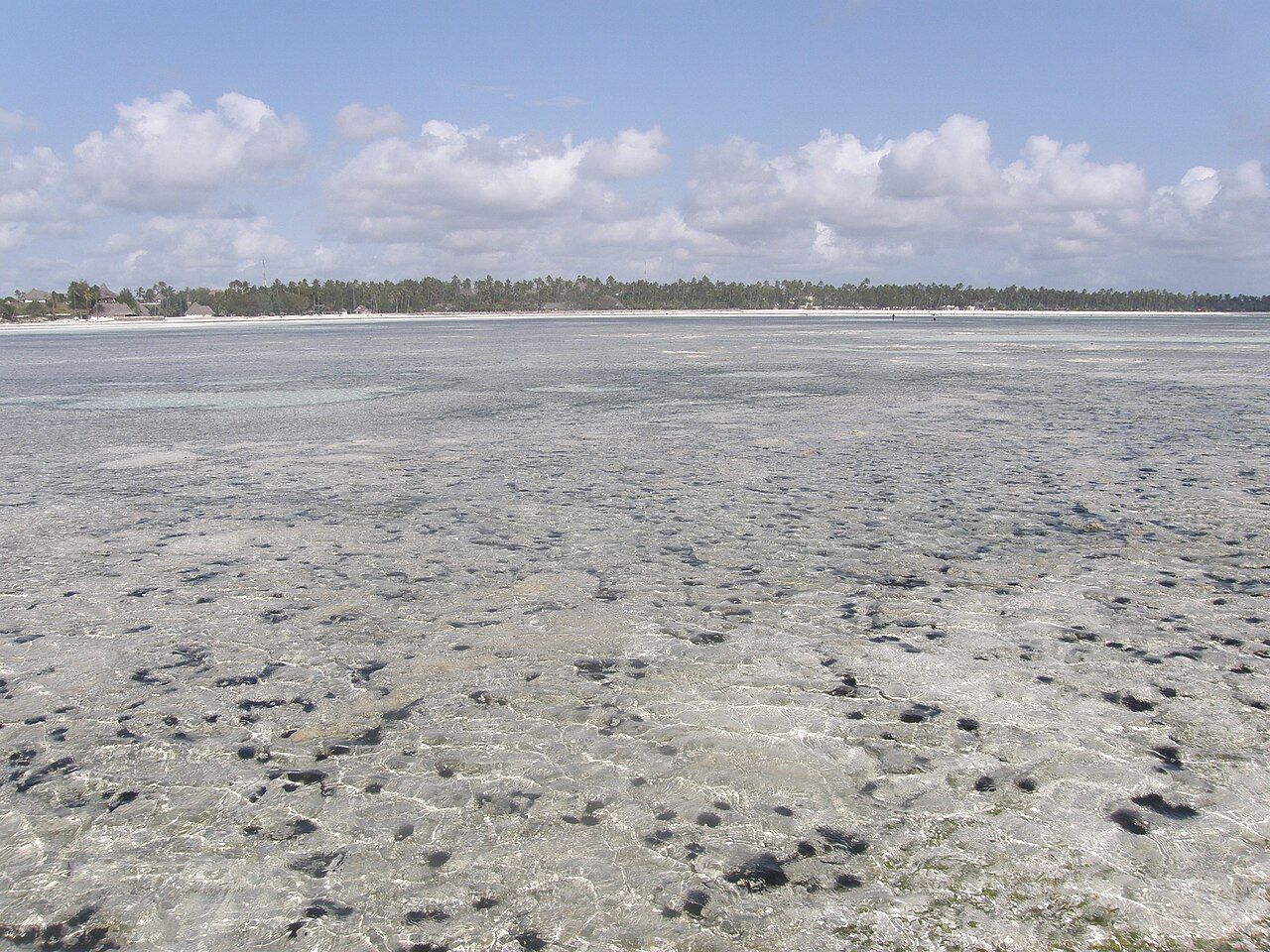
The east coast of Unguja is protected by a fringing coral reef that lies some way offshore. Between the reef and the beach is a wide, shallow lagoon. When the tide is high, water covers the whole lagoon and laps at the beach. When it falls, the lagoon drains towards the reef, and because the lagoon is so shallow and so wide, a modest change in sea level uncovers an enormous area of sea floor.
The tide on this coast is broadly semi-diurnal: there are usually two high tides and two low tides each day. Each tide arrives roughly an hour later than the day before, so the timing shifts through the week. The range also changes with the moon. Around new and full moon, spring tides bring the highest highs and the lowest lows, and the sea retreats furthest. Around the half-moon, neap tides bring a smaller range.
Other parts of the island have tides too. The north around Nungwi and Kendwa has deeper water close to shore, so the change is less dramatic there.
Reading a tide table
A tide table lists the times of high and low water for each day, often with the height of each. Tables for the region are published and easy to find, and many places to stay post them for guests. Local people also know the pattern well, and asking someone when the water will be in is a good way to start a conversation.
- High tide is when you can swim in the lagoon. The best swimming is usually a couple of hours either side of high water.
- Low tide is when you can walk across the flats, explore rock pools and see seaweed farmers at work.
- Spring tides (around new and full moon) have the biggest range, so they are best for walking far out and worst for swimming at low water.
- Neap tides (around the half-moon) keep more water in the lagoon through the day.
Treat printed times as a guide. Wind and local conditions can make the water come in earlier or later than predicted.
Pair it with The seaweed farmers
Walking the flats
A low-tide walk is one of the pleasures of the east coast. You can wander far out across rippled sand, through seagrass beds and around pools full of small fish, starfish, sea cucumbers and crabs. Local women may be at work in the seaweed farms, and fishermen walk out to check traps or collect octopus.
 Picture: lazyweaver · Creative Commons BY 3.0 (source file)

A few precautions make it safer:
- Wear reef shoes. Sea urchins, with their long black spines, are common on the flats and in the shallows. Stepping on one is painful. Sharp coral and shells add to the risk, and stonefish, though rarely seen, are well camouflaged.
- Watch where you put your hands. Some animals sting or bite. Look but do not touch.
- Do not walk on coral or living seagrass if you can avoid it. Stick to sandy patches.
- Know when the tide turns. The water can come back faster than you expect, and channels in the flats fill first. Head back well before the turn, and never get cut off on a sandbar.
- Cover up. There is no shade on the flats, and the sun reflects off the sand and water. Bring water and a hat.
If you do step on a sea urchin, get out of the water, remove any spines you can easily reach, and clean the wound. Seek medical help if spines are deep or the area becomes infected.
Swimming around the tides
For swimming, the east coast needs a little planning. At high tide the lagoon is warm, calm and inviting. At low tide, you may have to walk a long way to reach water deep enough to float in, and in some places there is none at all.
- Check the times the night before and plan your swims for the higher part of the tide.
- Be cautious about swimming near the reef edge or the channels through it. Currents there can be strong as the tide moves.
- Watch out for boats moving in and out of the lagoon, especially near villages.
- Swim where others are swimming, and avoid going out alone.
Boats and the tide
The tide affects boats as much as swimmers. At low water, fishing boats and canoes sit on the sand, and many boat trips can only leave or return when there is enough water in the lagoon. Snorkelling trips from the east coast to the reef or to Mnemba are often timed around high tide.
Fishermen plan their days by the tide and the moon. Some go out on the falling tide to fish the reef edge; others walk out at low water to collect octopus or check traps. Watching these rhythms is one of the best ways to see how the coast works.
 Picture: Bakersville · Creative Commons BY-SA 4.0 (source file)

Choosing a base
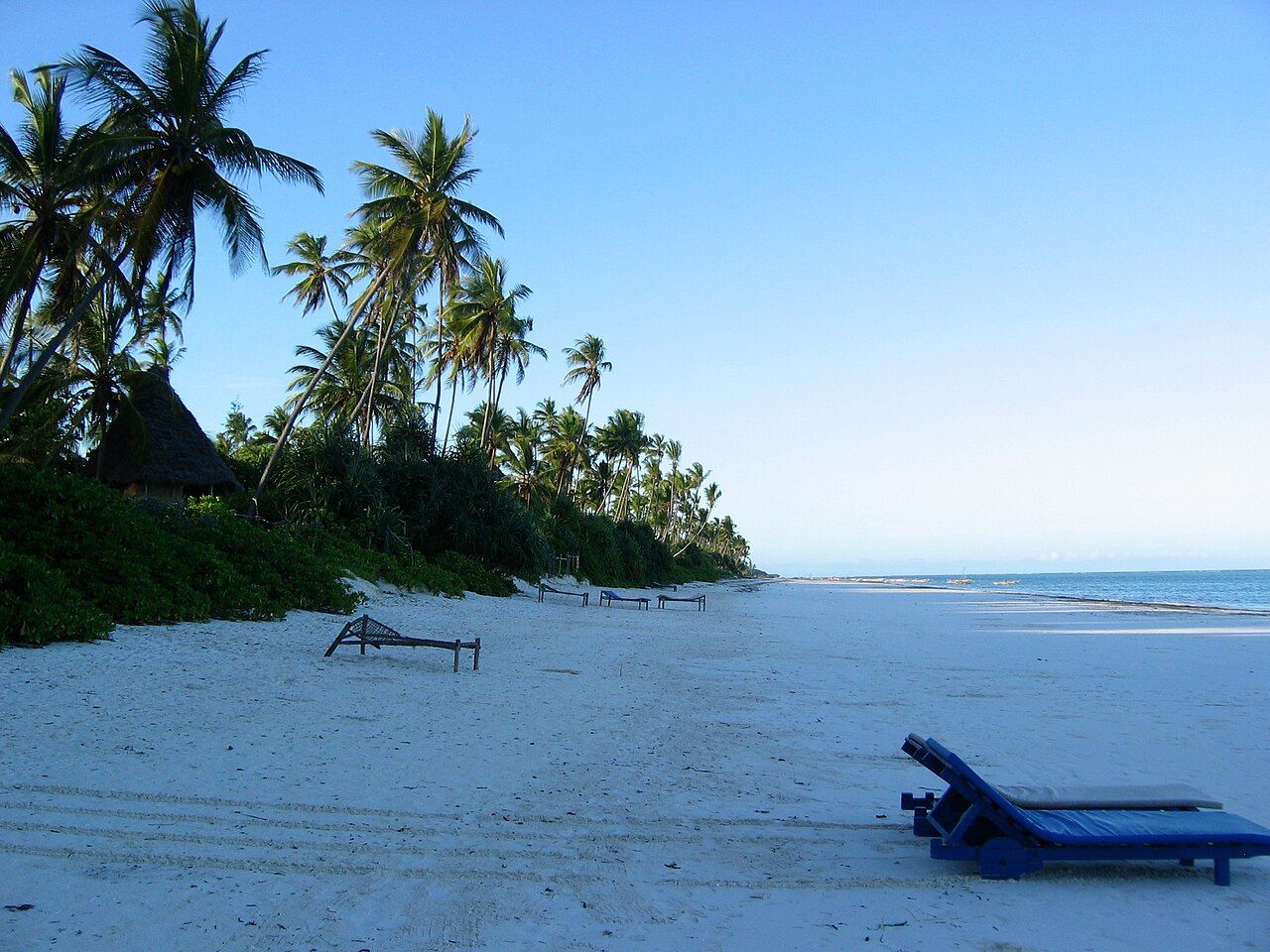
If you want to swim at any time of day, the north may suit you better than the east. If you enjoy changing views, low-tide walks and quieter beaches, the east coast has plenty to offer. Villages such as Paje and Jambiani show the tides at their most dramatic.
Whichever coast you choose, a few days are enough to fall into the rhythm. You start checking the tide table each morning, planning a swim for the afternoon high tide and a walk for the evening low. On the east coast, the sea sets the timetable.
With photos by Nina R from Africa · Creative Commons BY 2.0 (source file); Matt Kieffer from London, United Kingdom · Creative Commons BY-SA 2.0 (source file); Mangapwani · Creative Commons BY-SA 4.0 (source file)


