
Paje and Jambiani on the east coast
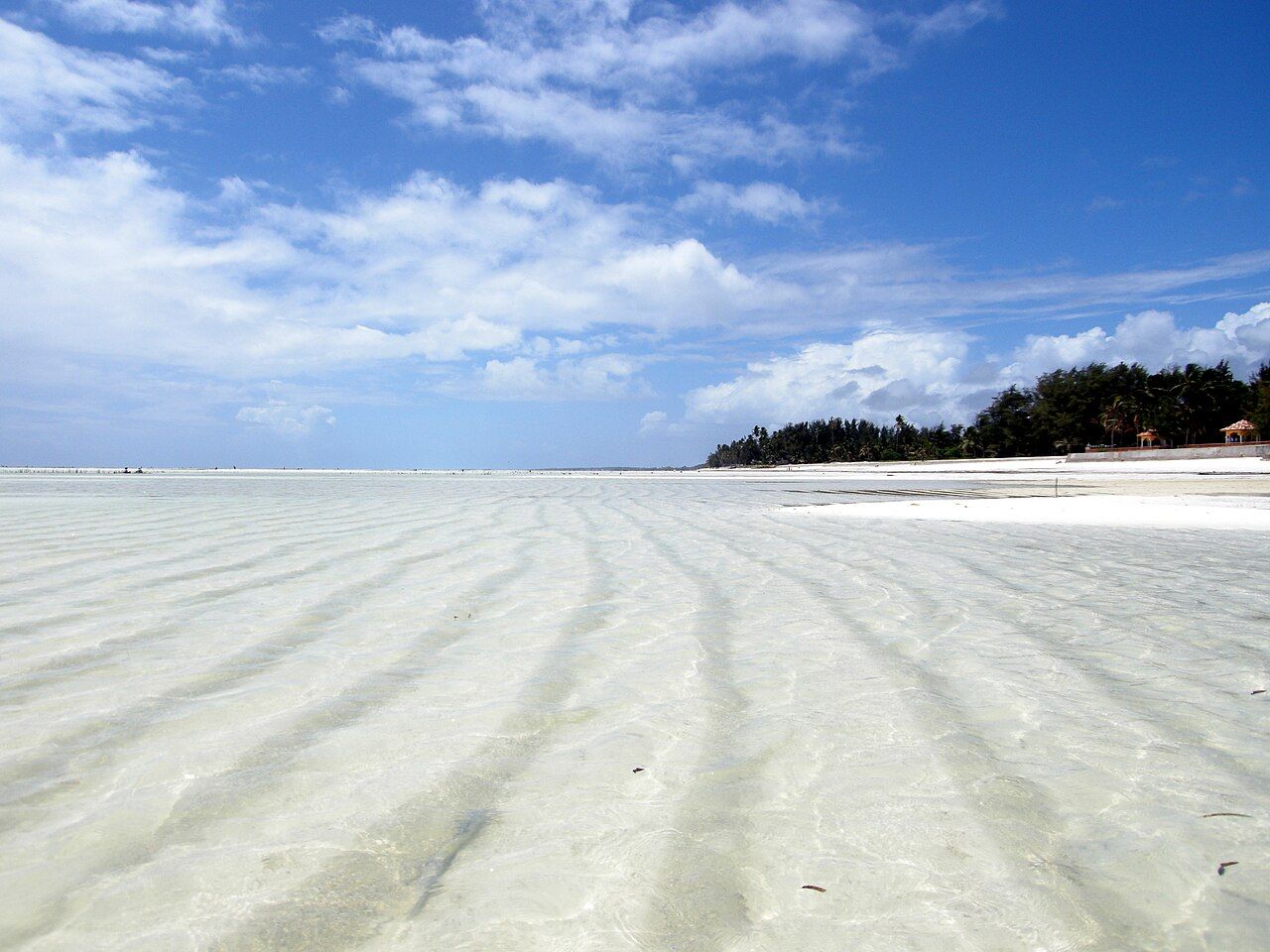
Two villages on the south-east coast share a pale lagoon that empties and fills with the tide. One is busy with kites; the other stretches out slowly along the shore.
 Picture: Matt Kieffer from London, United Kingdom · Creative Commons BY-SA 2.0 (source file)
- From Stone Town
- About an hour by road
- Pace
- Overnight
- Getting there
- Road east across the island
- Bring
- Reef shoes, a tide table, sunscreen, a cover-up
On the south-east coast of Unguja, Paje and Jambiani sit side by side along a long white beach backed by palms. The sea in front of them is a broad, shallow lagoon protected by a reef far offshore. At high tide it is a sheet of turquoise; at low tide it drains away, leaving sand, seagrass and pools for hundreds of metres. That rhythm shapes everything here, from when you swim to when the seaweed farmers go out to work.
The beaches and the lagoon
The sand on this coast is fine and very pale, and the water over it takes on remarkable colours. Paje's beach is wide and open, with a cluster of activity around the village centre. Jambiani is a long, strung-out village, several kilometres from end to end, and its beach feels quieter for much of its length.
The lagoon is generally shallow and calm inside the reef, which makes it good for wading and for children. It is less suited to serious swimming at low tide, when the water may be ankle-deep or gone altogether. Waves break on the reef in the distance.
Living with extreme tides
The tides here are among the most striking on the island. Twice a day the water withdraws far out towards the reef, then returns. The difference is greatest around the new and full moon, when the lowest tides expose wide flats.
Plan your swims for the higher part of the tide, and use low tide for walks across the flats. Local tide tables are often posted or easy to find, and the people who live here always know when the water will turn. The guide to the east coast tides goes into more detail, including the hazards on the flats.
Wear reef shoes when you walk out. Sea urchins, sharp coral fragments and the occasional hidden creature make bare feet a poor idea.
Kitesurfing at Paje
Paje has become one of the best-known kitesurfing spots in East Africa. The reasons are simple: steady trade winds for much of the year, a large shallow lagoon with flat water and a wide beach to launch from. Beginners can learn standing in waist-deep water, while more experienced riders head towards the reef.
The wind follows the monsoon seasons. The northerly kaskazi blows in roughly the December to February period, and the southerly kusi in roughly June to September. Between them the wind can be lighter and less reliable. Tides matter too, as the lagoon becomes too shallow at low water in places, so sessions are planned around them.
If you take lessons, choose an instructor with recognised training and safety equipment, and be honest about your experience. When the kites are out in force, beach walkers and swimmers should keep clear of launch areas and lines.
Pair it with The seaweed farmers
Seaweed farms in the lagoon
At low tide, you will see neat rows of sticks set in the sand of the lagoon, with lines strung between them. These are seaweed farms. Seaweed farming spread along this coast from the late twentieth century, and it is mostly women who tend the plots, tying cuttings to the lines, weeding them and harvesting the crop to dry on the sand. The dried seaweed is sold for processing, and some is used locally in soaps and other products.
It is hard, hot work, and changes in the sea, including warmer water, have made harvests less reliable for many farmers. Walk around the plots rather than through them and ask before taking photographs. To learn more, read the seaweed farmers.
Village life in Jambiani
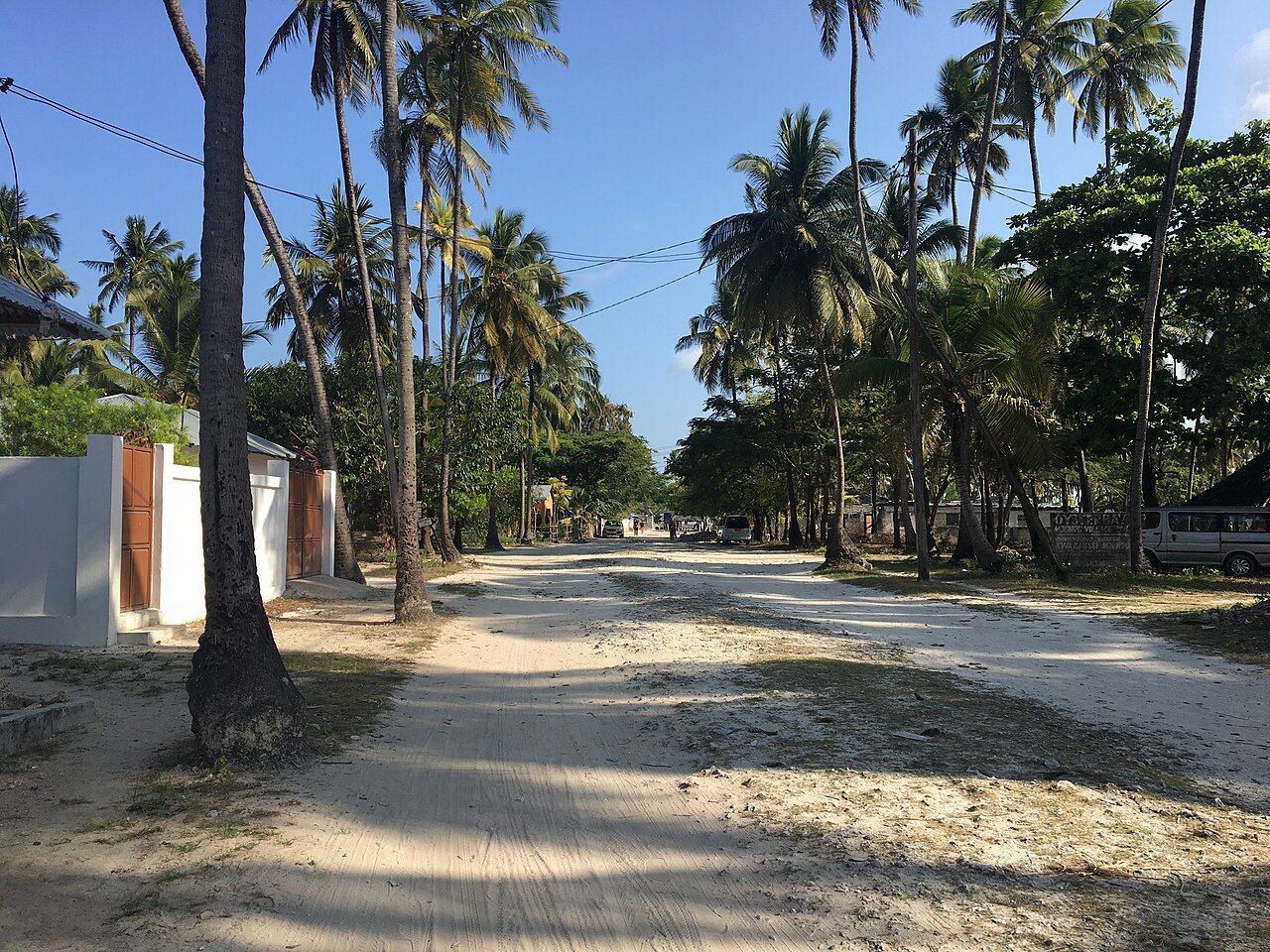
Jambiani is a long village along a sandy road behind the beach, shaded by coconut palms. Homes, small mosques, schools and shops sit among the trees, and life follows the rhythm of fishing, farming and the tides. Fishermen set out in wooden outrigger canoes, known as ngalawa, and return with the catch. In the evening, children play football on the sand and families gather outside their houses.
 Picture: Jonathan Dalrymple · Creative Commons BY-SA 4.0 (source file)

Jambiani also has several small mosques and Quran schools, and the pace of the place changes with the seasons and with Ramadan, when daytime life is quieter and evenings are busier. Walking the road through the village is a pleasant way to spend an hour. Greet people as you go, cover your shoulders and knees, and remember that this is home to many people, not a stage. Some community projects offer village walks; look for ones where the benefit clearly goes to local people.
Crossing the island to Paje
- Getting there. The drive from Stone Town crosses the island and usually takes about an hour, depending on traffic and stops. Daladalas run from Darajani.
- Seasons. The long dry season and the December to February period are popular. The long rains, roughly April and May, are wetter and quieter.
- Seaweed on the beach. At some times of year, loose seaweed washes up on the sand. It is natural and usually cleared or swept back by the tide.
- Jellyfish and urchins. Wear reef shoes, and watch where you put your hands and feet.
- Nearby. Jozani forest lies inland on the way back towards Stone Town; see Jozani forest and the red colobus.
Evenings on this coast are calm. The sun sets behind you, over the land, so the sea turns soft and pale rather than golden, and the stars are bright away from town lights. Give yourself more than one day. The coast changes completely between high and low tide, and both are worth seeing.
With photos by Nina R from Africa · Creative Commons BY 2.0 (source file); Mangapwani · Creative Commons BY-SA 4.0 (source file); Jonathan Dalrymple · Creative Commons BY-SA 4.0 (source file)


