
Prison Island and its giant tortoises
A short boat ride from the Stone Town waterfront leads to a small island with a jail that was never used, a long quarantine history and a herd of very old tortoises.
 Picture: Diego Delso · Creative Commons BY-SA 4.0 (source file)
- From Stone Town
- A short boat ride
- Pace
- Half day
- Getting there
- Small boat from the Stone Town shore
- Bring
- Hat, sunscreen, swimwear, reef shoes, dry bag
From the seafront in Stone Town, you can see a low green island a few kilometres offshore. This is Changuu, better known to visitors as Prison Island. It is small enough to walk around in well under an hour, and it combines three things in one easy trip: a strange piece of colonial history, a herd of giant tortoises, and clear water for a swim.
Getting across
Boats leave from the beach and waterfront in Stone Town, often near the area in front of Forodhani Gardens. The crossing takes roughly half an hour in good weather, more in rougher seas. Most trips are simple open boats, so expect sun and spray, and keep your phone and camera in a dry bag.
Arrangements are informal and vary a lot. Agree clearly before you set off on how long you will spend on the island, whether a snorkelling stop on the reef is included, and what is and is not covered. There is an entry fee to the island, paid on arrival or included in the trip. Ask for life jackets and check they are on board.
Calm mornings are best. The water is clearer, the sun is gentler and the island is quieter before the later boats arrive.
A prison that never held prisoners
The island's history is more surprising than its name. In the nineteenth century it was reportedly used by an Arab owner to hold enslaved people before they were moved on. Later, after the British took control, a jail was built on the island in the 1890s. It was meant for prisoners from the mainland and Zanzibar, but it seems it was never used for that purpose.
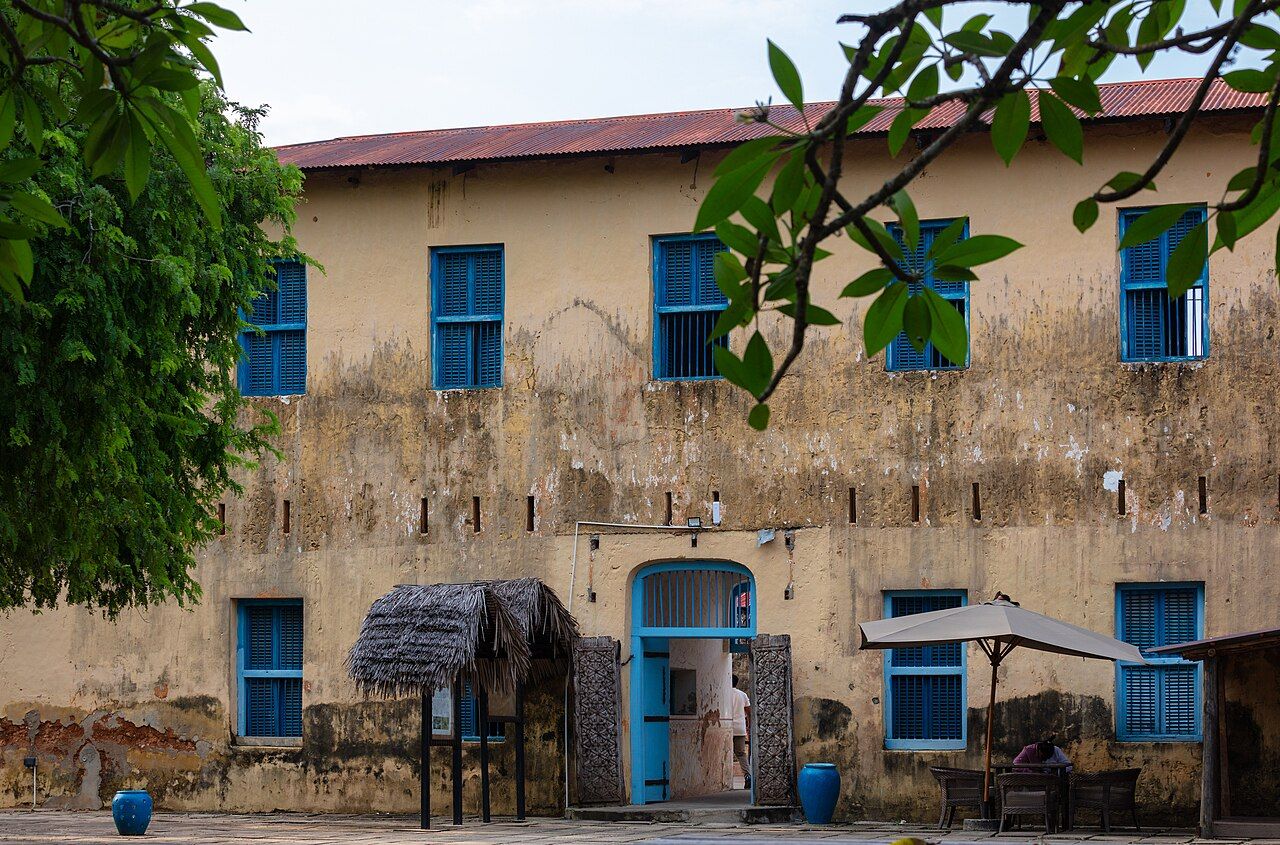
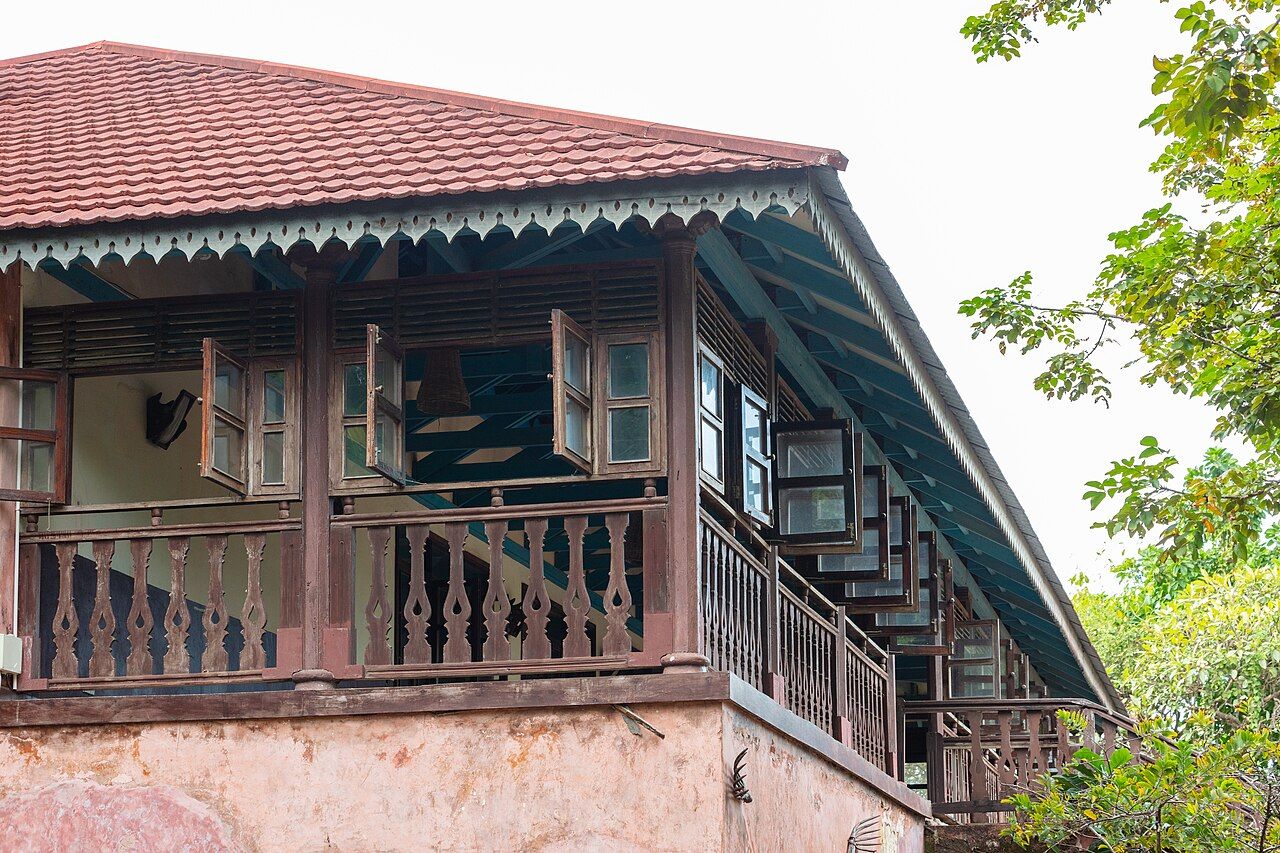
Instead, the island became a quarantine station. In an age of yellow fever, cholera and other epidemics, ships and travellers arriving from infected ports could be held here until they were judged safe to land in Stone Town. The long building with blue shutters near the landing is the old prison block, and other buildings from the quarantine period stand among the trees.
 Picture: Diego Delso · Creative Commons BY-SA 4.0 (source file)

Little signage explains all of this, so it helps to know the outline before you arrive. Walk slowly round the main buildings, look at the weathered walls and shutters, and imagine the island full of people waiting out their quarantine within sight of the town.
Pair it with The Old Fort and the House of Wonders
The giant tortoises
For most visitors the main reason to come is the tortoises. They are Aldabra giant tortoises, a species from the Aldabra atoll in the Seychelles. A group of them was brought to Zanzibar as a gift in the early twentieth century, and their descendants have lived on Changuu ever since. Some of the animals are thought to be very old, though exact ages are hard to know.
Numbers fell sharply in the past, partly through theft for the pet trade, and the tortoises now live in a protected enclosure with a conservation focus, at times including a separate area for young ones. You walk among the adults in the main enclosure, where they move slowly across the sand, graze on leaves and rest in the shade.
Some simple rules keep the visit good for them:
- Follow the keepers' instructions on feeding. If leaves are offered for feeding, use only those, and keep your fingers away from the mouth.
- Never sit or stand on a tortoise, and never lift one, however small.
- Do not pull at heads, legs or shells, and leave sleeping tortoises in peace.
- Keep your voice low and let the animals set the pace. They are wild animals in a protected space, not a petting farm.
- Wash or wipe your hands afterwards.
Watching them is oddly calming. A tortoise turning its long neck towards a leaf, or stretching out in the shade, does more to slow down a busy day than any number of sights in town.
Swimming and the reef
Around the island there are small beaches and areas of shallow reef. Many boat trips include a stop to snorkel nearby. Visibility depends on tides and weather, and some days are far better than others.
Wear reef shoes or watch your step on the coral and rocks, as sea urchins are common. Do not stand on the coral, touch fish or take shells. Use reef-friendly sun protection, ideally a rash vest, and keep your distance from anything with spines. If you want to learn more about how reefs here are protected, read about Chumbe and the protected reefs to the south.
Peacocks, trees and quiet corners
Beyond the tortoises, the island has shady trees, paths and a scattering of other animals. Peacocks wander about, and you may hear their calls echoing through the trees. Birds and small lizards are easy to spot if you sit still.
There is little shade at the landing and on the open parts of the island, so bring a hat, water and sunscreen. Facilities on the island can be limited and may change, so carry what you need.
Fitting it into your days
A visit takes half a day at most, which leaves time for the town afterwards. It pairs well with an afternoon in the lanes of Stone Town or a sunset by the water. On the way back, look at the town from the sea: the waterfront, the fort and the old palaces line up along the shore, and you get a clear sense of how important that view was to anyone arriving by ship. The boats that wait here, the old quarantine walls and the town ahead all belong to the same story of an island that has always lived by the sea.
With photos by mwanasimba from La Réunion · Creative Commons BY-SA 2.0 (source file)
