
Nungwi and Kendwa in the north
At the island's northern tip the tide stays closer to shore, the sunsets face the open sea and dhow builders still work on the sand.
 Picture: Nina R from Africa · Creative Commons BY 2.0 (source file)
- From Stone Town
- About ninety minutes by road
- Pace
- Overnight
- Getting there
- Road north from Stone Town
- Bring
- Reef shoes, sun hat, a cover-up for the village
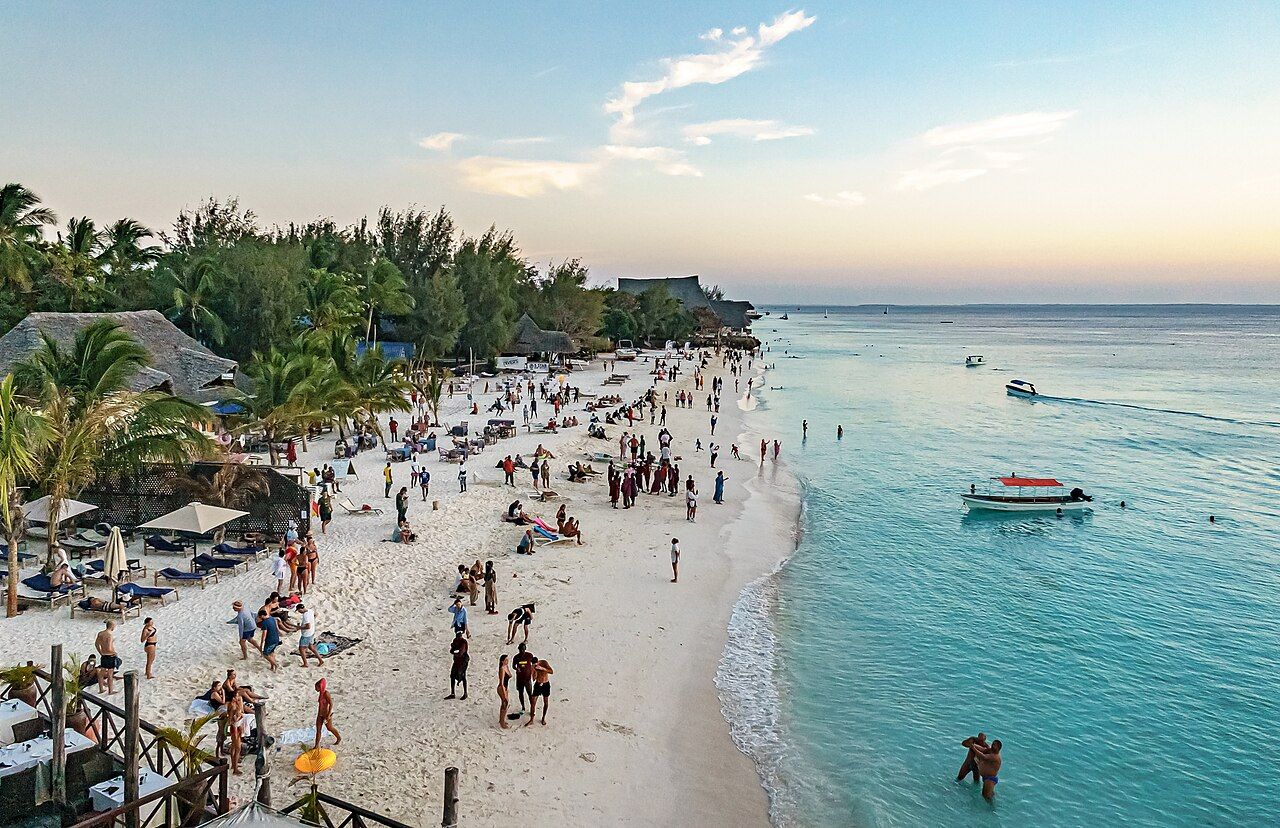
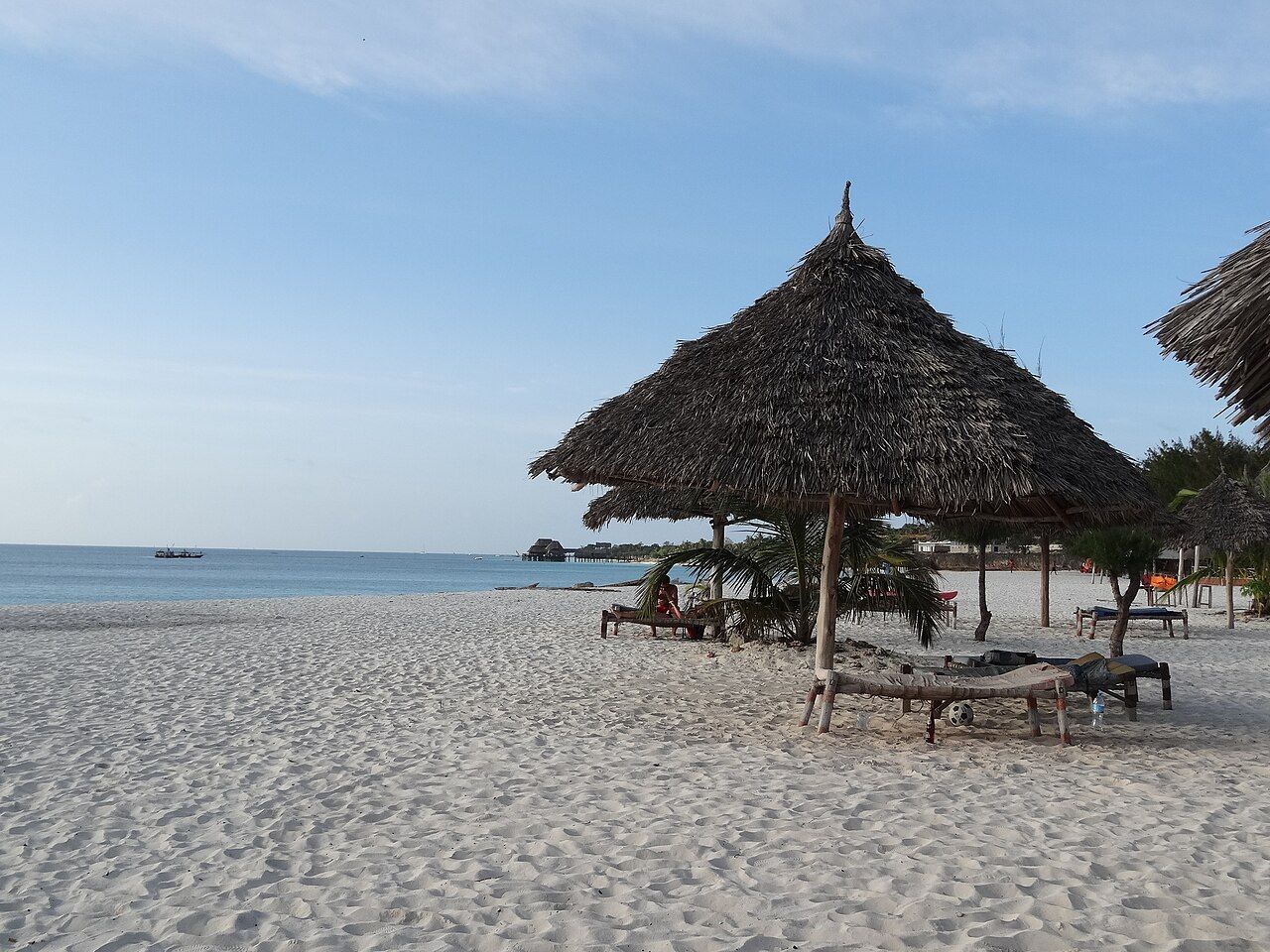
Nungwi sits at the very northern tip of Unguja, and Kendwa lies a short way down the west coast from it. Together they are the island's most popular beach area. The sand is white, the water is a clear turquoise, and the coast faces west and north, so the sun sets over the sea. Above all, the tide here does not retreat as far as on the east coast, which means you can swim for much of the day. That one fact explains a lot about why the north is busy.
It is busy. The beaches have plenty of development behind them, and in the high seasons the sand can feel crowded. But Nungwi is still a fishing and boatbuilding village, and with a little time you can see both sides of it.
Why the tides are kinder here
On the east coast, a fringing reef lies well offshore, with a wide shallow lagoon behind it. When the tide goes out, that lagoon drains and the sea retreats far from the beach. The guide to the east coast tides explains this in detail.
At the northern tip the sea floor drops away more quickly, so even at low tide there is usually water deep enough to swim within easy reach. The tide still moves, and at the lowest spring tides you will see rock and sand uncovered, but the change is far less dramatic. If swimming at any hour matters to you, the north is the easiest part of the island.
Kendwa, on the west side, is often said to have the most consistent swimming of all, with a gently shelving beach that keeps its water for most of the day.
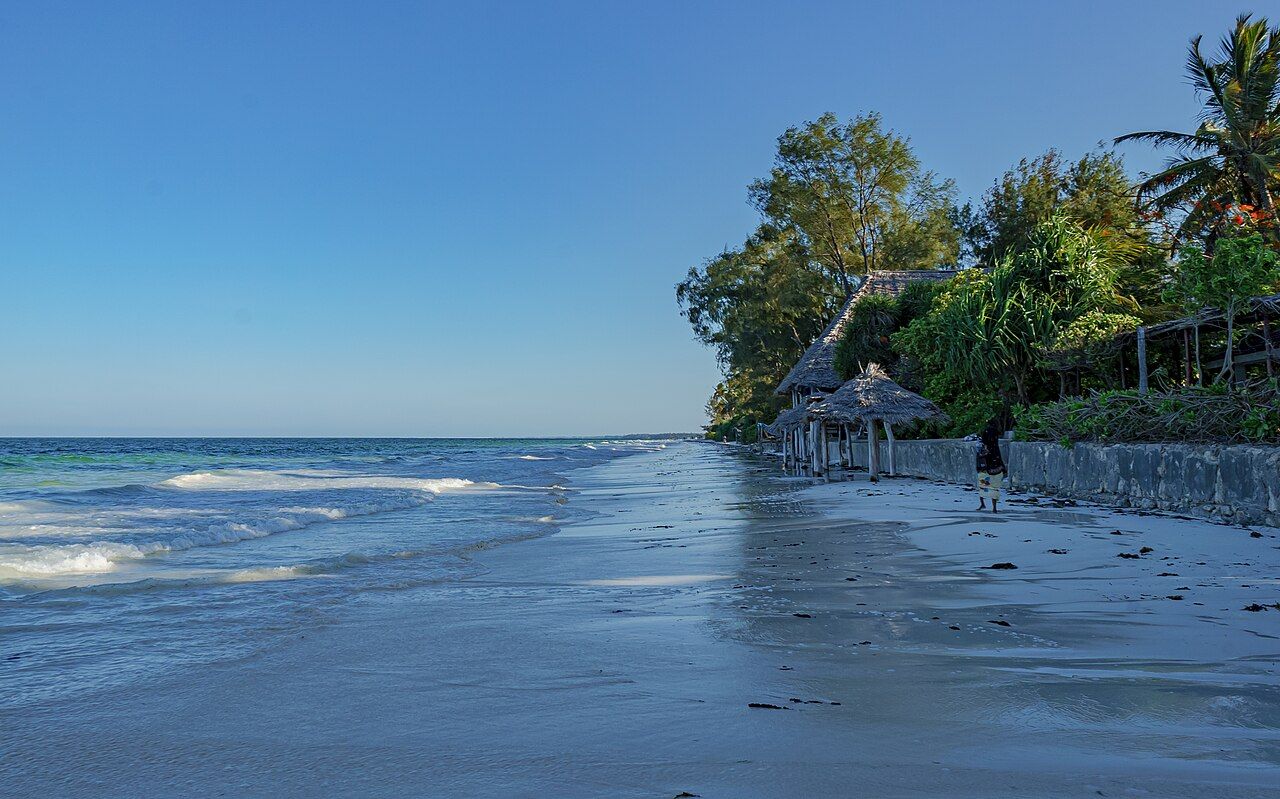
The two beaches are close enough to link on foot. At lower tides you can usually walk along the shore between them in well under an hour, past fishing boats, small rocky points and stretches of open sand. At high tide some sections may be cut off by the water. Wear something on your feet for the rocky parts. Early morning is the best time for the walk, before the sand heats up and the beach fills.
 Picture: Zoheb · Creative Commons BY-SA 3.0 (source file)

Nungwi village and the dhow builders
Behind the beach strip, Nungwi is a working village. Fishing has long been its main trade, and the village is known for building dhows and other wooden boats. On the beach, in the shade of trees, you may see the ribs of a large boat taking shape, built largely by hand using techniques passed down over generations. The planks are shaped and fitted, the seams caulked, and finished boats are eventually rolled down to the water.
It is fascinating to watch, but it is someone's workplace. Keep a respectful distance, ask before taking photographs and do not climb on boats or timber. For more about these vessels and the trade winds that carried them, see the story of dhows and the monsoon winds.
In the late afternoon, fishing boats return and the catch is sold on the beach. Small fish markets form and disperse quickly; if you happen to see one, it is a lively scene.
When you walk into the village itself, cover up. Beachwear is accepted on the sand, but in the village streets shoulders and knees should be covered, as elsewhere on the island.
 Picture: Nina R from Africa · Creative Commons BY 2.0 (source file)

Sunsets and evenings
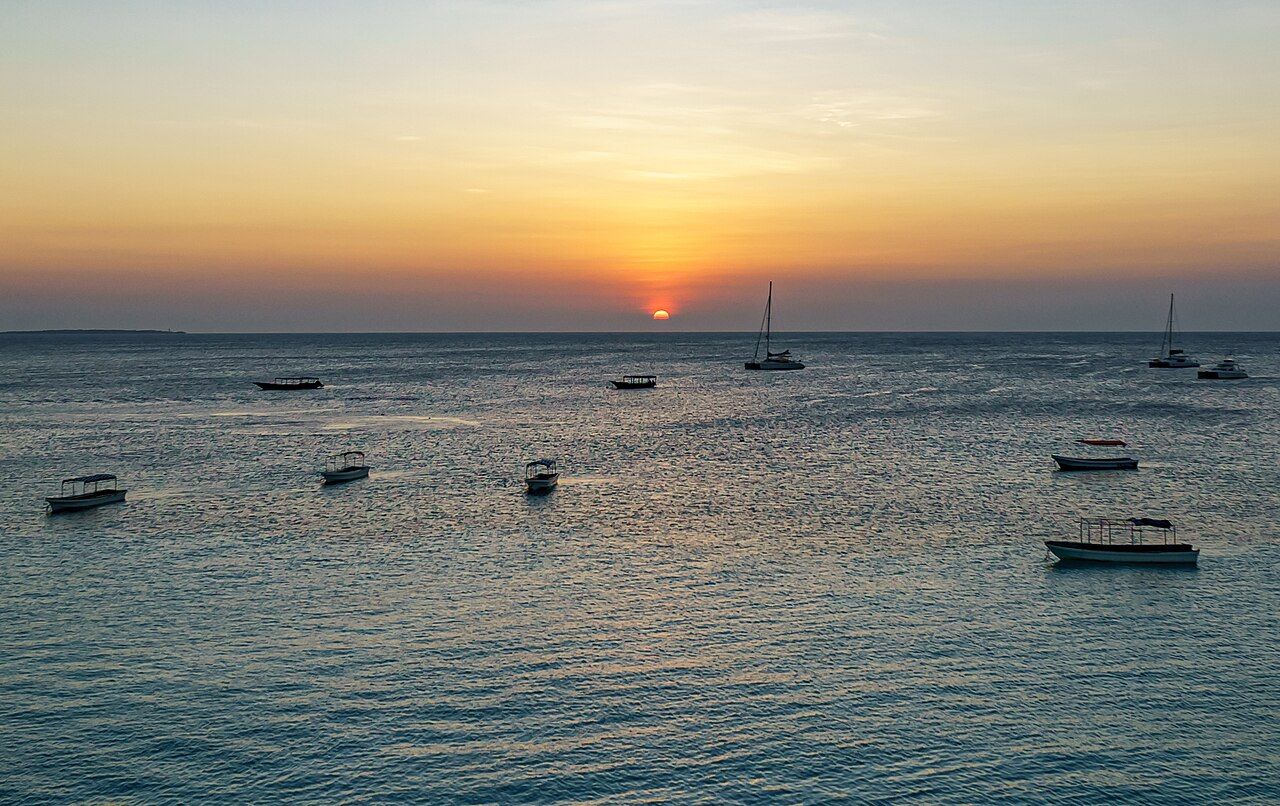
Because the coast here faces west, the sun sets over the open water. Sunset is a big moment in Nungwi and Kendwa, and many people walk the beach or sit on the sand to watch it. Sunset dhow sails are a common outing in the area, and from the beach you will see boats out on the water with their sails against the sky.
 Picture: Nina R from Africa · Creative Commons BY 2.0 (source file)

Pair it with Dhows and the monsoon winds
Evenings are lively in the busier parts of the beach, with music and dining. Kendwa in particular is known for its parties at certain times of the month. If you prefer quiet, look for a stretch further from the centre or come outside the peak weeks. Wherever you are, keep valuables close on the beach after dark and avoid walking alone on deserted stretches late at night.
The turtle pool
Near the tip of Nungwi there is a natural rock pool where sea turtles are kept and visitors can see them up close, a small attraction often called the turtle aquarium. It has been presented as a conservation project linked to the local community, with some turtles said to be released back into the sea.
Opinions differ about places like this. Some see them as a way to raise awareness and support villagers; others are uncomfortable with wild turtles being kept in a pool and handled or fed by visitors. If you go, look at the conditions, ask how animals are cared for and released, and avoid touching or feeding the turtles. You may decide that seeing turtles in the wild, on a snorkelling trip, is a better choice.
For a wider look at keeping animal encounters kind, read about the dolphins at Kizimkazi.
Busy seasons and practical notes
The north is busiest in the long dry season, roughly from June to October, and over the December and January holidays, especially around Christmas and New Year. Accommodation can fill up then, and the beaches are at their liveliest. The long rains, usually around April and May, bring fewer visitors, more clouds and heavy showers, though there are still sunny spells. The short rains in November can bring passing storms.
Some practical points:
- Getting there. The road north from Stone Town is paved, and the drive usually takes about an hour and a half, depending on traffic and stops. Daladalas also run north from Darajani; they are slower and cheaper.
- Beach sellers. Expect people selling excursions, souvenirs and boat trips. A polite no is normally accepted.
- Snorkelling trips. Boats leave for the reef and for Mnemba to the east. Choose operators who respect the reef and keep groups small; see the guide to Matemwe and the Mnemba reef.
- Sun and sea. The sun is strong, and some currents can be stronger than they look off the tip. Swim where others do, and be careful at the point itself.
- Cash. Cash machines exist in the area but can run out or fail. Carry some cash as backup.
If swimming at any hour matters to you, the north is the easiest part of the island.
Spend at least a night or two if you can. Day trips from Stone Town are possible, but the north is best when you have time to swim, watch the boats come in and stay for the sunset.
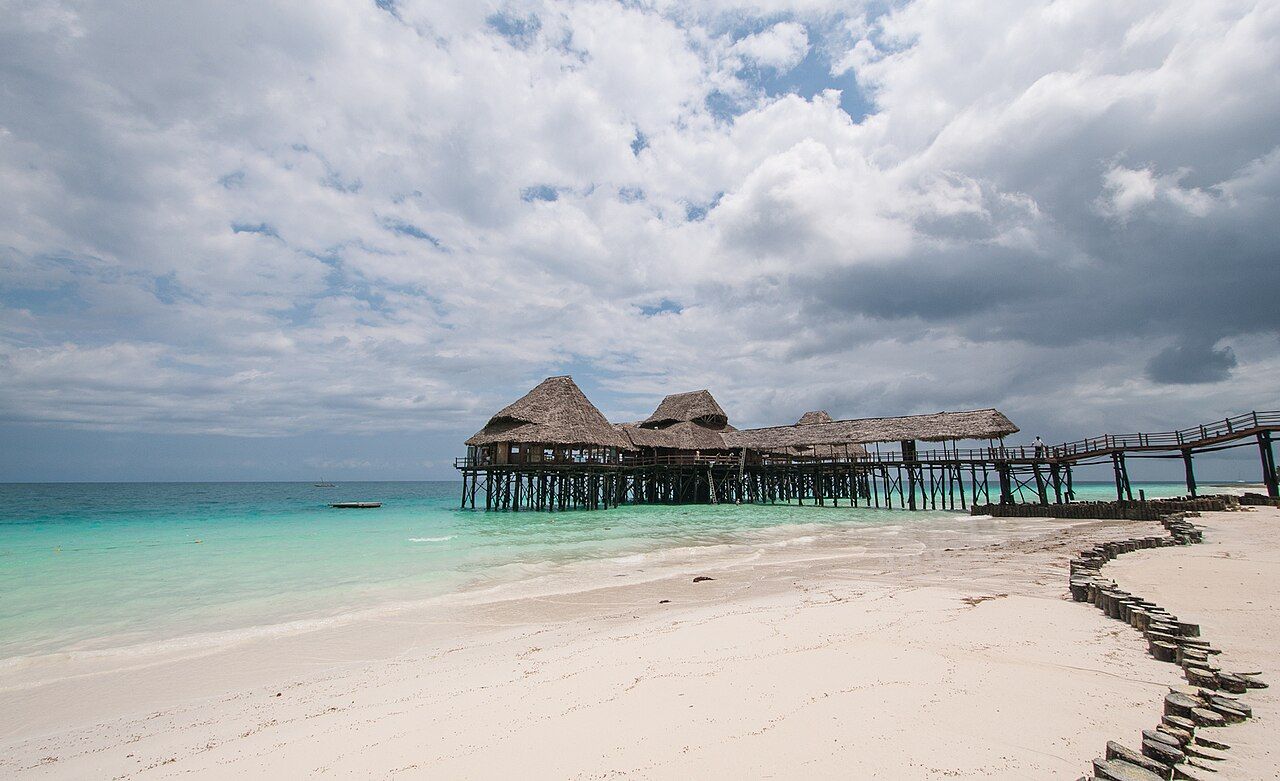 Picture: Yoni Lerner from Tel Aviv, Israel · Creative Commons BY 2.0 (source file)

With photos by Matt Kieffer from London, United Kingdom · Creative Commons BY-SA 2.0 (source file); Mangapwani · Creative Commons BY-SA 4.0 (source file); Jonathan Dalrymple · Creative Commons BY-SA 4.0 (source file)


