
Dhows and the monsoon winds
For centuries, wooden boats with triangular sails rode the seasonal winds between this coast, Arabia and India. You still see them every day, from the Stone Town shore to the northern beaches.
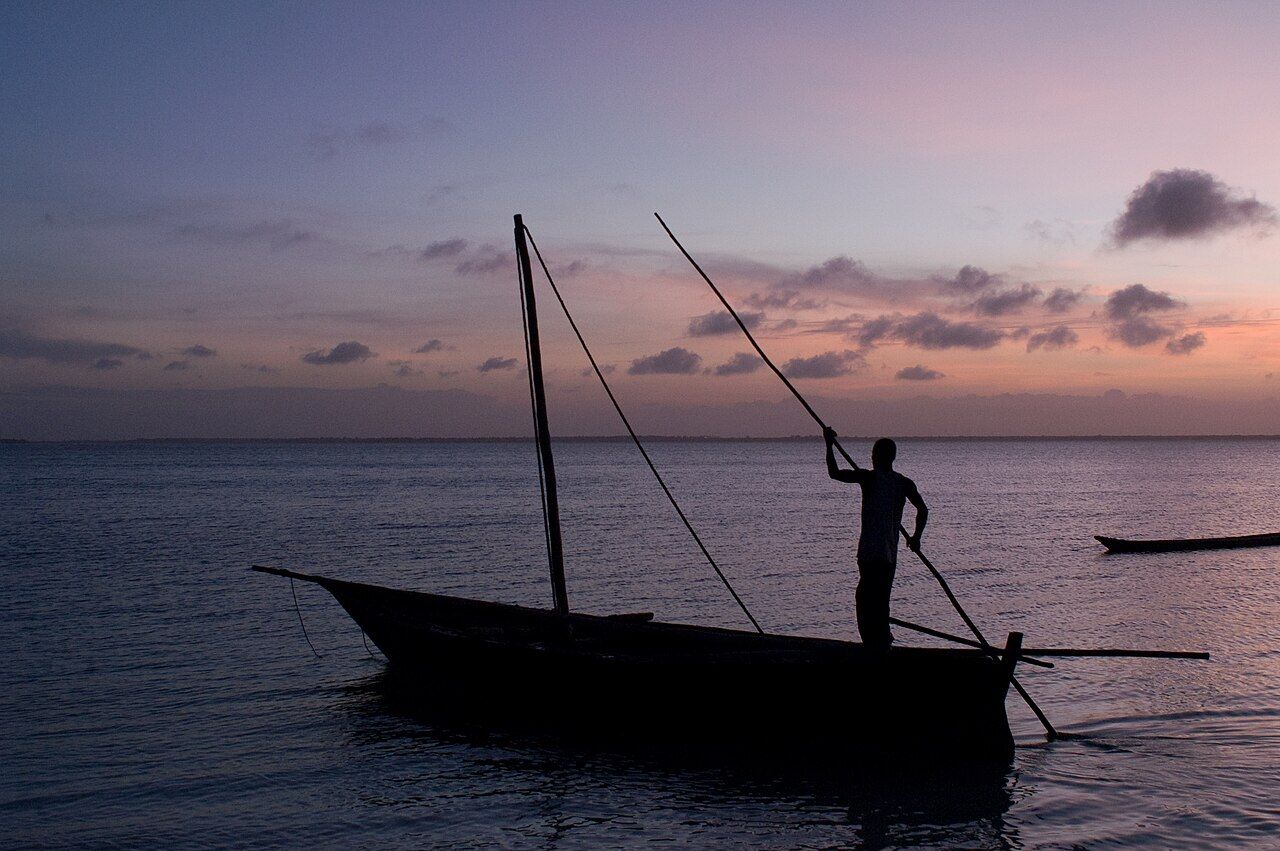 Picture: Fanny Schertzer · Creative Commons BY 2.5 (source file)
- From Stone Town
- Visible from the Stone Town seafront
- Pace
- Easy
- Getting there
- Stone Town shore and northern beaches
- Bring
- Hat, life jacket check, dry bag, light layer
Stand on the shore in Stone Town at the end of the day and sooner or later a dhow will cross your view: a wooden hull, a slanting yard and a big triangular sail filled with wind. These boats have been part of life on this coast for centuries, and for much of that time they were the link between East Africa and the wider world.
The shape of a dhow
Dhow is a general word used by outsiders for a family of wooden sailing boats found across the western Indian Ocean, from the Persian Gulf to the Swahili coast. Along this coast, people use their own names for different types. The large cargo boats are often called jahazi, smaller sailing boats are known as mashua, and the slim outrigger canoes used for fishing close to shore are ngalawa.
What links them is the lateen sail: a large triangle of cloth hung from a long, sloping yard that crosses the mast at an angle. The design lets a boat sail close to the wind and handle changing breezes well. Changing direction with a lateen sail takes skill and teamwork, since the yard and sail often have to be moved around the mast.
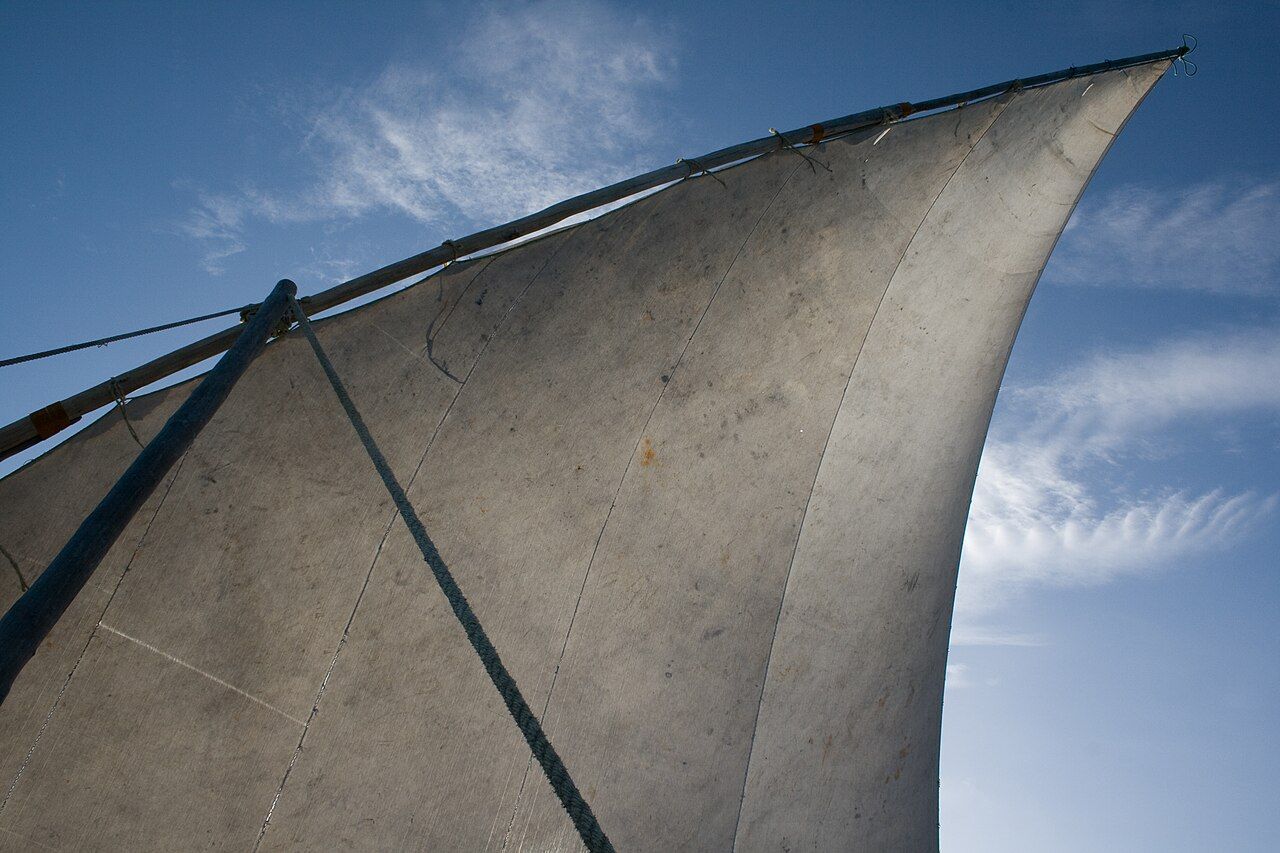 Picture: Fanny Schertzer · Creative Commons BY 2.5 (source file)

Traditional hulls are built of local hardwoods, shaped by hand. Older boats were sewn together with coir rope rather than nailed, though nails and modern fittings are now common. Many dhows now carry engines too, and some sail only when the wind is good.
Riding the monsoon
The Indian Ocean trade ran on the seasons. For part of the year, roughly from late in the year into the early months of the next, the north-east monsoon, known on this coast as the kaskazi, blows steadily from Arabia and India towards East Africa. Later in the year the winds swing round, and the south-east monsoon, the kusi, carries boats back the other way.
Traders learned to time their voyages to these winds. Dhows came south loaded with cloth, dates, dried fish, carpets, metalwork and other goods, waited on the coast while the wind changed, and returned north with ivory, mangrove poles, spices and other cargo. During the long wait, traders, sailors and towns mixed, which is one reason the Swahili coast blends African, Arab, Persian and Indian influences in its language, food and buildings.
That trade also included people. Enslaved Africans were shipped on dhows to Arabia and beyond, and Zanzibar became a centre of that traffic in the nineteenth century. The memorial at the former slave market in Stone Town tells that part of the story, and it belongs alongside any romantic picture of sails at sunset.
Pair it with Nungwi and Kendwa in the north
Where the boats are built
Dhow building is still alive on Zanzibar, though on a smaller scale than in the past. The best-known place to see it is on the beach at Nungwi in the far north, where boats are often built in the open on the sand, from keel to frame to planking. Work goes on for months, with simple tools and a great deal of knowledge passed down through families.
If you visit, watch from a respectful distance unless you are invited closer. The builders are working, sometimes on tight timetables, and a crowd of visitors underfoot does not help. Ask before taking photos, especially of people. A quiet greeting goes further than a camera. The story on Nungwi and Kendwa has more about the northern beaches.
Dhows in daily life
Fishing boats still head out from beaches all round the island, especially at dawn and in the late afternoon. On the east coast, where the tides go far out, boats are left resting on the sand at low water and float again when the sea returns. In the evenings, small sailing boats glide back towards villages with the day's catch.
In Stone Town, larger wooden boats still work along the coast, though most freight now moves in steel ships and containers. The harbour and the beach near the old customs house give a sense of how busy the waterfront once was, when ocean-going dhows crowded the anchorage at the height of the trading season.
Sunset sails and short trips
Many visitors try a dhow sail as an evening trip from Stone Town or the northern beaches. These are usually short sails along the coast, timed so that the boat is on the water as the sun goes down. Some trips also include snorkelling or a stop at a sandbank during the day.
A few practical points:
- Check safety equipment. Ask whether life jackets are on board, count them, and check they fit, especially for children.
- Watch the weather. Wind and waves can pick up quickly. If the sea looks rough, it is fine to wait for another day.
- Agree on the details before you board: how long the trip lasts, where it goes, and what is included.
- Keep valuables dry in a waterproof bag, and wear clothes that can get wet.
- Be careful with alcohol on board. Zanzibar is mostly Muslim, and drinking in public is not appropriate in many places; on a boat, it also makes accidents more likely.
Reading the water
Once you start looking, dhows tell you a lot about the island. Their sails show which way the wind is blowing and how the season is turning. Their hulls show who still builds by hand. The way they come and go from the shore follows the tide and the fish. Sit on the seafront for an hour in the late afternoon and you are watching something that has gone on here, in one form or another, for a very long time.
With photos by Rod Waddington from Kergunyah, Australia · Creative Commons BY-SA 2.0 (source file)
