
Eating on the island
Spice, coconut and the sea run through everything on a Zanzibar plate. Here is what to look for, from a bowl of urojo to the fruit piled on market tables.
 Picture: Rod Waddington from Kergunyah, Australia · Creative Commons BY-SA 2.0 (source file)
- From Stone Town
- Right in Stone Town
- Pace
- Easy
- Getting there
- Markets, waterfront stalls and village kitchens
- Bring
- Appetite, hand sanitiser, small change, bottled water
Food on Zanzibar tells the island's history on a plate. Centuries of trade with Arabia, Persia and India brought rice, spices and cooking methods that mixed with African staples, coconut and fish from the reef. The result is a cuisine that is warm with spice rather than fiery, rich with coconut and built around whatever the sea and the season provide.
Urojo, the Zanzibar mix
If there is one dish people associate with Stone Town street food, it is urojo, often called Zanzibar mix. It starts with a thin, tangy yellow soup, flavoured with turmeric, mango or tamarind and spices. Into the bowl go a mix of fried and boiled things: bhajia fritters, potato, small meat skewers or kebab pieces, boiled egg, and crunchy bits on top. A splash of coconut chutney and chilli sauce finishes it.
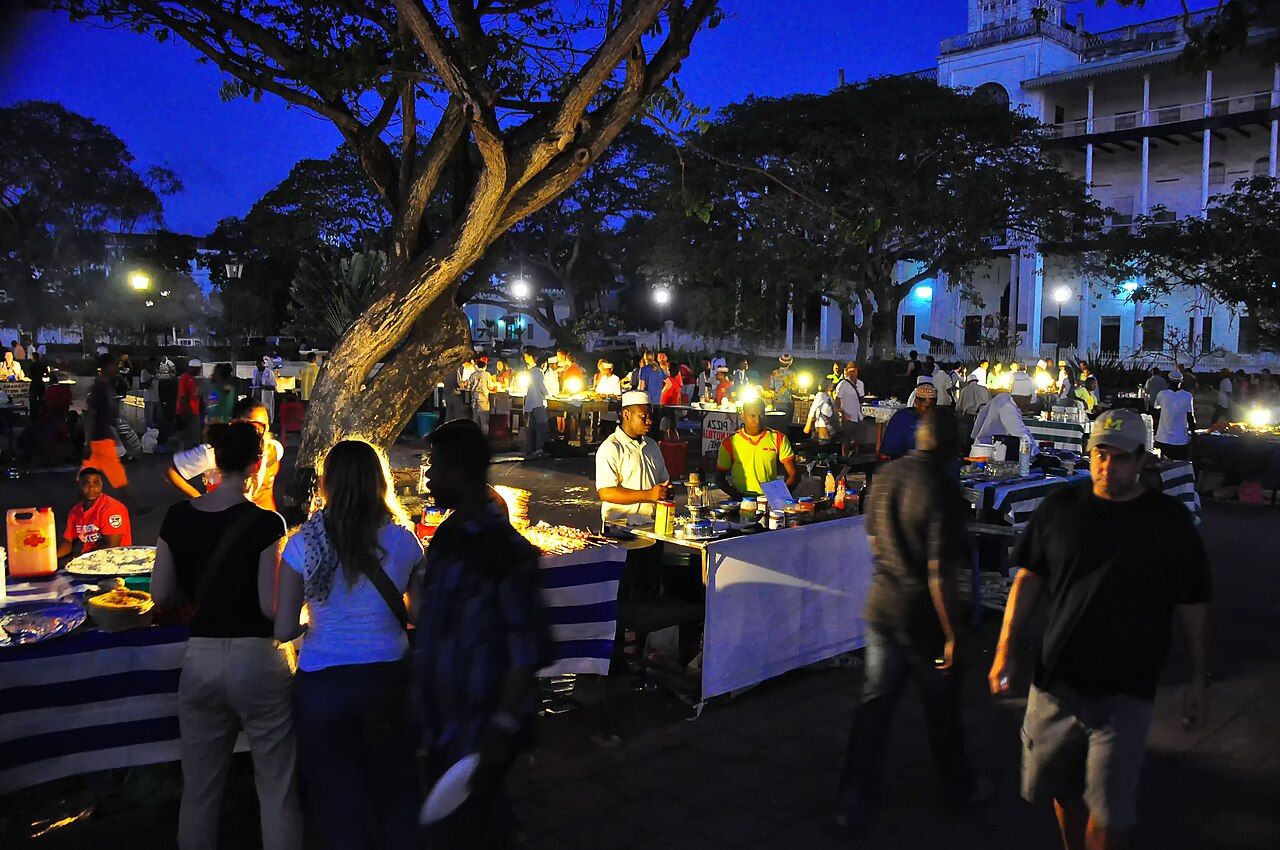
Every stall has its own version, and the balance of sour, salty and spicy changes from one bowl to the next. It is cheap, filling and best eaten fresh, standing near the stall. The most famous place to find it in the evening is around Forodhani Gardens, though stalls and cafes across town make it too.
 Picture: Hussein Simba · Creative Commons BY-SA 4.0 (source file)

Rice dishes: pilau and biryani
Rice is central to celebrations and daily meals. Pilau is rice cooked in stock with whole spices such as cumin, cardamom, cinnamon, cloves and black pepper, often with meat or potatoes. The rice comes out golden-brown and fragrant, and it is commonly served with a fresh salad of tomato and onion called kachumbari.
Biryani here usually means rice and a spiced meat or chicken sauce cooked separately, then served together or layered. It reflects the long Indian presence on the island. Both dishes turn up at weddings, Eid and family gatherings, and at many simple eating places at lunchtime.
From the sea
Fish and seafood are everyday food along the coast. Octopus, called pweza in Swahili, is caught on the reef flats at low tide and cooked in many ways. One of the best known is octopus curry, where tender pieces are simmered in a sauce of coconut milk, tomato, garlic and spices. It is often eaten with rice or chapati.
Grilled fish, fish in coconut sauce and fried small fish are common in coastal villages. In the evening stalls, you may also see skewers of seafood laid out on the grill. Ask when things were caught and cooked, and pick the ones cooked fresh in front of you.
Pair it with Darajani market in the morning
Breads and snacks
Chapati, a soft flatbread with Indian roots, is everywhere, eaten with curries, beans or tea. Mandazi are lightly sweet fried doughnuts, often flavoured with cardamom and coconut, and are a favourite with morning tea. Other snacks include samosas, cassava chips, roasted maize and sweet potato.
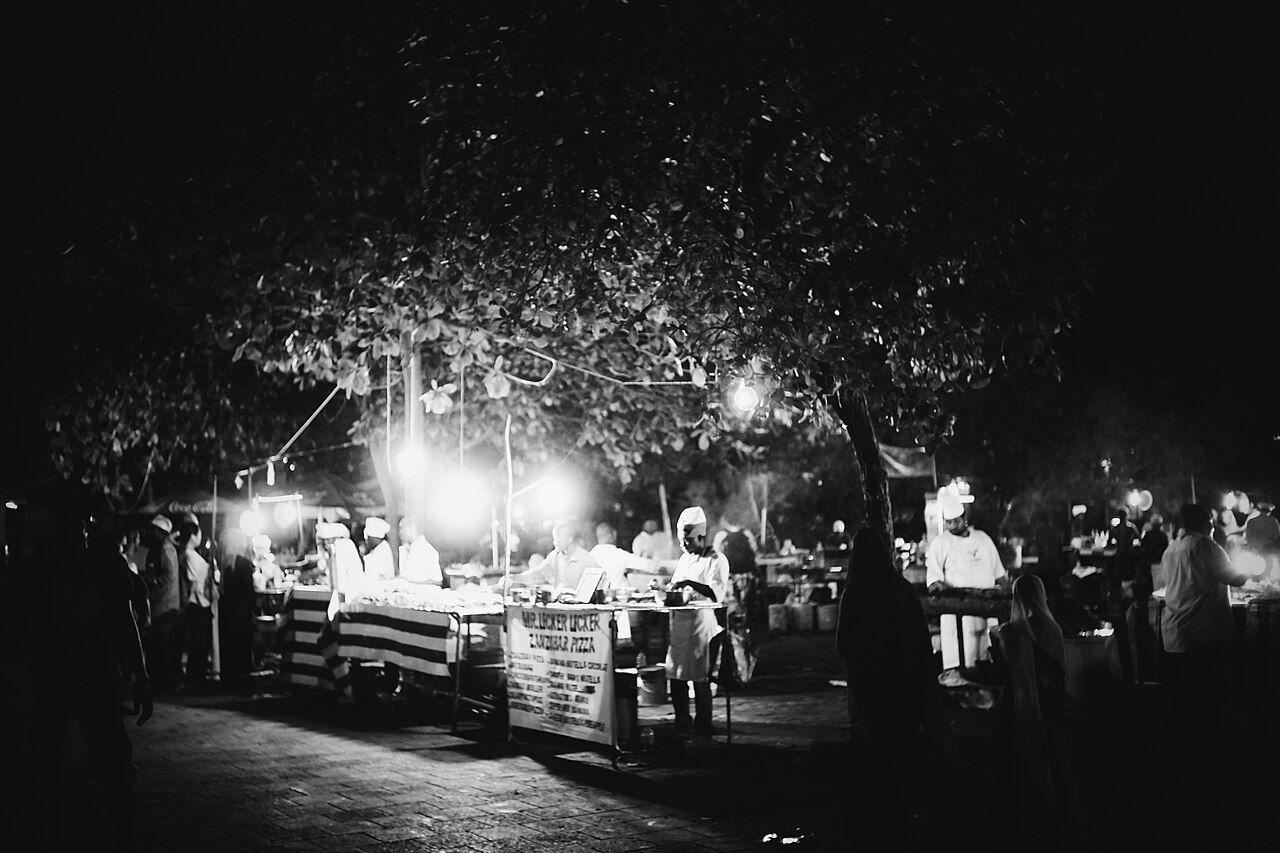
A popular evening snack is the so-called Zanzibar pizza: a thin dough wrapped round fillings of egg, minced meat or vegetables, folded into a square parcel and fried on a hot plate. Sweet versions with banana and chocolate are common too. It has little to do with Italian pizza but it is very good hot off the griddle.
Tea is often spiced with ginger, cloves or cardamom. Strong black coffee is poured in tiny cups from long-spouted pots by street sellers in Stone Town, especially in the evenings. Fresh sugarcane juice, squeezed with lime and ginger, is sold from carts.
Coconut and fruit
Coconut runs through Zanzibar cooking. Grated flesh is soaked and squeezed to make coconut milk for curries, rice and sauces. Young green coconuts are sold for their water, opened with a few strokes of a knife.
Fruit depends on the season. Mangoes are plentiful in the hotter months, often around the end and start of the year. Bananas, papaya, pineapple and citrus are available most of the year. In season, look for jackfruit, durian, rambutan, breadfruit and passion fruit. The best place to see what is ripe is a market; Darajani market in Stone Town is full of fruit sellers in the mornings. Seasons shift with the rains, so ask what is good that week.
Eating well and staying well
Street food is part of the pleasure here, and a few habits help you enjoy it safely:
- Choose busy stalls with a quick turnover, where food is cooked or reheated thoroughly in front of you.
- Be cautious with food that has been sitting out in the heat, especially seafood.
- Drink bottled or treated water, and think about ice and raw salads if you have a sensitive stomach.
- Peel fruit yourself where possible.
- Agree on the price before you order at evening stalls, since prices can be unclear and change with the season.
Eating with the right hand is customary, especially when sharing food from a common plate. Wash your hands before and after if water is offered.
Eating through Ramadan and holidays
During Ramadan, many local places close during the day, and eating or drinking in public in daylight is seen as disrespectful. After sunset, the mood changes completely. Families break the fast with dates, soups and snacks, and the evening streets fill with food. If you are visiting at that time, eat discreetly by day and enjoy the evenings. The guide to greetings, dress and Ramadan has more on travelling during the holy month.
Food is a quick way into daily life on the island. Try the dishes, ask what they are called, say asante to the cook, and you will often find that the conversation is as good as the meal.
With photos by Fanny Schertzer · Creative Commons BY 2.5 (source file)
